

Paleo Bags $2.3M to Advance Regulatory Filings for Animal-Free Meat Protein

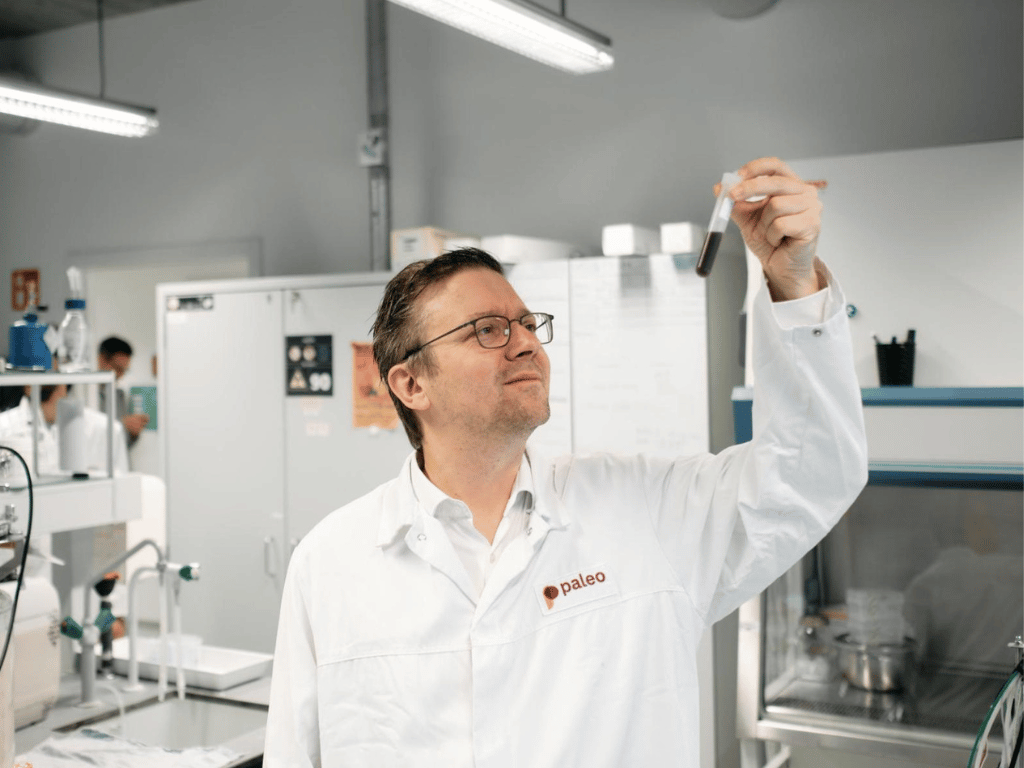
Belgian precision fermentation startup Paleo has raised €2M ($2.3M) in funding to support regulatory submissions for its yeast-derived myoglobin, a heme-containing protein that can help meat alternatives close the flavour gap.
Plant-based meat is still battling the inferior taste allegations, and addressing these could be the key to restoring the adoption levels that first brought them into the mainstream.
One startup working to bridge this gap is Paleo, which engineers yeast to produce myoglobin, an iron-rich protein that gives meat its characteristic colour and umami flavour. The firm eschews the need for animals with this process, with co-founder and CEO Hermes Sanctorum suggesting in a LinkedIn post that the ingredient can help make “the best meat alternatives in the world”.
That confidence is backed by a new €2M ($2.3M) investment round led by Beyond Impact. “They are one of the few funds that recognise alternative proteins for what they are: not a hype, but a fundamental part of the solution to a challenge that will only become more urgent in the future,” Sanctorum tells Green Queen.
“The funding is not primarily focused on R&D or upscaling, as we have largely moved beyond that stage. The main priorities are to finalise our regulatory submissions in North America and accelerate customer engagement through trials and formulation work,” he reveals.
Paleo has cut myoglobin costs by 613-fold
Found in mammalian muscle cells, myoglobin is a heme protein that facilitates oxygen storage and diffusion in humans and dogs and is an essential source of taurine for cats. Its iron-rich characteristics give meat its metallic and umami flavour, and the oxygen bound to it is the reason a burger patty changes its colour when cooked.
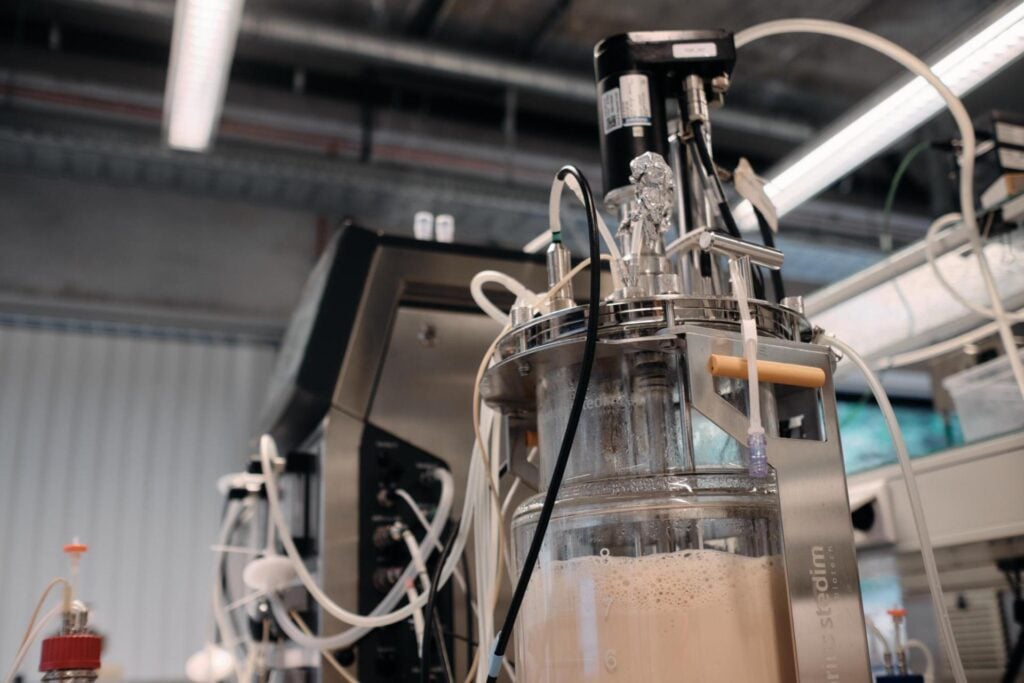
Paleo uses precision fermentation to make bioidentical versions of this protein. It inserts a myoglobin-encoding DNA sequence into Komagataella phaffii, a yeast strain widely used in the food industry, and then conducts a two-stage fermentation process that increases the yeast population and induces myoglobin expression under precise cell culture conditions.
This protein release is called extracellular secretion and enables the startup to produce a food ingredient free of GMOs. After this, the extracellular proteins are separated from the yeast via centrifugation and further concentrated through filtration, before being prepared for use in meat and fish alternatives.
“Our production process is based on a relatively straightforward fermentation and downstream processing process. A significant part of our know-how sits in the production strain itself,” says Sanctorum, who founded Paleo in 2020 with board director Andy de Jong.
“We have spent years optimising it to produce bio-identical myoglobin that is free of genetically modified organisms, at high productivity, which is ultimately what enables us to achieve competitive cost of goods. It took considerable time and R&D to crack that code, but we are there now.”
Komagataella phaffii is also leveraged by Impossible Foods to produce its precision-fermented soy leghemoglobin, a heme-containing ingredient that forms the core of its signature plant-based beef burger. Meanwhile, Luxembourg’s Moolec Sciences employs molecular farming to grow bovine myoglobin inside pea seeds.
Paleo works with several contract manufacturers to produce its myoglobin rather than building its own production infrastructure. And over the last two years, it has managed to reduce production costs by a factor of 613.
“We have successfully demonstrated the technology at scales well above 10 cubic metres,” Sanctorum says. “This gives us flexibility to scale production through existing fermentation capacity as demand develops.”
Meat alternatives the ‘most advanced’ use case for Paleo’s myoglobin
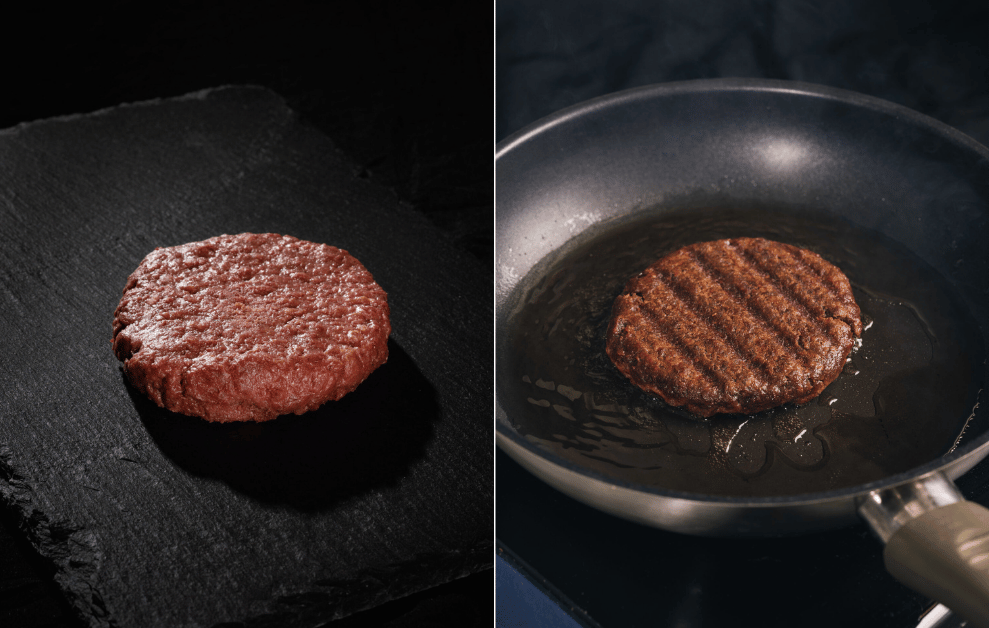
Paleo’s ingredients have the same levels of bioavailable heme as meat, and the protein can be better absorbed than plant-based products that contain non-heme iron.
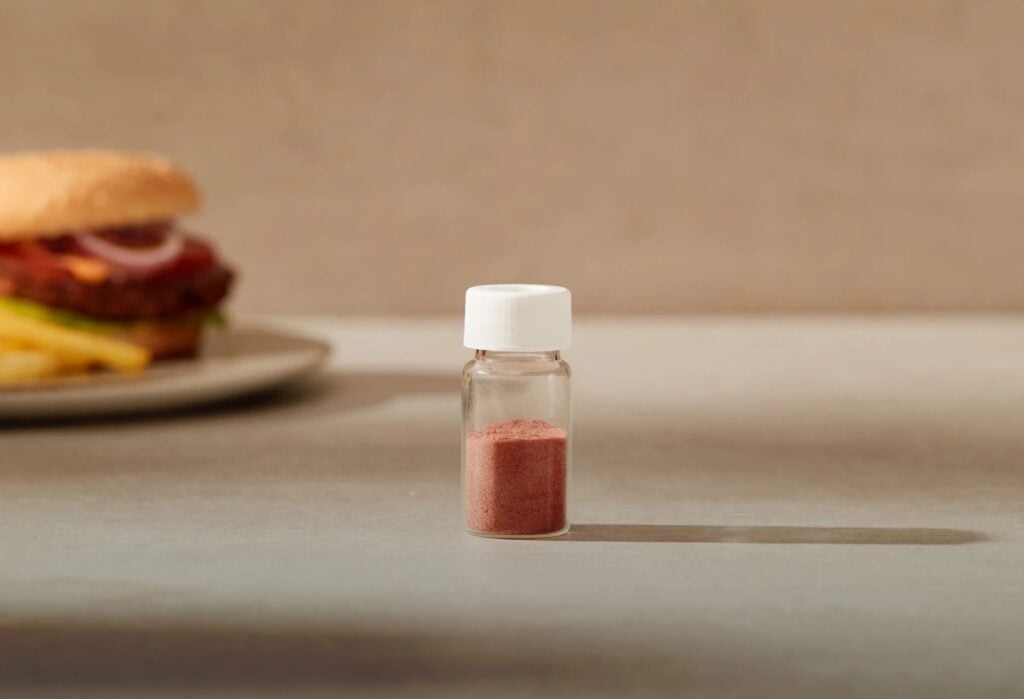
It produces a range of myoglobins, offering bioidentical versions of the proteins found in beef, chicken, pork, lamb, and tuna (suitable for human food applications), as well as those from mouse, rat, and rabbit (for pet food). “Our first and most advanced application is meat alternatives, like plant-based burgers, sausages, minced meats or whole cuts,” says Sanctorum.
“The sector has clearly been under pressure, but we believe the fundamental problem is not that consumers have stopped caring about alternatives to conventional meat. The problem is that too many products remain too expensive while not delivering a sufficiently convincing eating experience,” he outlines.
“That is exactly where myoglobin can make a difference. It is one of the key proteins responsible for the colour, aroma and characteristic experience of meat. At low inclusion levels, our myoglobin can transform a meat alternative into a much more authentic meat experience in a cost-effective way.
“We therefore believe myoglobin can be a game-changer for the category and help manufacturers develop products capable of bringing consumers back. At the same time, we are exploring applications beyond meat alternatives, including pet food and nutraceuticals, where the unique nutritional and functional properties of myoglobin could create additional opportunities.”
The company’s core business model is B2B, and it’s already in strategic and commercial discussions with potential customers, including some that can incorporate its myoglobin into their own products. That said, Paleo is looking beyond the traditional ingredient manufacturer playbook as well.
“The alternative protein market has changed significantly, and I don’t believe simply repeating the strategies of the past will be enough. We need to find more creative ways. We are developing some new approaches around this,” explains Sanctorum, teasing more details in “due course”.
Aside from the taste benefits, Paleo’s myoglobin offers environmental advantages, too. In 2023, an independent life-cycle assessment showed that producing its precision-fermented protein generates 78% fewer GHG emissions than beef and uses over 99 times less land.
Paleo eyes US approval, with EU filing in the works too
Paleo itself hasn’t been immune to the “pressure” Sanctorum has referenced. Last year, the Belgian startup announced a “strategic refocusing of its operations” to double down on R&D, citing challenges like long regulatory approval timelines and the funding decline for alternative proteins. This led to a “significant reduction” in the workforce at its R&D centre in Leuven.
This latest investment, which brings its total raised to nearly €18M ($ 20.8 M), reflects investors’ appetite for fermentation technologies. In Europe, biomass and precision fermentation startups accounted for 84% of financing for alternative proteins in the first half of this year, surpassing their segments’ respective totals for the entirety of 2025.
Paleo is now preparing its Generally Recognized as Safe (GRAS) dossier in the US, which brings together the “extensive safety, production and characterisation data required” for its myoglobin.
“Our GRAS submission is a near-term priority and a key milestone for the company,” Sanctorum says, weeks after the US Food and Drug Administration proposed a rule to eliminate the self-affirmed GRAS pathway that many food producers use to bring ingredients to market.
If that proposal becomes official, companies could face further delays in commercialising new ingredients, while also incurring additional costs. However, the Paleo CEO says these potential changes don’t “fundamentally alter” his company’s strategy.
“From the outset, our intention has been to pursue the highest level of transparency and FDA involvement rather than relying on a self-determined GRAS pathway. In that sense, the direction of travel is very much aligned with the approach we had already chosen,” he explains.
Beyond North America, Paleo is also preparing a regulatory filing for the European Food Safety Authority, though it will be submitted at a later stage. “The European regulatory pathway is more extensive and will obviously take longer,” Sanctorum notes.
Reflecting on the funding, he highlights that the important thing for Paleo is that it has “moved beyond proving whether the technology works”.
“The focus now is on reaching the next value inflexion points: completing our regulatory submissions, further advancing industrial production, and deepening commercial collaborations. With this funding, we are getting ready for commercialisation,” he says. “Again: we have a product that works. That is our strength.”