

New York City Expands Soy Milk Pilot in Schools After Cutting Food Emissions

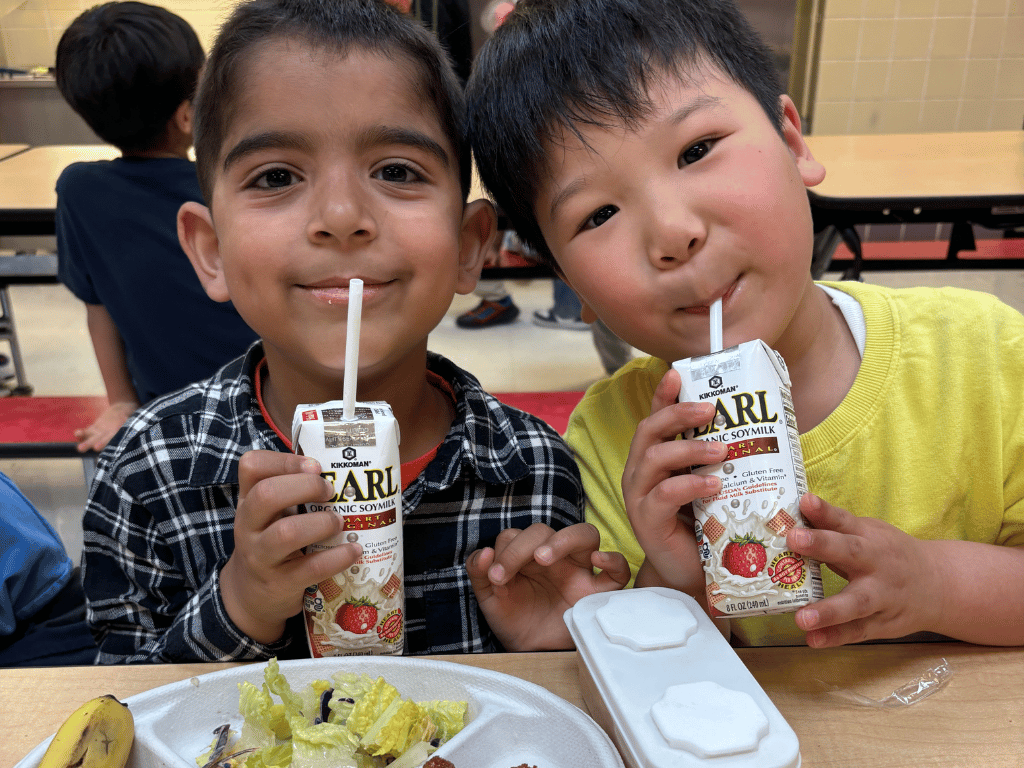
New York City has lowered its milk-related emissions in schools by 17% through a pilot that offered soy milk on the lunch line, which is set to expand to more institutions this fall.
Soy milk is helping drive schools’ sustainability efforts in New York City.
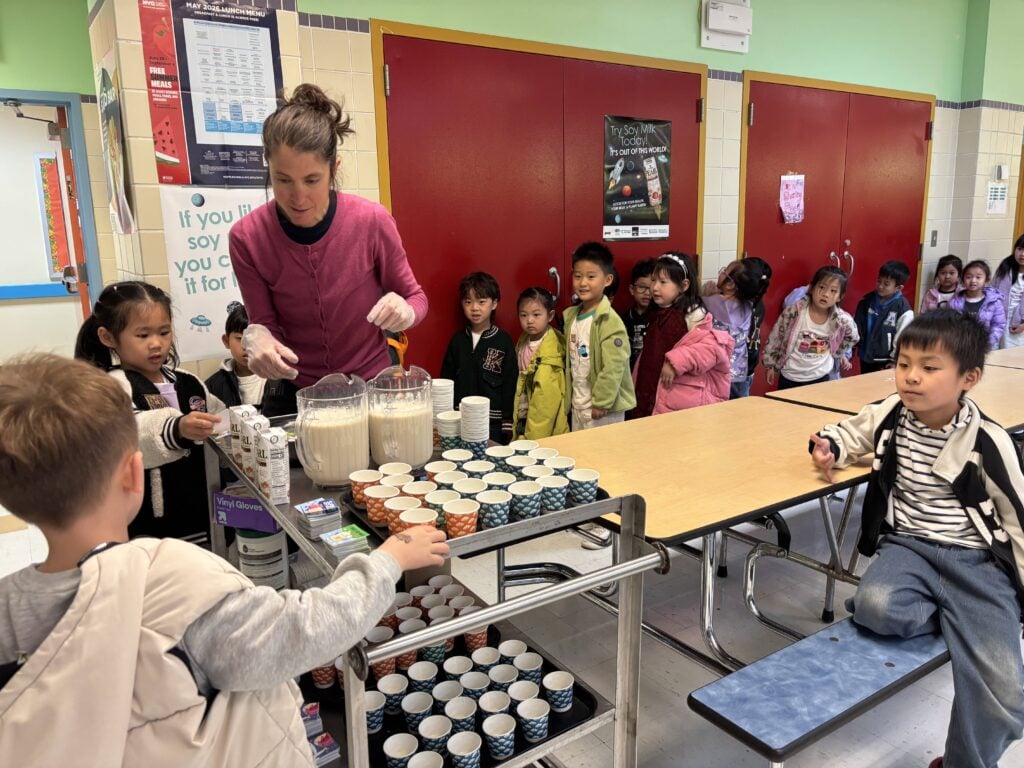
In a first-of-a-kind pilot launched by the Office of Food & Nutrition Services and the Mayor’s Office of Food Policy in May, five schools offered organic soy milk on the lunch line.
The trial was carried out by the Plant Powered School Meals Coalition, and resulted in expanded student choice, strong overall demand for milk and plant-based alternatives, and a lower food climate footprint.
New York City has been one of the first to take advantage of a recent change in federal law that allows schools to offer nutritionally equivalent non-dairy milk to any student without a doctor’s note.
“We commend New York City for its leadership in building a school food programme that is better for students and the planet. These results show that expanding plant-based offerings is a triple win for nutritional equity, student choice, and climate change,” said Chloë Waterman, deputy director at Friends of the Earth.
The organisation was part of the Plant Powered School Meals Coalition, alongside Chilis on Wheels, the Coalition for Healthy School Food, and the Physicians Committee for Responsible Medicine (PCRM).
Soy milk pilot lowers emissions by 17% despite hike in consumption
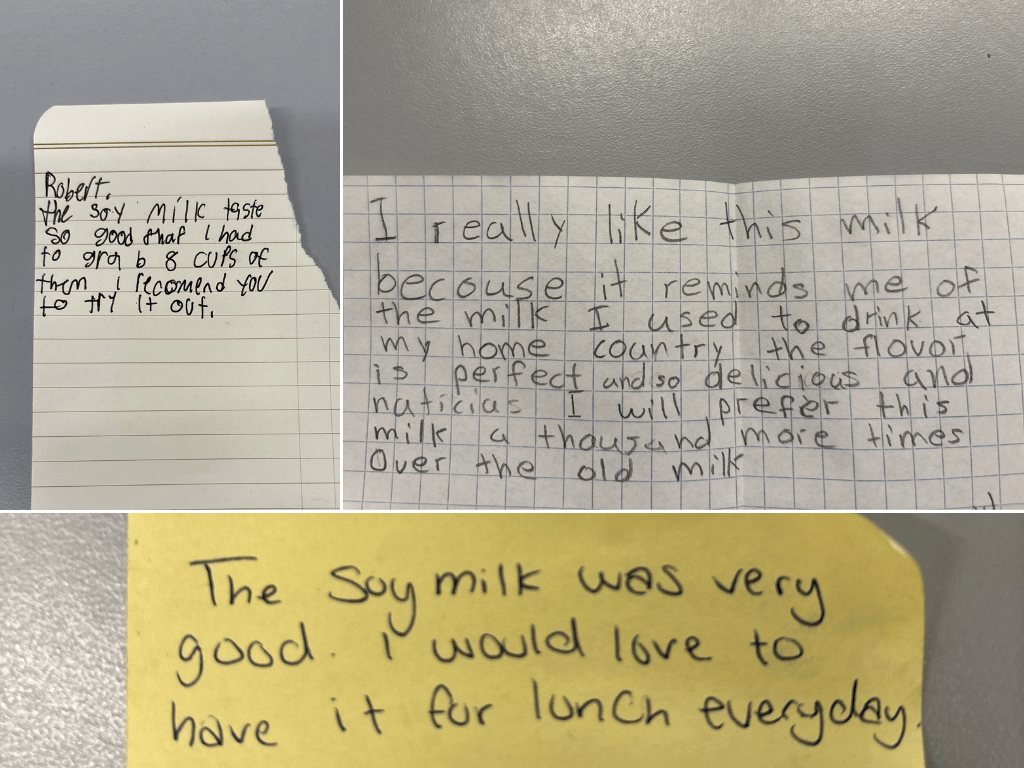
Mayor Zohran Mamdani’s administration launched the pilot in five schools: Beacon High School, Maspeth High School, PS 244, Vertex Partnership Academies, and PS 369.
Among the three schools with baseline data, average milk selection increased by 18.6%, or about 126 additional servings per day. But despite the higher consumption of milk, emissions from these drinks fell by 17.4% on average.
In fact, across the five pilot schools, 35.6% of the milk selected by students was soy milk. And this shift substantially reduced the climate impact of each serving, with greenhouse gas emissions per 100 milk servings falling by 30.4%.
This is because soy milk is far more environmentally superior than dairy. Research has revealed that the former generates less than a third of the greenhouse gases produced by the latter, while using 93% less land and 96% less water.
Besides the climate wins, the plant-based dairy alternative also offers some nutritional benefits. The soy milk used in the trial, produced by Kikkoman and sold under the Pearl brand, contains 8g of protein per 240ml carton (the same as cow’s milk) and offers an equivalent amount of calcium per serving. And unlike dairy, it also provides 2g of fibre and zero saturated fat.
“We were really excited to participate in the pilot in the spring. More than half of our students chose soy milk during the time it was available,” said Bob Groff, principal of the PS 244 elementary school in Queens. “We feel it is important for our students to be exposed to a variety of milk alternative options.”
The success of the programme has prompted Mamdani’s office to expand the soy milk pilot to 12 schools this fall.
Plant-forward policies slash New York City’s food emissions
The pilot came months after President Donald Trump signed the Whole Milk for Healthy Kids Act into law, which incorporated certain provisions from the Plant Powered School Meals Pilot Act.
This legislation authorised school districts to serve non-dairy milk to any student, and removed the requirement for a doctor’s note to document a disability, so that parents could directly request disability-based alternatives (including for lactose intolerance) and schools must follow them.
Lactose intolerance affects around half of the nearly 30 million children who benefit from the National School Lunch Programme. Lactose malabsorption rates are especially high among people of colour, with 65% of Hispanic and 75% of Black Americans suffering from the condition. This rises to 90% for Asian Americans and 95% for Native Americans.
“Offering soy milk at school gives students with lactose intolerance, dairy allergies, or a preference for plant-based options easier access to a nutritious and tasty choice,” said Emily Perryman, a registered dietitian for PCRM. “We look forward to continued partnership with the New York City Office of Food & Nutrition Services to highlight soy milk as a healthy substitute for dairy.”
The emissions wins from the soy milk trial build on broader climate progress for school food in New York City. New data shows that the city reduced the carbon footprint of school meals by 59% between 2019 and 2025, with the associated land use down by 71% and water footprint by 40%, driven largely by plant-forward menus.
It’s not just schools: the city government’s overall food emissions fell by 36% in this period, surpassing its 33% reduction target for 2030 well ahead of time. This was fuelled by a hike in purchases of plant-based proteins like legumes, nuts and seeds by 130% and fruits and vegetables by 46%, alongside decreases of 21% and 67% for dairy products and ruminant meats, respectively.
New York City has eliminated all processed meat and increased the share of minimally processed plant proteins used in meals and snacks at 11 of its agencies. And last year, it launched the Plant-Powered Carbon Challenge, helping partners like Columbia University, The Rockefeller Foundation, Aramark, and the US Open track emissions and apply best practices in designing plant-forward menus.