

Biotech Open Platform: Danone, Michelin & Co Open €20M Precision Fermentation Facility

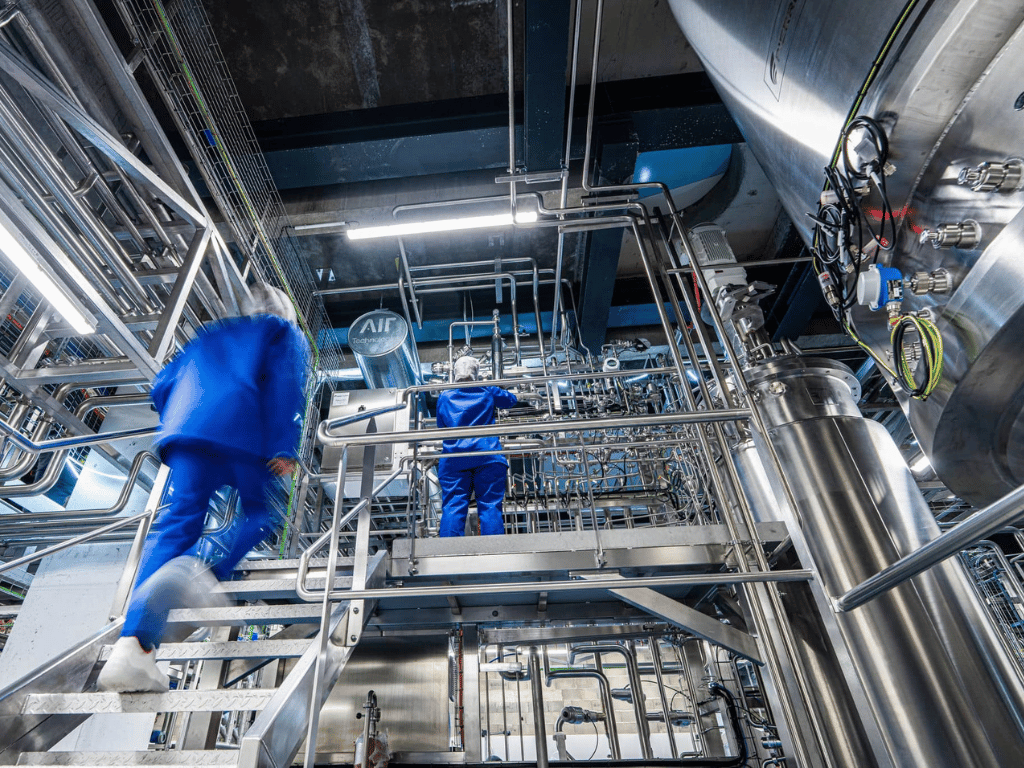
France’s Biotech Open Platform, established by Danone, Michelin and others with over €20M in initial funding, has opened an advanced fermentation facility to help companies scale up to industrial production.
Two years after its creation, France’s Biotech Open Platform has opened an industrial-scale facility to help advanced fermentation companies move through the “valley of death” between lab breakthroughs and commercialisation.
The platform was established by French dairy giant Danone, tyre manufacturer Michelin, investment bank Crédit Agricole, tech transfer specialist Clermont Auvergne Innovation, biotech pioneer Greentech, and US biomanufacturer DMC Biotechnologies, which collectively poured in more than €20M in funding for its phase.
Spanning 5,000 sq m, it’s located at the Sustainable Materials Center within the Michelin Innovation Park Cataroux in Clermont-Ferrand, boasting a fermentation capacity of 15 cubic metres.
The facility supports startups, industrial companies and R&D organisations in developing, optimising, scaling up and validating fermentation-based processes from lab scale to “conditions representative of industrial production”. It aims to strengthen Europe’s industrial competitiveness, and has welcomed its first advanced fermentation projects.
“Biotechnology will play a major role in the sustainable transformation of many sectors. By providing companies with an open infrastructure and leading expertise, we want to accelerate the transition from research to industry,” said Florent Menegaux, chairman of the Michelin Group.
“For Michelin, this is an opportunity to explore new ways of replacing certain molecules currently derived from petrochemicals with more sustainable, bio-based alternatives. More broadly, this platform aims to become a catalyst for innovation in support of European competitiveness.”
Biotech Open Platform targets proteins, biomaterials and more
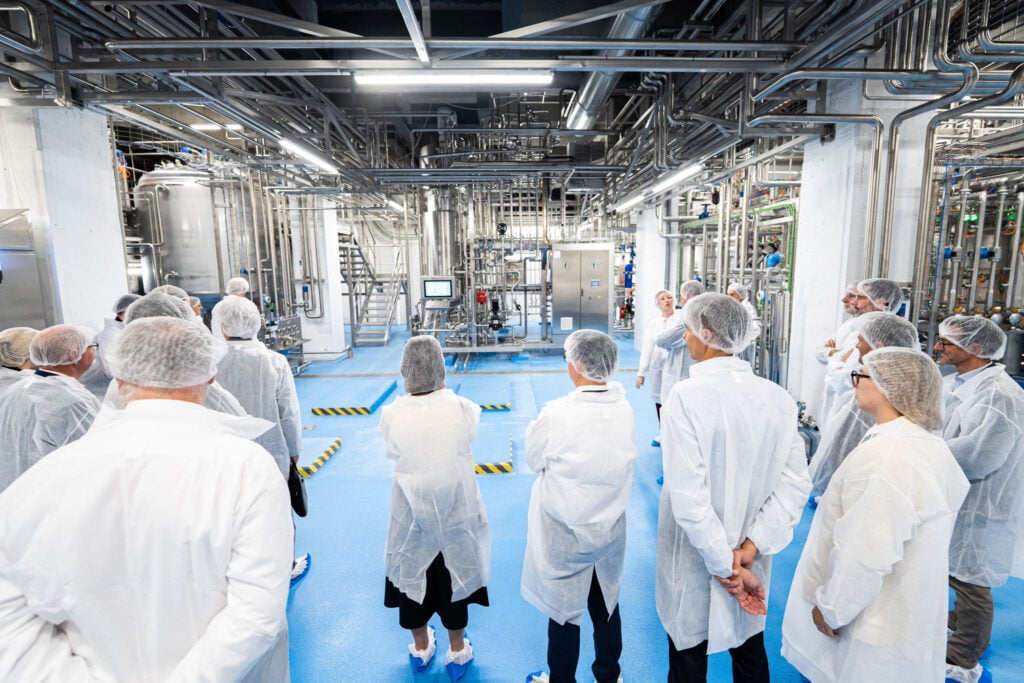
Biotech Open Platform’s new facility aims to provide a solution to companies moving away from fossil-fuel-derived ingredients, noting how industrial biotech and advanced fermentation processes are opening up new opportunities to produce molecules, ingredients and materials from renewable resources.
In an interview with Green Queen after announcing the platform in 2024, a Danone spokesperson explained the white biotech focus: “White biotechnologies encompass a wide range of industries, such as the food and chemical industries, that produce raw materials used in many sectors such as materials, agri-food and agronomy.”
Advanced fermentation, where precision fermentation is one of the main approaches, entails the use of microbes as “micro-factories” capable of producing molecules of interest, such as proteins, enzymes, food ingredients, cosmetic actives and bio-based materials for industries spanning food and beverages, cosmetics, agriculture, chemicals, and biomaterials.
“Biotech Open Platform was created to address a very concrete challenge in biotechnology: how to move from a promising process at laboratory scale to a robust process that can work at industrial scale. The infrastructure is important, but equipment alone is not enough,” said Khadidja Romari, the platform’s CEO.
“Scale-up requires experience, technical know-how and the ability to solve the issues that appear as the process moves from one scale to another. Confidentiality and protection of intellectual property are also essential for the companies we work with. Our role is to help them move faster and more securely towards industrialisation.”
The platform offers integrated fermentation, purification and bioprocess development capabilities, including the aforementioned 15-cubic-metre line, alongside semi-industrial purification systems.
Beyond technical process validation, it enables the production of sufficient volumes to conduct application testing and support validation stages prior to commercial production, helping companies move from 10g to one tonne of ingredients.
Danone’s fermentation pedigree a boon for new platform
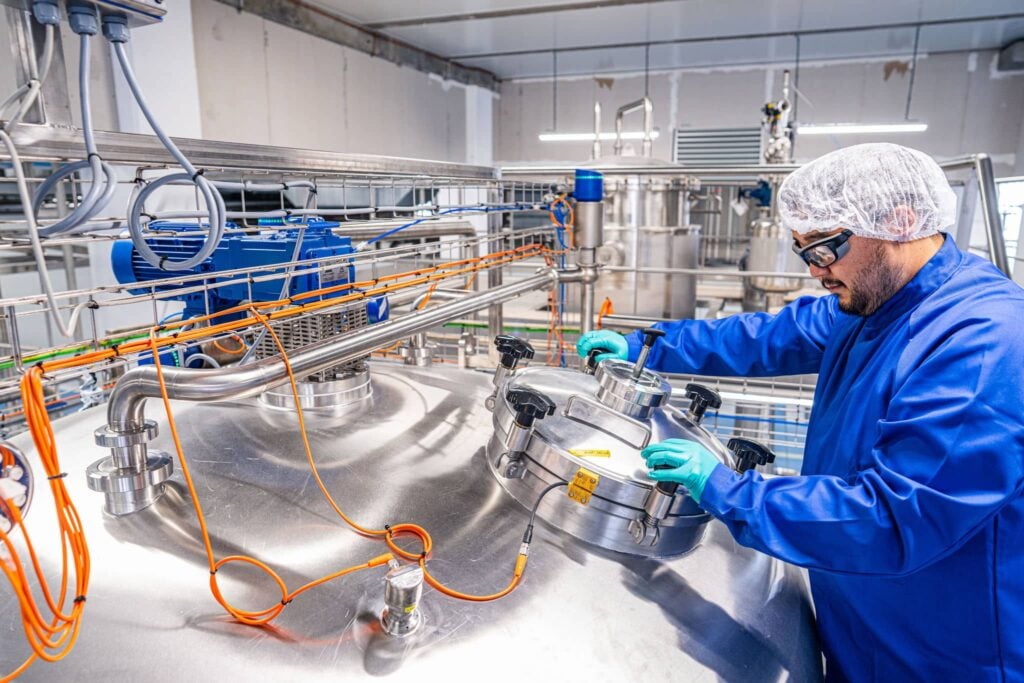
The new platform has its own dedicated teams and infrastructure, ensuring strict project confidentiality and intellectual property protection. It has also received financial support from the EU through the European Regional Development Fund, managed by the Auvergne-Rhône-Alpes Region, as well as from Clermont Auvergne Métropole.
As countries globally boost their biomanufacturing capabilities, Biotech Open Platform aims to strengthen Europe’s industrial capacity to foster the development of new value chains based on renewable resources and turn scientific innovations into tangible solutions.
This is something recognised by the European Commission’s new strategy for food research and innovation, too, which plans to build a competitive and resilient agrifood system and identifies a need to address the region’s lack of industrial fermentation capacity.
It highlights the importance of building production plants to expand advanced fermentation technologies like precision fermentation, noting that while the EU is strong in financing early-stage innovation, scaling up sustainable foods needs more financial support to help startups overcome the “second valley of death” from pilot to commercial-scale production.
This is why Danone’s involvement in Biotech Open Platform is crucial. The owner of Activia, Actimel, Alpro, Oikos, Silk and YoPro has one of the largest ferment libraries in the world, with 4,000 strains identified. It is the only major dairy producer aligned with the Global Methane Pledge’s target to reduce methane emissions by 30% by the end of the decade.
It’s already involved in the precision fermentation industry as an investor, having backed Israeli startup Imagindairy and French player Standing Ovation, both of which use the tech to produce dairy proteins like whey and casein, respectively.
“We are strengthening a critical link in Europe’s biotechnology ecosystem by accelerating the industrial scale-up of laboratory innovations,” said Danone CEO Antoine de Saint-Affrique. “Biotech Open Platform demonstrates the value of shared infrastructure and long-term partnerships in enhancing European competitiveness.”