

Beyond Meat, Quorn & Food Industry Urge EU to Reject Extension of Plant-Based Labelling Ban

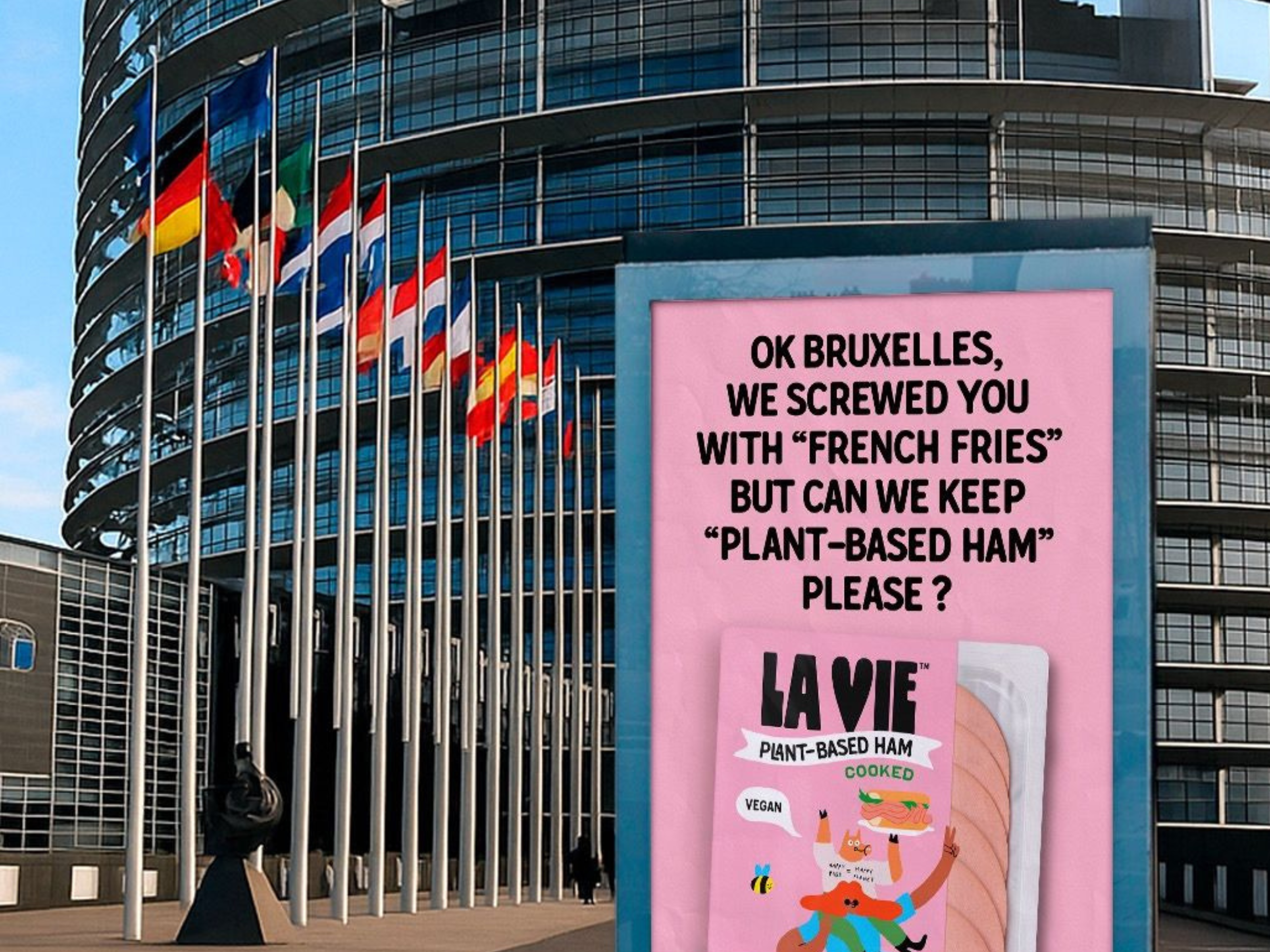
The EU’s ‘veggie burger’ labelling ban will undercut its protein strategy, warn a group of 28 food organisations and companies, asking lawmakers to reject efforts to expand restrictions.
As negotiators convene for the European Parliament’s latest plenary session, the food industry is sounding the alarm over a proposed extension of the labelling ban on plant-based meat products.
The EU voted in favour of an amendment to the Common Market Organisation (CMO) regulation earlier this year that prohibited companies from using ‘meat’ and 31 other related terms on the packaging of meat alternatives.
The rule was published in the bloc’s official register in August, giving companies three years to comply. But days later, members from the European People’s Party, Patriots for Europe, and the European Conservatives and Reformists Group signed another set of amendments to the CMO, seeking to extend the ban to a broader set of words.
The EU Parliament’s agriculture committee will now hold technical meetings on the proposal, with a vote scheduled for December. The final plenary vote is set to take place in 2027. But a group of 20 food companies and trade groups have called on MEPs to reject further restrictions, arguing that the legislation undermines the goals of the EU’s Protein Plan.
The list of signatories includes plant-based leaders like Beyond Meat, Quorn, The Vegetarian Butcher Collective, Linda McCartney and Redefine Meat, and organisations such as EIT Food (an EU-backed think tank), the European Alliance for Plant-Based Foods (EAPF), and Plant-Based Foods Europe.
Rutger Rozendaal, CEO of the JBS-owned The Vegetarian Butcher Collective, said the extended ban risks creating unnecessary barriers for plant-based products without a clear consumer benefit.
“Consumers already understand terms such as ‘burger’ and ‘sausage’ in the context of plant-based food,” he pointed out. “We should focus on giving consumers more choice, not making that choice harder to navigate.”
Why the EU’s veggie burger ban contradicts its protein strategy
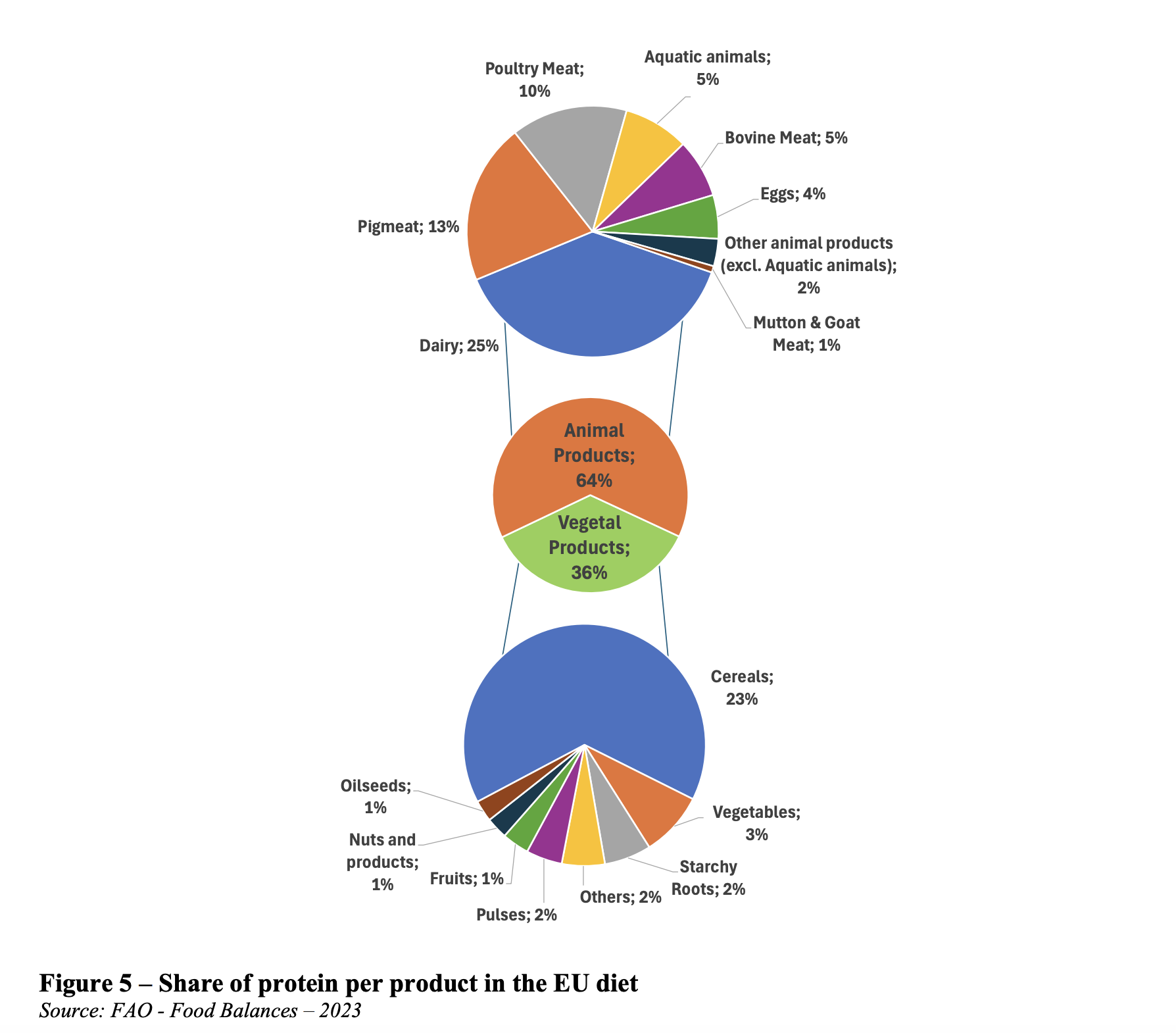
The joint statement references the European Commission’s recently released Protein Plan, which sets a framework for scaling up plant protein production to reduce the region’s dependency on imports, which the EU said would support its food security and energy objectives, create new opportunities for farmers and rural areas, and advance its climate neutrality goal for 2050.
The region is self-sufficient in low-protein feed, but imports 74% of its high-protein feed, such as oilseeds and protein crops, creating vulnerability to global market fluctuations and supply chain disruptions. It has set a target to increase the share of domestically produced proteins from 25.8% last year to 35% by 2035 (though this is focused on animal feed, rather than human food applications).
This strategy followed a brutal summer, which was Europe’s hottest on record. The extreme heat caused a wave of droughts that pushed farmers to look for more resilient options, including crops that fix their own nitrogen and rotations that spread the risk. Protein crops tick these boxes, but only if there’s a market for them, the organisations argue.
They note that plant-based foods are essential to the EU’s protein strategy, since they create higher-value markets for EU-grown pulses, cereals and other protein crops, anchor processing and ingredient manufacturing domestically, and give farmers diversifying their crops a growing outlet for their harvests.
“Rising demand for plant-based foods is, in practice, rising demand for European plant protein. Suppressing that demand works against the very transition the Action Plan seeks to accelerate,” the letter states.
It lists several reasons why the labelling restrictions go against the EU’s goals. For starters, they hinder competitiveness by forcing producers into costly rebranding and marketing and stifle consumer demand for plant-based foods, continuing the EU’s reliance on imports. Not to mention that weaker competition keeps prices from falling, even as consumers continue to feel the cost-of-living squeeze.
People who support the ban often cite consumer confusion as a reason, even though multiple studies have shown that people can easily tell a plant-based product doesn’t contain meat. “Further restrictions would address a problem that does not exist, while raising real barriers to choice and innovation and affecting the long-term development of the plant protein sector in the EU,” the organisations write.
“It is contradictory for the EU to launch an Action Plan to expand the production and consumption of plant protein while, at the same time, hampering its demand. A credible approach requires policy that pulls in one direction,” they add.
Naming restrictions cost companies hundreds of millions of euros
“You can’t launch a plan to grow plant protein on one day and then tie the hands of the manufacturers that drive plant protein demand with their products. Policy needs to pull in one direction. Especially after this summer, farmers need diversified opportunities and new markets, not fewer. Naming restrictions would weaken demand at exactly the wrong moment,” said EAPF secretary-general Thomas Schobesberger.
Companies have repeatedly warned of the financial impact these restrictions will have on their businesses, thanks to the additional red tape of rebranding and renaming products across the EU’s 24 official languages.
“We estimate that the naming restrictions could cause around €250M in economic damage in Germany alone,” said Fabio Ziemßen, chairman of the Berlin-based Federal Association for Alternative Protein Sources (BalPro).
“And this figure does not yet account for the further restrictions currently being discussed. The more extensive the ban becomes, the greater the economic burden on companies will be, with resources being diverted from innovation and investment into costly regulatory adjustments.”
It’s why the companies and trade groups behind the letter are imploring EU policymakers to strike down attempts to extend the labelling ban in the full revision of the CMO regulation, as well as any future file.
They should also ensure coherence between labelling laws and the protein strategy, so that the former supports – not suppresses – demand for European plant proteins. “At the very least, make sure proposals are accompanied by an impact assessment,” the letter reads.
Lawmakers are being asked to deliver the demand-side goals of the Protein Plan by implementing measures such as fair naming, VAT parity between plant-based and animal proteins, and sustainable public procurement, and also protecting the single market with consistent, workable rules across the region.
Finally, the EU should create a framework for competition and promote innovation to enable plant-based producers to compete on a level playing field.
“The young and burgeoning plant-based food industry needs planning certainty and a reliable regulatory framework. Introducing new naming restrictions undermines precisely this prerequisite for the plant-based sector to thrive, create opportunities for farmers, jobs and growth,” said Schobesberger.