

Dutch Consortium to Advance Continuous Precision Fermentation for Alternative Proteins

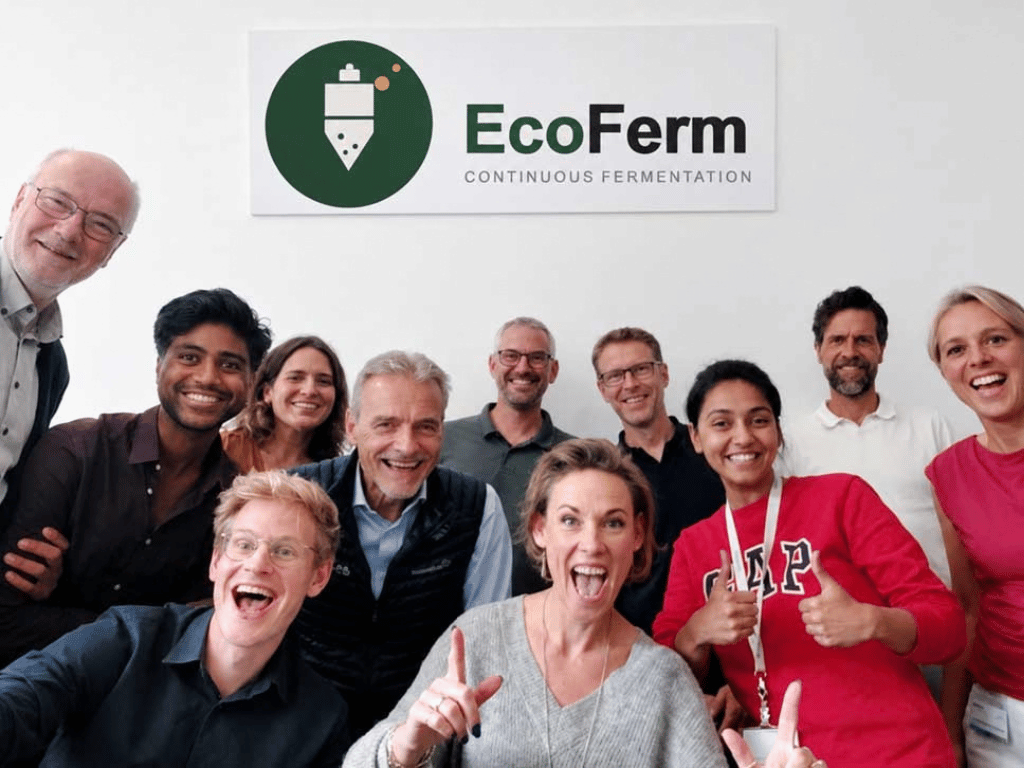
A Dutch public-private partnership has led to the formation of the EcoFerm Consortium, which aims to develop continuous precision fermentation technologies to scale up alternative proteins economically.
Cost-effective scale-up is the main bottleneck for the alternative protein industry, which is why it’s the focus of a new public-private consortium in the Netherlands.
The EcoFerm Consortium, an acronym for Efficient Continuous Fermentation for Alternative Proteins, is a two-year project funded by non-profit TKI Agri & Food, focusing on developing continuous fermentation technologies that can significantly boost the productivity and economic viability of precision-fermented proteins.
The project partners include contract manufacturer Nizo Food Research and its Biotechnology Fermentation Factory (BFF), cost-advantaged fermentation specialist Dab.bio, precision fermentation startup Vivici, ingredients giant DSM-Firmenich, and the Van Hall Larenstein University of Applied Sciences.
Their ultimate goal is to demonstrate a novel continuous fermentation approach that combines in-situ biomass retention with controlled cell agglomeration to create a scalable production platform for high-value alternative proteins.
Overhauling existing precision fermentation processes
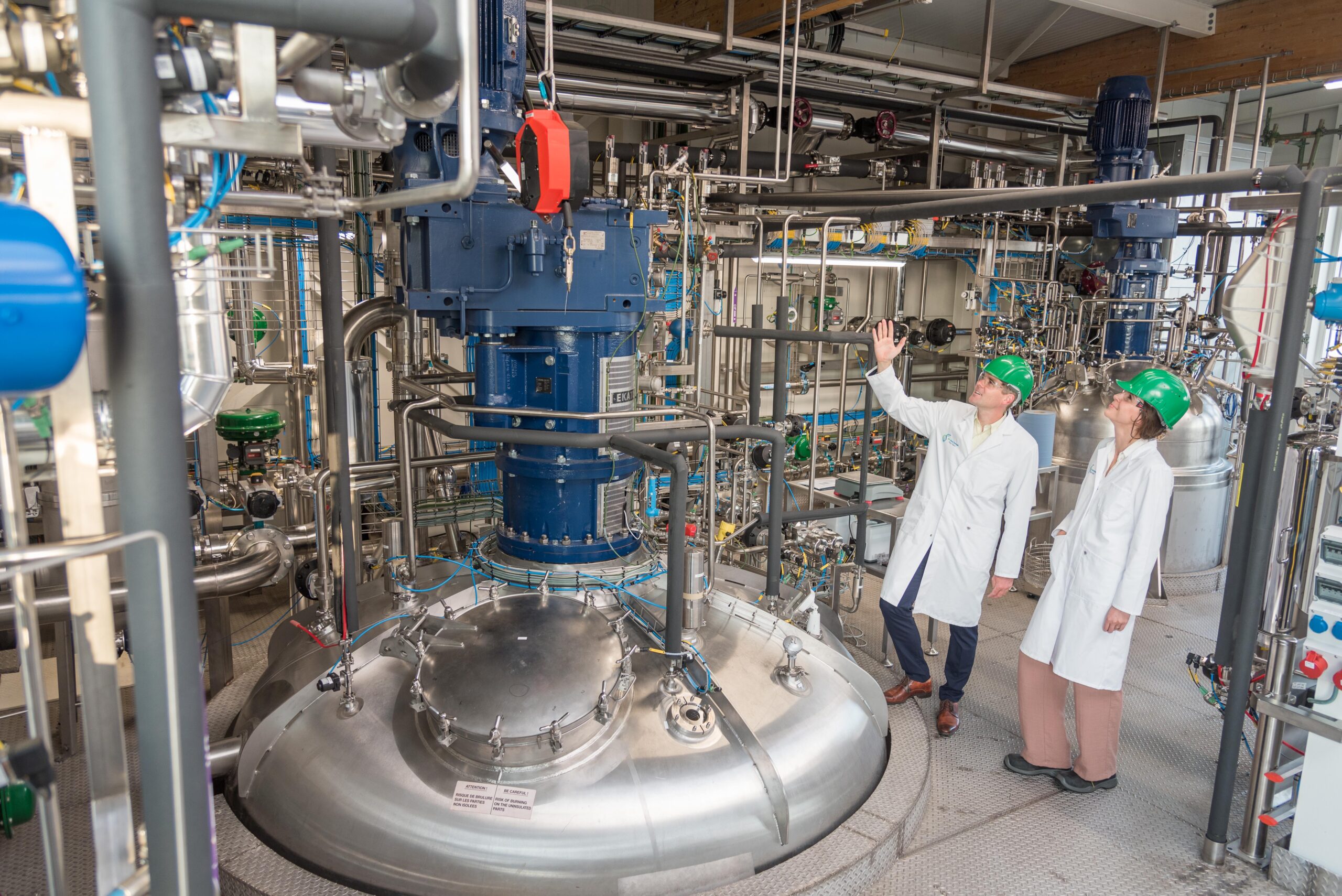
Precision fermentation involves inserting a DNA sequence into microbes to teach them to produce the desired molecules when fermented. It can enable companies to produce animal proteins like whey, casein and ovalbumin without the animal, leading to a much lower climate footprint and more stable supplies.
But commercial adoption remains challenging due to the high costs and resource requirements of current fed-batch manufacturing processes, which are stop-and-start methods that require the tank to be emptied and cleaned between runs.
EcoFerm is instead focused on a continuous production model where microbes remain in the bioreactor and the finished product is harvested without interruptions. This can enhance yields and lower costs by maximising vessel filling and boosting bioreactor productivity. It also reduces the operational downtime related to emptying, cleaning, filling, sterilising, and restarting vessels.
Maintaining stable and productive microbial populations over extended periods further improves carbon yield and cuts downstream processing costs. However, conventional continuous fermentation systems, like chemostats, have their limitations.
Productive microbes and nutrients continuously leave the bioreactor with the process stream, and long production runs face contamination risks, genetic instability, and process performance losses. It’s why one of EcoFerm’s core focuses is to implement controlled cell agglomeration to retain biomass in situ, which enables microbial cells to remain within the tank without energy-intensive separation technologies (like membranes or centrifuges).
The project will use precision-fermented proteins such as beta-lactoglobulin as representative demonstration cases to validate the technology and generate relevant insights for a broader range of ingredients.
Some of the project partners have already been working together for a while. Vivici, for instance, is backed by DSM-Firmenich and has a dairy protein application lab at Nizo Food Research. The firm’s animal-free beta-lactoglobulin protein has been cleared for sale in the US, and it’s working with co-manufacturers in Europe and the US to produce its whey proteins on a commercial scale.
EcoFerm Consortium looks to boost Europe’s competitiveness
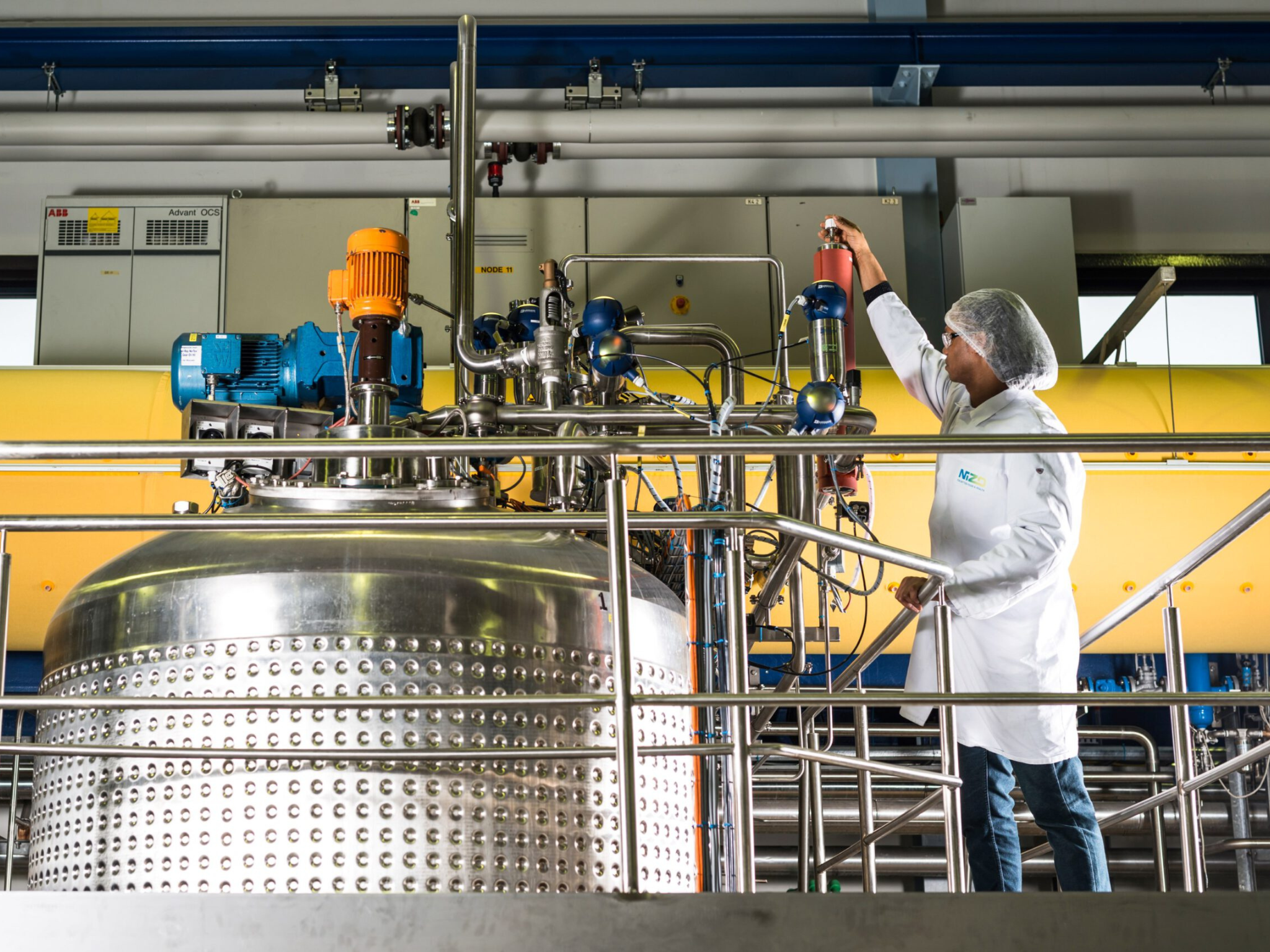
During its two-year run, the EcoFerm Consortium will investigate the biological, engineering, and operational parameters needed for successful continuous fermentation. It will focus on controlling and maintaining stable agglomeration behaviour, optimising the performance of Dab.bio’s Fast reactor, understanding process robustness, and establishing strategies for industrial scale-up.
The group intends to bring together experts from across the value chain to develop practical solutions that can accelerate the transition from lab-scale innovation to commercial manufacturing.
“Precision fermentation has enormous potential to contribute to a more sustainable food system, but further process innovation is needed to improve production economics,” said Robyn Eijlander, project manager at Nizo Food Research and the BFF.
“EcoFerm focuses on one of the most promising opportunities in the sector: combining continuous fermentation with efficient biomass retention to achieve higher productivity while reducing resource consumption and environmental impact.”
The project’s outcomes are expected to support the alternative protein sector by providing new technological capabilities for large-scale manufacturing. It’s also hoping to establish a platform technology that can be applied across a range of precision-fermented products.
By lowering costs and improving sustainability, the consortium is set to boost the competitiveness of the European biotech and food innovation system as well as support the protein transition. It aligns with the European Commission’s new strategy for food research and innovation, which plans to build a competitive agrifood system and outlines the need for building facilities to expand technologies like precision fermentation.
“Continuous fermentation is widely viewed as a critical next step for the maturation of precision fermentation,” said Dab.bio CEO Eric van der Meer. “Through this collaborative effort, we aim to generate the knowledge and demonstrate technological solutions needed to make continuous production a practical reality for the alternative protein industry.”