

France’s Edonia Nets $16.8M to Ramp Up Production of Ground Spirulina Protein

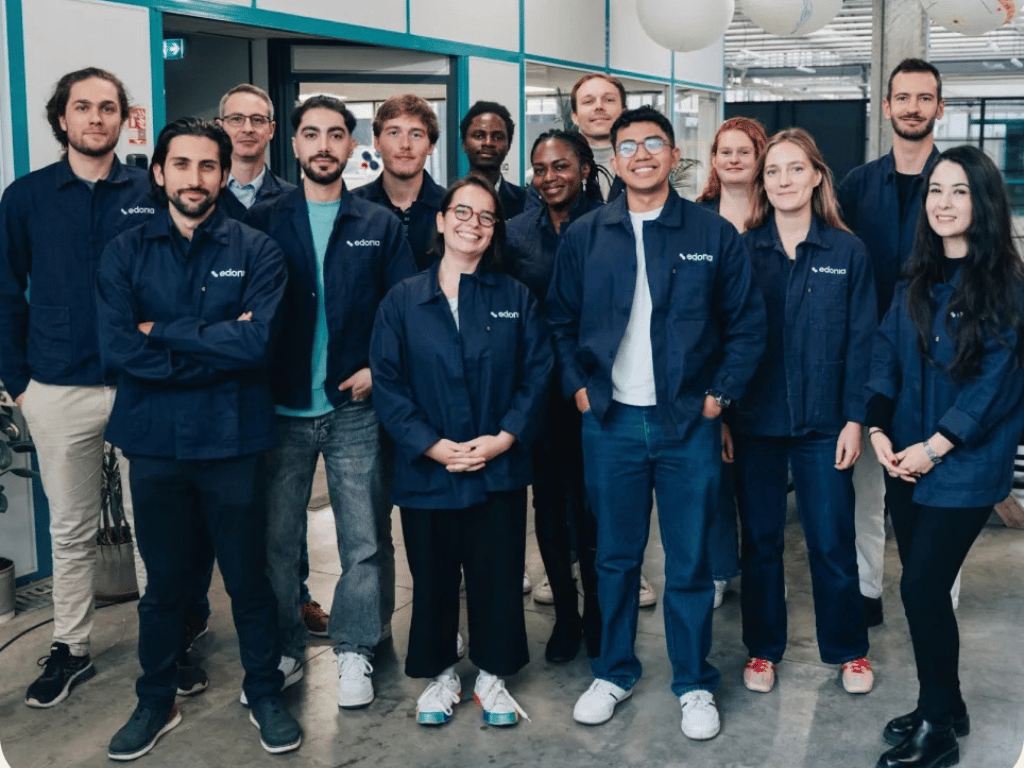
French food tech startup Edonia has raised €15M ($16.8M) to open an industrial facility for its minimally processed spirulina protein mince, after securing €30M in pre-orders.
Paris-based microalgae innovator Edonia has closed a €15M ($16.8M) funding round to fund the industrial scale-up of its protein-rich spirulina mince.
The investment was led by Swen Blue Ocean 2, Asterion Ventures and EIT Food (an EU-backed accelerator), alongside non-dilutive funding from state-owned bank Bpifrance under the France 2030 initiative and bank loans.
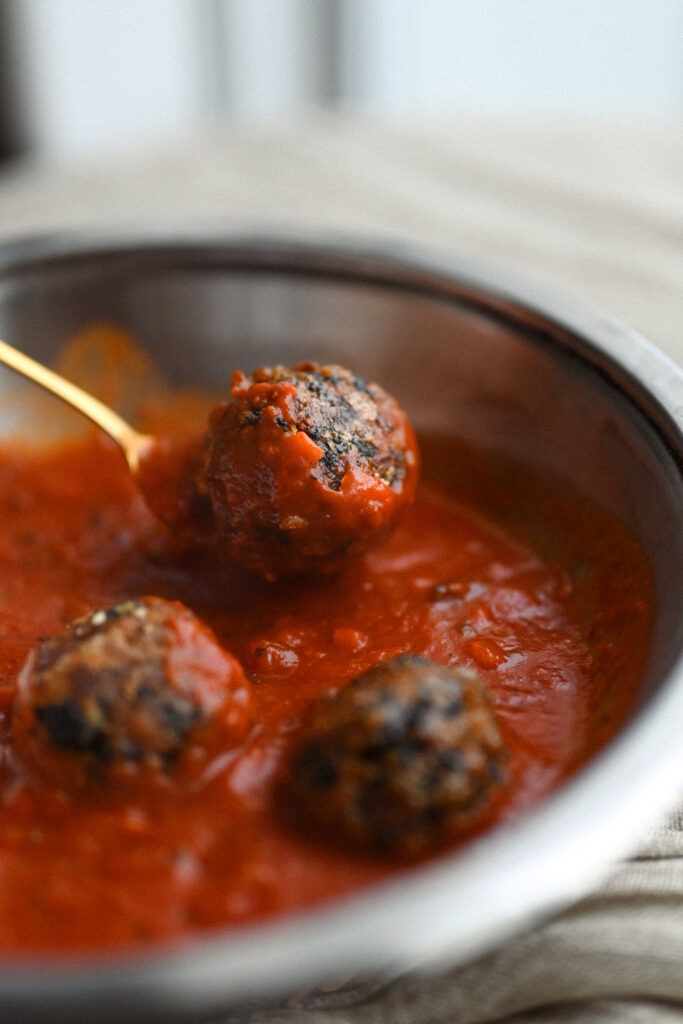
The company’s flagship product, Edo, is a minimally processed, soft-textured brown mince made from just two ingredients – spirulina and oil – and containing as much protein as beef with a climate footprint much smaller than soy.
Edonia will use the capital to open a new industrial-scale plant at an existing facility owned by canned tuna producer Maison Chancerelle in Brittany, which is set to open within a year. It will also expand its B2B sales model in Europe, the US, and Japan, having secured €30M in pre-orders for its microalgae protein from 20 leading industry players.
“Today, nutritious, tasty, inexpensive, good-for-the-planet food options are limited, and consumers are stuck needing to compromise on either the environment, health, or taste, depending on what they decide to choose as a protein source,” said Julie Peyrache, investment director at Swen Blue Ocean 2.
“That is why we are delighted to support Edonia, whose innovative microalgae-based ingredients meet all of these demands and could drastically improve the health and sustainability of our food supply.”
A complete protein with an ultra-low climate footprint
Spirulina has been around for 3.5 billion years, and has made its name in the modern wellness industry as a low-carbon superfood. But its use in diets remains limited, primarily due to its sensory properties, which have hindered its integration into recipes by food manufacturers and restaurants.
Edonia, founded in 2023 by Hugo Valentin, Pierre Mignon and Nicolas Irlinger, leverages its patented Edonization tech to overcome this bottleneck. The process involves cooking spirulina in oil at a precise temperature, changing its colour, taste and texture to turn it into a fluffy grain with a natural umami flavour and none of the typical off-notes of algae.
“We achieve this without using any additives: no texturising agents, no flavours. Unlike most plant-based approaches, we don’t use conventional fermentation, extrusion, or enzymatic treatments. Instead, we developed a proprietary clean process with AgroParisTech’s research lab, already scaled up at our pilot plant in France,” Valentin told Green Queen last year.
The process gives Edo a tender texture with a bite similar to meat. But the ingredient is being marketed as a standalone protein that can be used in dishes like stuffed tomatoes, ravioli, curries, salads, pies, soups, blended meat, and even chocolate cakes.
It has 27g of protein per 100g, with all essential amino acids and a PDCAAS score of 0.97. It boasts 20mg of bioavailable iron per 100g, much higher than beef or soy, and an environmental footprint of 1.95kg of CO2e, which is 27 times lower than beef and 2.5 times smaller than soy mince for the same amount of protein.
The product enables companies to offer clean-label protein options at a time when ultra-processed foods (UPFs) like meat alternatives are falling out of favour. Research shows that 76% of people are willing to pay more for clean-label products, and 74% of EU citizens find simple ingredients an essential part of purchasing decisions.
Edonia finds success with foodservice and retail partnerships
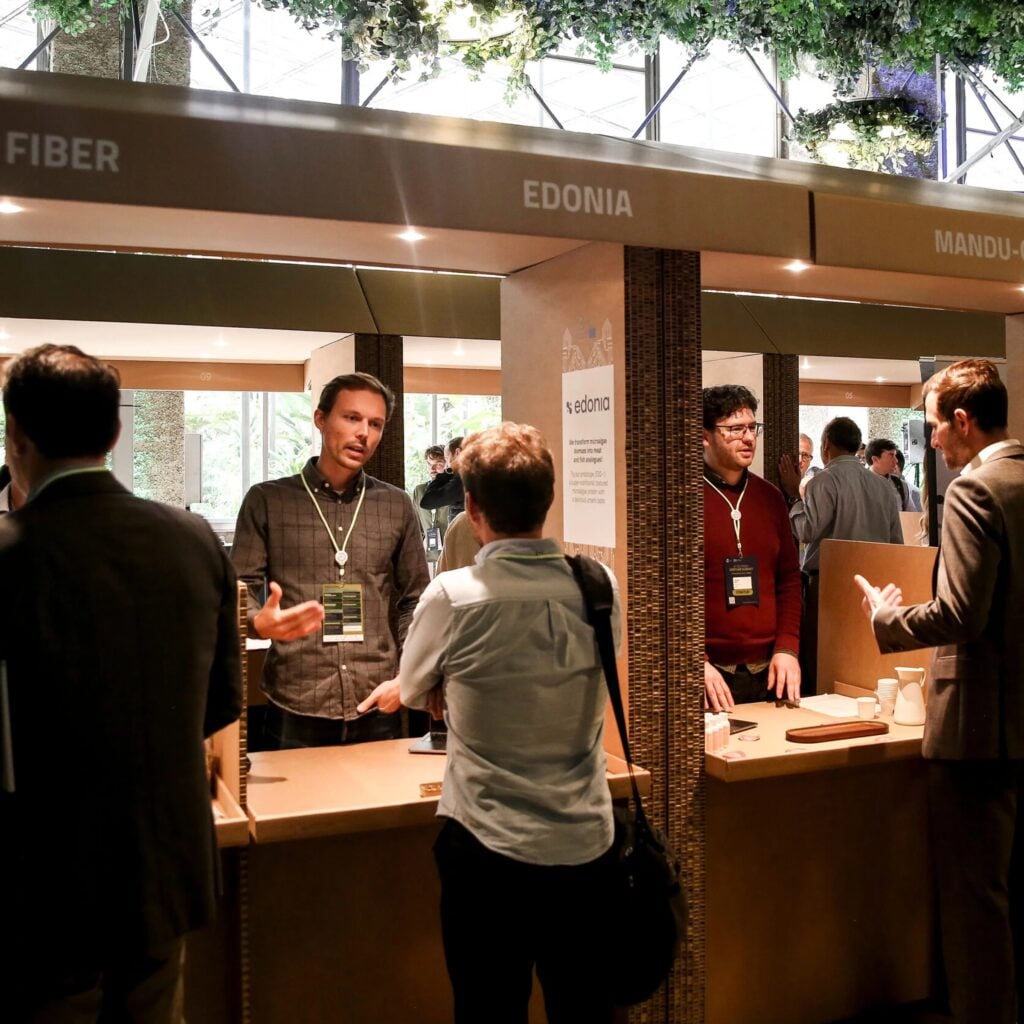
Edonia began industrialising its process in 2024, with a €2M funding round that funded the development of its pilot plant in Agen. The startup then moved from lab work to production, setting up its own supply chain and fulfilling the first orders for its partners.
These include global catering giant Newrest and French nutrition company Aliive. Newrest, which has a presence in 50 countries, began offering Edo in its dishes in 2025, serving thousands of meals with the ingredient each month across its catering sites in France.
In the retail channel, Aliive incorporated Edo into two of the ready meals sold by its weight management scheme Dietbon, which saw 40% of consumers switch from meat recipes to the ones containing the spirulina protein, with matching satisfaction scores.
“We firmly believe that microalgae can feed the world in a different way, and our successful step from pilot to large-scale production proves that there are applications far beyond nutraceuticals, particularly in the ready-to-use protein ingredients market,” said Valentin, who is the company’s CEO.
“Edonia is developing the new category of nutritious, minimally processed whole-food plant-based proteins. These essential and versatile ingredients can be used by industrial manufacturers on a large scale and at competitive prices,” he added.
“We’ve proven that a whole-food protein can outperform the animal on nutrition and compete on price, at real volume, with real clients. This funding gives us the resources to turn our promise into verified proof.”