

Infinite Roots Adds Umami Block to Mushroom-Based Protein Lineup in Germany

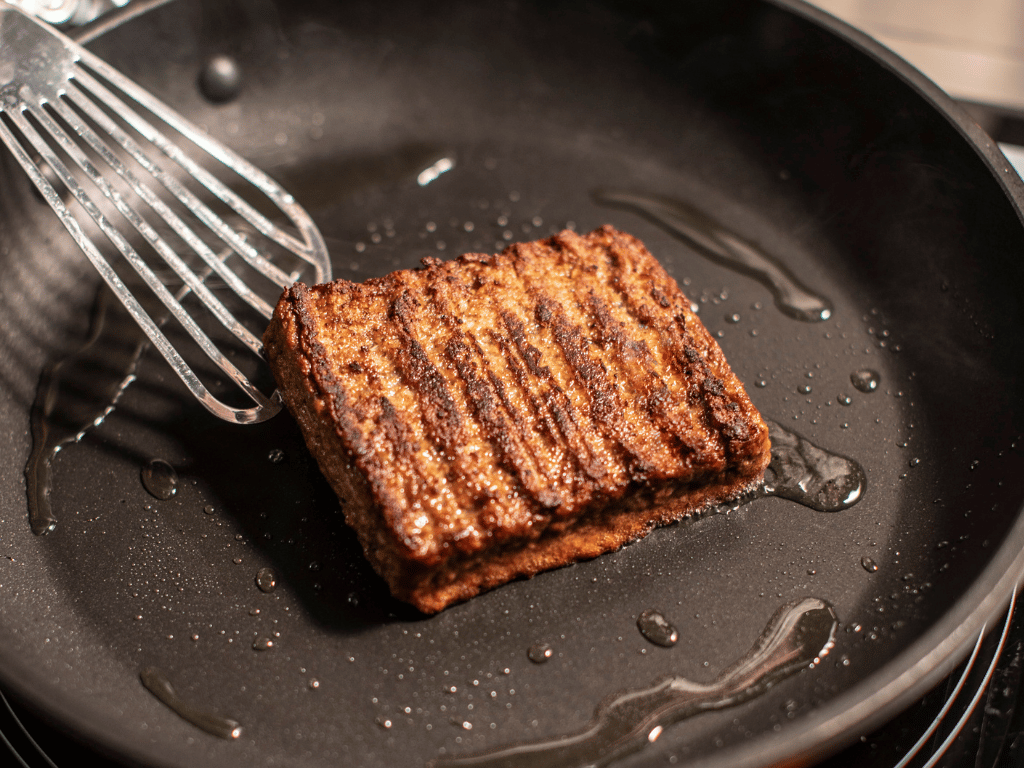
German food tech startup Infinite Roots has launched a mushroom-based Umami Block featuring 18g of protein per 100g under its MushRoots brand, just as it simultaneously advances its mycelium platform.
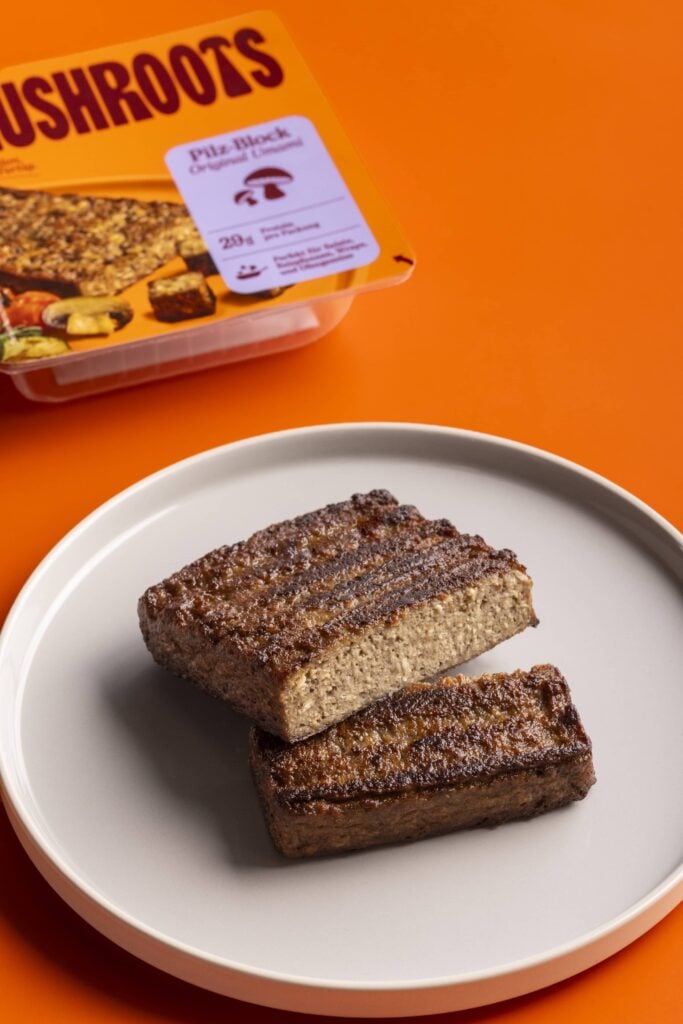
Hamburg-based fermentation firm Infinite Roots has become the latest alternative protein player to champion whole-food proteins over meat mimics, unveiling an Umami Block made from button mushrooms.
The startup’s newest format has joined the mushroom-based meatballs, mince and burgers sold under the MushRoots brand, available at more than 1,000 Rewe stores across Germany and Austria.
“The Block follows a similar approach to our first three products: mushrooms as the main ingredient, combined with wheat protein and familiar cooking ingredients,” Infinite Roots co-founder and CEO Mazen Rizk tells Green Queen.
“It delivers the natural savoury umami of mushrooms, with a juicy texture and a satisfying bite. Already seasoned, it can be sliced for sandwiches, diced into curries or pan-fried as a salad topping.”
Infinite Roots eyes mushrooms as a ‘category in their own right’
Founded in 2018, Infinite Roots is building out a platform centred around both mushrooms and mycelium (the root-like structure of edible mushrooms) through fermentation.
The MushRoots lineup is focused on the former. The meatballs, mince and burger have been available at Rewe since January, containing 43-73% of mushrooms and delivering 15-17g of protein and 2-3g of fibre per 100g.
“The MushRoots Umami Block is made from button mushrooms, which we season and shape into a versatile block. It does not involve mycelium fermentation, but draws on the expertise in flavour and texture we have gained through our fermentation research,” says Rizk.
The product is made up of 45% mushrooms, combined with wheat and potato proteins, rapeseed and sunflower oils, wheat flour, onions, starch, spices, mushroom and spice extracts, psyllium husk, buffered vinegar, dextrose, natural flavours, salt, and lemon juice concentrate. It offers 18g of protein, 3g of fibre, and 11g of fat (less than 1g of which is saturated) per 100g serving.
A swathe of alternative protein producers have diversified from meat analogues to embrace whole foods across Europe. In the UK, for instance, This has expanded its plant-based meat range with proteins like veg-led burgers, slices, and bites, a mushroom-based tofu alternative, and a chickpea tofu range with Omami.
Likewise, whole-cut vegan meat innovator Juicy Marbles has launched a veg-forward Umami Burger in the UK, and Paris-based meat alternative startup La Vie sells a range of tofu products in France and the UK.
It comes as consumers shift away from ultra-processed foods. In Germany, the largest market for plant-based meat in Europe, whole-food proteins like tofu, tempeh and seitan are a much smaller category, but their sales climbed by 29% last year, compared to a 0.2% rise for meat alternatives.
“Ingredients like mushrooms have their own appeal. Their natural umami and texture give us everything we need to create foods people choose for their taste,” Rizk says when asked why plant-based companies are going beyond meat. “With MushRoots, we want to establish mushrooms as a category in their own right.”
Mycelium technology remains a key priority for Infinite Roots
As it rolls out the new Umami Block, Infinite Roots is continuing to advance its mycelium platform. The company employs a submerged fermentation process (where microbial cells are grown in a liquid medium) to produce its mycelium, feeding edible mushroom strains on sidestreams like brewers’ spent grain, a beer industry byproduct.
After a couple of days, the mycelium is harvested and separated from the nutrient liquid. The protein is then mixed with natural seasonings and ready to be cooked.
Its tech spans the process from preparing fermentation feedstocks to cultivation and food development, and the choice of strain, nutrients and growing conditions influences the properties of the resulting biomass, such as its flavour and texture.
While Infinite Roots had self-determined its oyster mushroom mycelium as Generally Recognized as Safe (GRAS) in the US, it has since rescinded its evaluation request with the Food and Drug Administration, citing a need to update its safety dossier.
And in 2024, its struggles to obtain regulatory approval in the EU pushed it to diversify its market strategy. It teamed up with South Korean food giant Pulmuone to roll out mushroom-based meatballs and steaks under the latter’s Earth Diet line in the East Asian country.
“No novel food approval is required for the Umami Block. It uses conventional edible mushrooms and follows the food safety and labelling requirements for conventional foods,” Rizk confirms.
Infinite Roots has also been working with the Hamburg University of Technology to develop tech that transforms whey into a feedstock for mycelium fermentation. The project is backed by a €2.6M grant from the German food and agriculture ministry. And earlier this year, it acquired Bosque Foods to strengthen its fermentation portfolio and incorporate whole-cut meat analogues into its mycelium protein lineup.
The German startup has secured $73M in venture funding to date, though Rizk has not responded to a query about any future fundraising plans. However, he has laid out the company’s plan for the next 12 months. “We have two clear priorities: advancing our mycelium technology and establishing MushRoots as a new mushroom-based food category on supermarket shelves,” he says.