

Aqua Theon Nets $13M to Expand OoMee’s Seaweed-Based Functional Drinks


Californian seaweed tech startup Aqua Theon has secured $13M in a seed funding round, $5M of which is earmarked for the expansion of its OoMee line of functional marine beverages.
Would you drink seaweed? One Japanese company is betting on it. And so are its investors.
Aqua Theon, which makes marine-based confectionery, edible plastic alternatives, and functional drinks, has bagged $13M in seed financing to expand its seaweed tech. The round was led by Sparx Asset Management, with further participation from Beyond Next Ventures and World Innovation Lab.
The focus of the new capital is on the company’s marine nutrition portfolio, with $5M of the funding directly invested into OoMee, the plant-based drinks label it launched in the US last year. The rest of the capital will be set aside for Misaky Tokyo, its brand of premium Japanese crystal candy.
Claiming that the beverages help “curb your cravings” by making you “feel fuller longer”, OoMee seems to be building on its early success by positioning itself towards the booming GLP-1 market in the US.
“Seven years ago, when we started, people said: ‘Seaweed… as a drink?’ Today, that question has turned into trust, momentum, and belief,” founder Alissa Miky, a Forber Japan 100 honouree, said in a LinkedIn post. “We’re incredibly grateful to our investors, partners, and community for believing in this vision.”
A zero-waste process leveraging agar agar
Formerly known as Cashi Cake, Aqua Theon was founded in 2019 by Miky. It began with the Misaky Tokyo brand of confectionery, then rebranded after evolving its technology into a “launchpad for commercialising marine plants”.
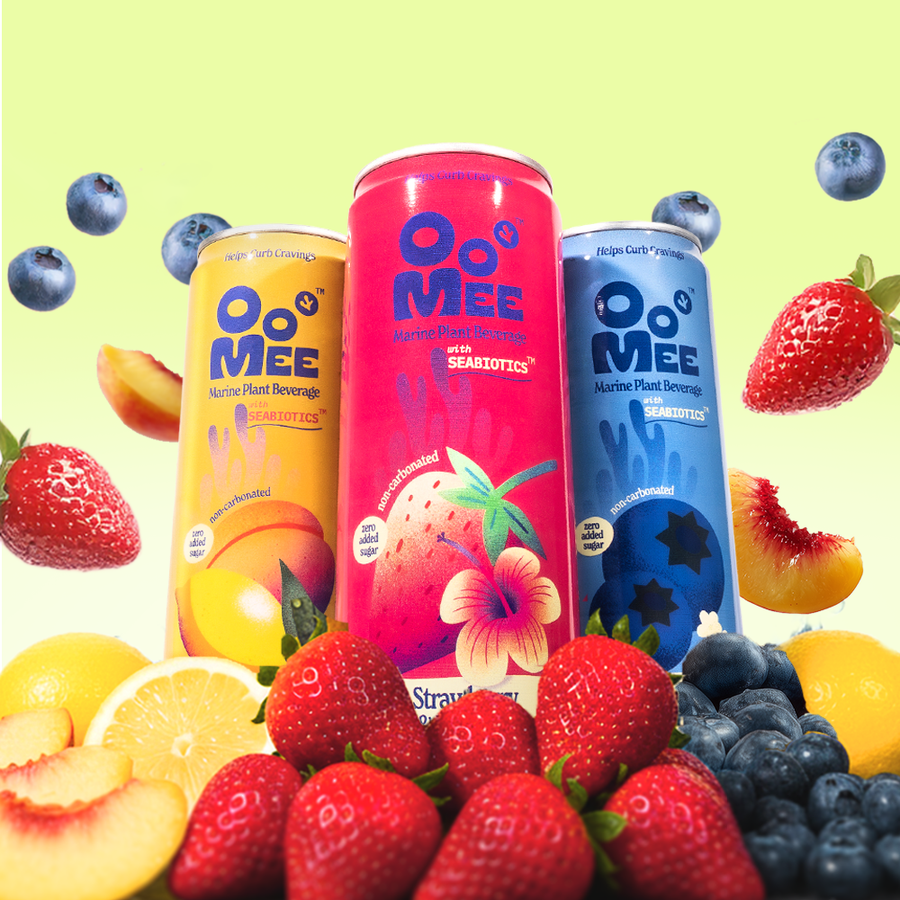
The firm expanded its horizons into packaging and nutrition. It partnered with Tottori Industrial Technology Center to encapsulate high-ABV or low-pH liquids like whiskey, tequila and orange juice into edible seaweed pods, and created the OoMee brand of non-carbonated beverages based on its Seabiotics gel.
This proprietary ingredient leverages agar agar, a red seaweed used widely in Japanese cuisine. Agar functions as a soluble fibre that promotes satiety and helps manage cravings.
Soluble fibres like agar agar dissolve in water and form a gel-like substance that moves slowly through the digestive tract, preventing constipation, balancing glucose levels, and lowering cholesterol.
Aside from the nutrition benefits, OoMee’s approach also promotes sustainability. Seaweed grows rapidly (up to 12 inches per day) and captures as much as 30% more carbon dioxide than terrestrial plants, while requiring no freshwater, farmland or fertilisers.
Aqua Theon operates a zero-waste process in which agar extraction byproducts are fermented and repurposed into fertiliser for crops, which it can produce over 2,800 tonnes of annually.
Aqua Theon targets functional beverage demand with OoMee

Typically, agar agar gels when treated with heat, rendering a viscous, jelly-like texture that, according to Aqua Theon, is less popular in the US than in Asia. But with the functional beverage market expanding, it formulated Oomee with minimum viscosity, no jelly-like mouthfeel, and reduced sensitivity to vitamin C.
It launched the 12oz cans in the US in May 2025, each containing just 20 calories and no added sugar. Debut flavours included blueberry-elderflower, strawberry-hibiscus, and peach-lemon, before an expansion into fruit-flavoured matcha drinks (lemon-mint, yuzu-passionfruit, and berry).
The brand’s “function-first” approach has taken the beverage market by storm, selling over 100,000 units in the first six months and gaining listings in more than 700 stores, including Sprouts Farmers Market, Raley’s, and Bristol Farms. On its website, it maintains a repeat purchase rate of 70%.
The brand’s marketing seems skewed towards the GLP-1 market, eschewing seaweed-focused messaging for claims like “supports digestive health” and “helps keep cravings in check”.
It comes at a time when the share of Americans taking Ozempic, Mounjaro and other similar drugs doubled from 5.8% in early 2024 to 12.4% in summer 2025. That has pushed food companies to tweak their offerings to offer more protein and fibre.
These drugs work by replicating a natural hormone found in our bodies, called incretin, which boosts GLP-1 to help regulate blood sugar, fulfil satiety and manage weight. Incretin can be regulated by dietary fibre, a nutrient only 5% of American adults consume enough of. Fibre can trigger the body’s natural GLP-1 response.
It’s why a host of companies have launched fibre- and GLP-1-focused beverages recently, from nutrition shakes by Kate Farms and Nestlé to Beyond Meat’s clear protein drinks and Ozzi’s Crave Crusher line.