

Climate Change Could Halve the Area Suitable for Livestock Farming by 2100, Shows Study

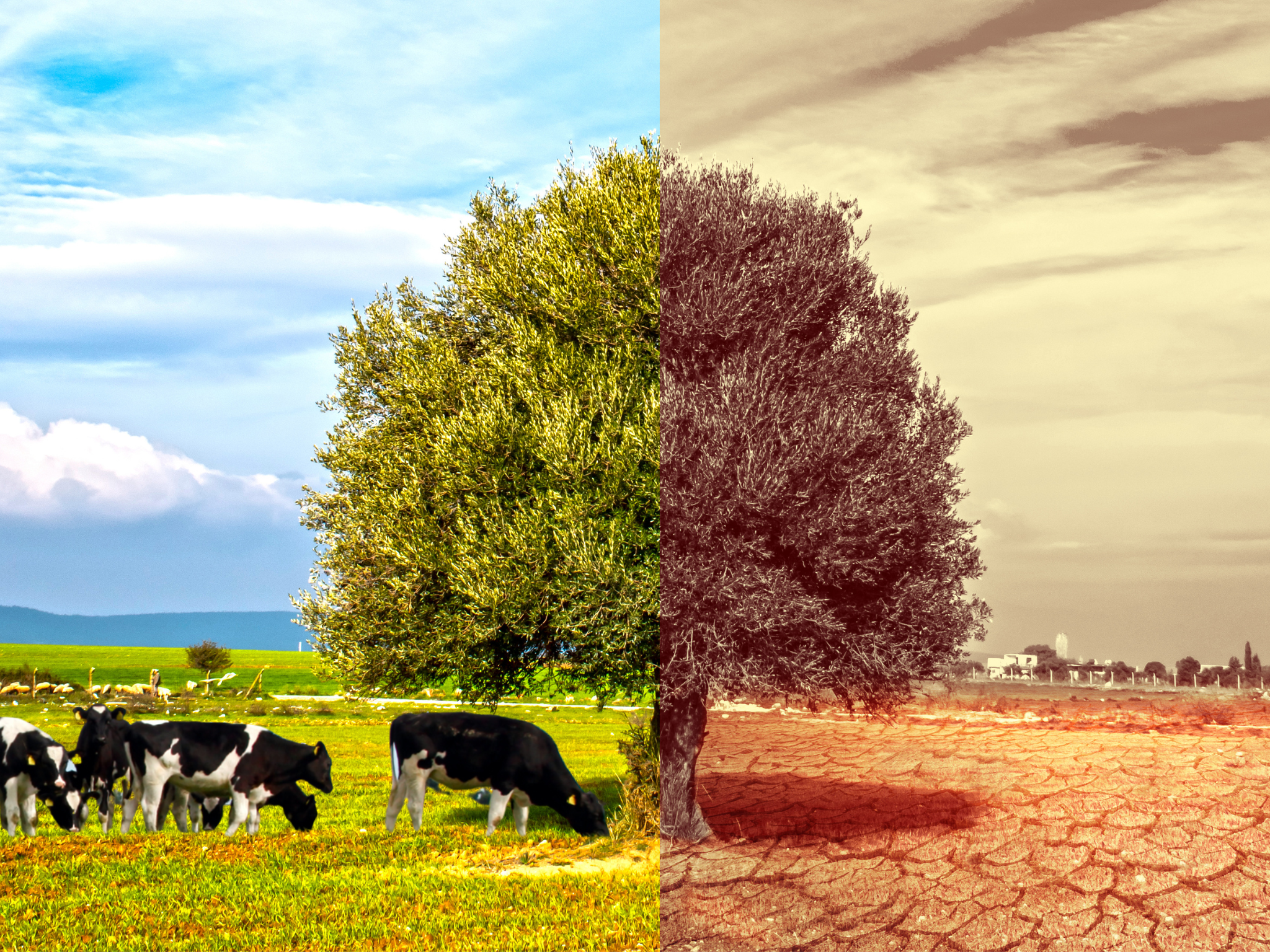
Livestock farming is already a leading driver of climate change, and increasing GHG emissions could result in a 36-50% decline in the area suitable for grazing by the end of the century.
The world’s largest food production system is under threat from the very climate crisis it is fuelling, according to a major new study.
Grassland-based grazing systems, which cover a third of the Earth’s surface, will witness a severe contraction with the rise in global temperatures, affecting hundreds of millions of pastoralists and threatening food security in the world’s most vulnerable regions.
Researchers at the Potsdam Institute for Climate Impact Research (PIK) identified a “safe climatic space” for cattle, sheep and goat grazing, assessing how factors like temperature, precipitation, humidity, and wind speed will affect these grassland-based systems.
The study, published in PNAS, found that 36-50% of land with suitable climatic conditions for grazing will lose their viability by 2100.
“Grassland-based grazing is highly dependent on the environment, including things like temperature, humidity, and water availability,” explained study co-author Maximilian Kotz, a researcher at the Barcelona Supercomputing Center and PIK.
“What we see is that climate change is going to reduce the spaces in which grazing can thrive, fundamentally challenging farming practices that have existed for centuries,” he added.
Climate change will hit Africa’s livestock systems hardest
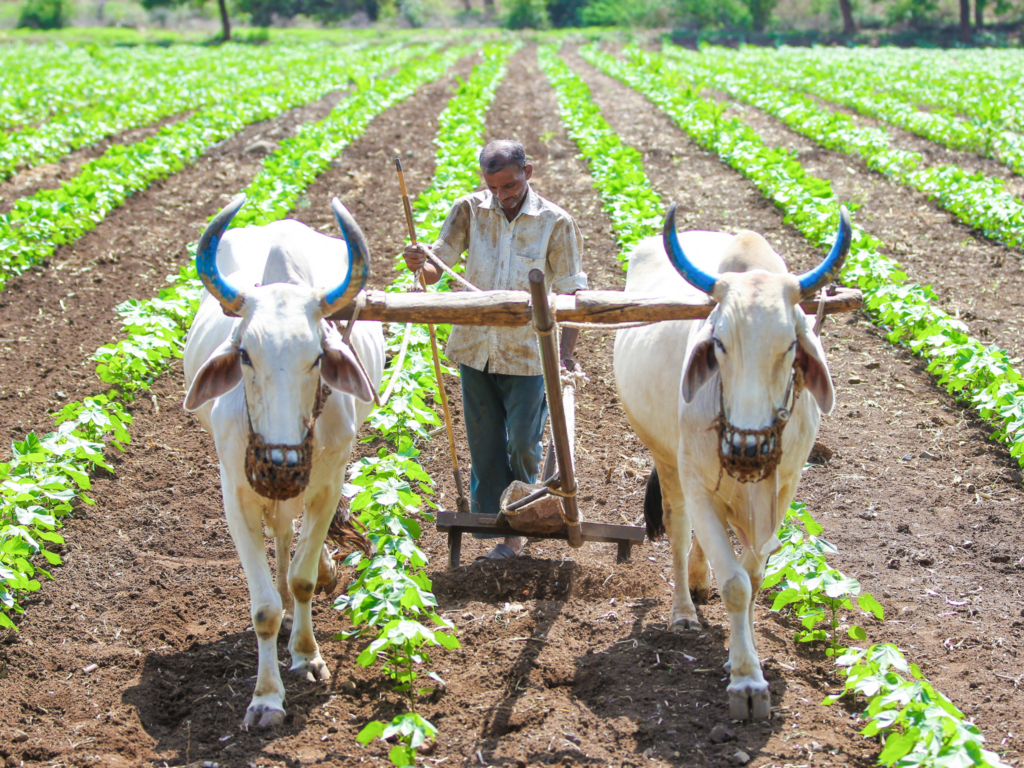
According to the study, grazing systems range from pasture systems that are part of the premium meat industry in high-income countries, to the “lower end of the socioeconomic spectrum”, where pastoralists are often subsistence farmers relying entirely on grazing livestock for their income.
It’s why they’re a critical base for the livelihoods of hundreds of millions of people across diverse ecological and socioeconomic contexts, but, as the authors argue, there’s a lack of global understanding of their sensitivity to climate change.
They point out that grazing livestock systems have so far thrived within certain ranges of temperature (from -3°C to 29°), rainfall (between 50 and 2,628 mm per year), humidity (39-67%), and wind speeds (between one and six metres per second).
But they will be “increasingly exposed” to changes in these conditions, with the magnitude and direction of these shifts varying across regions.
“Climate change will shift and significantly contract these spaces globally, leaving fewer spaces for animals to graze,” said lead author Chaohui Li. “Importantly, [many] of these changes will be felt in countries that already experience hunger, economic and political instability, and higher levels of gender inequity.”
The worsening climate crisis is expected to negatively affect 110-140 million pastoralists and 1.4-1.6 billion animals, and 51-81% of impacted populations already reside in countries with “low income, serious hunger, severe gender inequality, and high political fragility”.
Africa will be particularly vulnerable. Here, grasslands could shrink by 16% in a low-emissions scenario, and as much as 65% if fossil fuel expansion continues. This is because temperatures on the continent are already at the upper end of the safe climatic space for grazing.
As they rise further, the climate niches supporting critical grazing regions in the Ethiopian highlands, the East African Rift Valley, the Kalahari Basin, and the Congo Basin will shift southward. And since the African landmass terminates at the Antarctic Ocean, these suitable temperature belts would eventually extend beyond the continent’s edge, causing a loss of viable grazing land.
A prime opportunity for alternative proteins

The research paper issues a stark warning about the consequences of inaction here: “As the impact of climate change hits ecosystems and communities worldwide, humans and animals must adapt, tolerate, or relocate in accordance with the changing environment or face morbidity or even extinction.”
Study co-author Prajal Pradhan, an assistant professor of the University of Groningen and a PIK researcher, said the shift away from the safe climatic space “really challenges the efficacy of adaptation strategies that have been used in places such as Africa in times of hardship, such as switching species or migrating herds”.
“The changes are just too big for that,” he noted. “Reducing emissions by rapidly moving away from fossil fuels is the best strategy we have to minimise these potentially existential damages for livestock farming.”
The research indicates an important opportunity for the food tech world. Livestock farming accounts for up to a fifth of global emissions and 80% of the world’s farmland, and some suggest it’s the leading driver of climate change when you use updated metrics to measure its impact.
This sector is already struggling with the effects of climate change, which has played a part in the decline in livestock inventories and meat supplies, and the increase in meat prices to all-time highs.
Companies that produce alternative proteins – like plant-based, fermentation-derived, or cultivated meat – stand to win big. These products are associated with a fraction of the emissions, land use and water consumption linked to the livestock sector, and can help boost food security (especially as they scale and undercut the price of conventional meat).
Many studies have noted the environmental benefits of a plant-based diet. A landmark paper from 2023 suggested that this way of eating reduces emissions, water pollution and land use by 75% compared to meat-rich diets. And in 2025, another study found that vegan diets cut carbon emissions by 46%, water use by 7%, and land use by 33%.
By ramping up alternative protein production, companies can offer the livestock industry an off-ramp from the dangerous effects of climate change on grazing systems, and also help boost food and nutritional security in regions most vulnerable to the crisis.