

Enifer Seeks FDA Approval for Mycoprotein Powder to Unlock Large-Scale Partnerships


Finnish startup Enifer has filed a GRAS notification to the US FDA for its Pekilo mycoprotein, marking a step towards large-scale partnerships for high-protein applications, including blended meat.
To pump up the sustainable protein sector in the US, Enifer has taken a key regulatory step for its flagship mycoprotein ingredient.
The Finnish food tech startup already self-affirmed its Pekilo protein as Generally Recognized as Safe (GRAS) in September. But with this regulatory pathway under threat, it has now submitted a GRAS dossier to the Food and Drug Administration (FDA), in pursuit of a ‘no questions’ letter.
According to the company, the move to put the ingredient under formal FDA review is a “significant step” towards large-scale partnerships with US food manufacturers, who can use Pekilo for high-protein, functional and hybrid food products.
“Large food manufacturers operate within strict procurement and compliance frameworks,” said Elisa Arte, head of food R&D at Enifer. “FDA-notified GRAS status removes a key internal barrier, allowing ingredient discussions to move beyond technical sampling into long-term supply planning.”
Pekilo is well-suited for the protein and fibre era
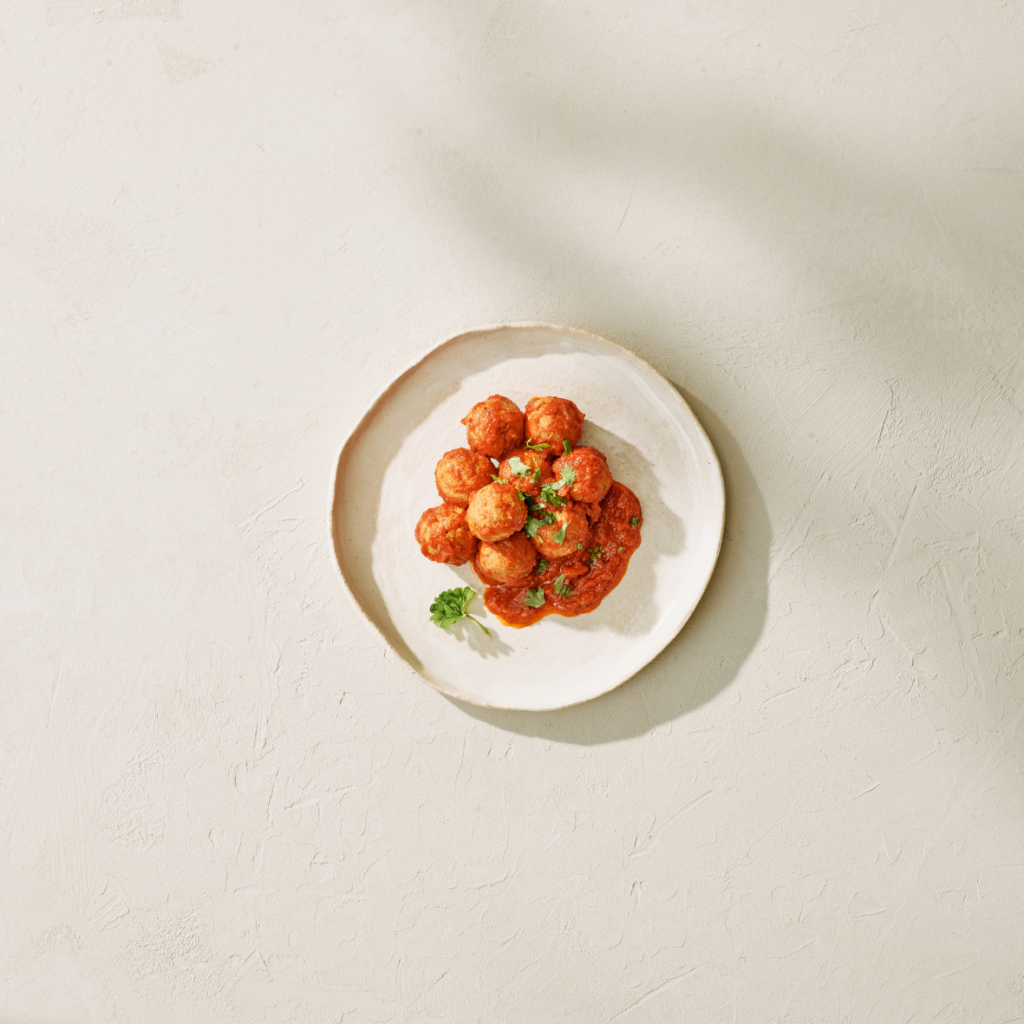
Enifer’s mycoprotein, named after the fungal strain Paecilomyces, has roots dating back to the 20th century. This strain was selected from among more than 300 fungi to be used for mycoprotein production for feed applications in Finland between 1975 and 1991.
At the time, the microbes were fed on forest industry byproducts. Enifer, a spin-out of the VTT Technical Research Centre of Finland, revived the process by adapting Paecilomyces to food and agricultural sidestreams to develop food-grade mycoprotein.
It employs a continuous submerged fermentation similar to brewing soy sauce. After fermentation, most of the water is mechanically removed from the mycelium, which is then dried and milled into a fine, shelf-stable powder.
This ingredient has an optimal amino acid profile, strong water-holding capacity, and neutral taste and colour, alongside being high in protein and fibre. It is currently being tailored to three categories: pet food (where its protein content is over 60%), aquaculture feed (up to 65% protein), and human food (up to 50% protein and 35% fibre).
The latter’s characteristics lend well to a wide range of products, including better-for-you snacks, extruded breakfast cereals, breads and baked goods, plant-based meat and dairy, as well as blended meat (which has boomed in popularity over the last year).
Pekilo’s protein- and fibre-rich makeup fit seamlessly into the rising demand for these two macronutrients in the US. Nearly three in five (57%) Americans plan to prioritise protein this year to increase energy (52%), build strength (51%), and manage weight (48%).
Speaking of which, the share of consumers using weight-loss medications like Ozempic and Mounjaro grew from 10% in 2024 to 18% in 2025. Their growing popularity, alongside TikTok trends like fibermaxxing, has put fibre consumption in the spotlight.
They’ve also pushed food companies to tweak their offerings to offer more protein, since GLP-1 users witness a 25-40% decrease in muscle mass over eight to 16 months (much more so than non-medicated weight loss approaches and age-related muscle loss).
Enifer raising funds to scale up amid GRAS uncertainty

Self-affirmed GRAS status doesn’t legally require FDA review – instead, companies only need to conduct a safety assessment by a scientific panel, which can include both internal and external experts. This helps them maintain confidentiality and is a cheaper and faster way to get to market – the FDA only evaluates around 75 GRAS notices a year, and each can take between six and 12 months to be approved.
However, health secretary Robert F Kennedy Jr has proposed to end this rule, calling it a “loophole” that needs to be closed to provide greater transparency to Americans. It would mean companies now need to go through the full GRAS notification process, a much more rigorous process that requires the submission of a host of comments, including studies of a company’s ingredients.
In an op-ed for Green Queen in January, Enifer co-founder and CEO Simo Ellilä wrote: “If the FDA narrows or weakens the self-affirmed GRAS process, it risks slowing precisely the kind of science-based innovation that can improve both public health and environmental outcomes. Self-GRAS is not a loophole; it is an essential part of how credible research moves from the lab to the marketplace.”
Still, Enifer’s decision to enter the FDA review process will help breed market confidence as it works to expand its capacity. Currently, it operates a pilot line that produces five to 10kg of Pekilo daily, with periodic campaigns with contract manufacturers at 10 times that capacity. It’s now building a €33M commercial-scale facility that would churn out 3,000 tonnes of the protein annually.
“We are scaling production to ensure consistent, industrial volumes. In a market that has moved past hype and is now focused on unit economics and reliable capacity, regulatory clarity and manufacturing readiness must advance together,” said Arte. “This step brings Pekilo into that commercial decision framework.”
The company, which has also applied for novel food approval in the EU, Singapore and the UK, has raised around €49M in both equity and debt to date. It’s now working on a Series C round, which is expected to close by the end of the year.
“Demand for protein isn’t slowing, but manufacturers are rethinking where that protein comes from and how it performs in finished products,” said Ellilä. “With regulatory review underway and our 2026 production ramp-up approaching, we are aligning capacity and compliance to support structured, long-term supply relationships in the US market.”