

Cow-Free Lactoferrin Maker FerrinX Strikes Skincare Distribution Deal with Palmer Holland


US startup FerrinX, which makes precision-fermented lactoferrin, has signed a deal with Palmer Holland to distribute the ingredient to cosmetics and beauty brands in North America.
Legacy ingredients distributor Palmer Holland has announced a new agreement to supply FerrinX’s recombinant lactoferrin ingredient to skincare companies.
FerrinX, a 50:50 joint venture established last year between US startup De Novo Foodlabs and Earth First Food Ventures, is using precision fermentation to produce NanoFerrin, a bioidentical version of the bovine whey protein.
The new distribution deal is geared towards beauty and cosmetics manufacturers in North America, unlocking access to a highly functional ingredient that is otherwise in short supply.
NanoFerrin offers multiple high-value skin benefits

Precision fermentation involves inserting specific DNA into microbes to teach them to produce the desired molecules upon fermentation.
FerrinX is targeting lactoferrin, a glycoprotein known for its iron-regulating abilities. The ingredient has antiviral, antibacterial, immunity-boosting, and gut-strengthening properties, and is used to treat low iron levels during pregnancy.
It’s present in both human milk and bovine colostrum. In the latter, though, it’s available in much smaller concentrations, and extracting 1kg of purified lactoferrin requires at least 10,000 litres of milk. This drives up costs – ranging from $600 to $2,000 per kg – and makes lactoferrin supply reserved for applications like infant nutrition and premium supplements.
Producing it via microbes in bioreactors can solve this bottleneck and enable companies to scale up the ingredient. FerrinX’s process delivers a product with high purity, reliable functionality, and consistent quality at a commercially viable scale ideal for next-gen cosmetics production.
Outside the food and wellness segments, lactoferrin has sustained scientific interest for its potential applications in dermatology and skin health. NanoFerrin itself addresses multiple dermatological pathways.
For instance, dark under-eye discolouration is often caused by iron deposits from microvascular leakage beneath the skin. NanoFerrin binds free iron to neutralise the underlying cause of this pigmentation (instead of just masking it).
NanoFerrin sequesters iron, disrupting the metabolic pathways acne-causing bacteria rely on to grow, limiting microbial growth and preserving the skin microbiome. Its anti-inflammatory properties help reduce redness and irritation from breakouts, posing as a compelling alternative to harsher treatments like benzoyl peroxide.
Moreover, lactoferrin influences cellular signalling pathways linked to skin vitality and stimulates skin cells to increase collagen and hyaluronic acid production. But instead of just providing topical hydration, NanoFerrin encourages the skin to regenerate these molecules internally for long-term smoothness and resilience.
FerrinX aims to start commercial-scale production this year
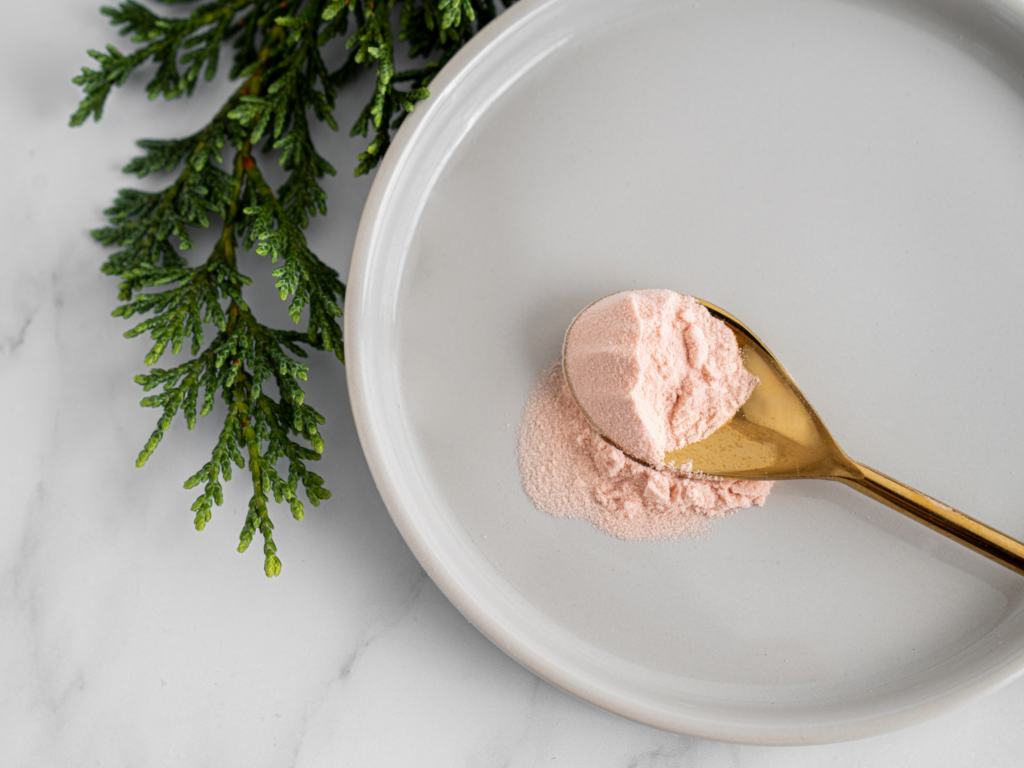
Cosmetics companies have been seeking alternatives to ingredients with increasingly complex supply chains and climate challenges. According to Palmer Holland, NanoFerrin offers a planet-friendly shift for skincare innovators on the hunt for efficacious, multifunctional ingredients backed by strong science.
It’s also a response to shifting consumer priorities – two-thirds of Gen Z Americans prioritise sustainability when purchasing personal care products, and 56% of consumers would pay more for eco-conscious options.
FerrinX is set to kickstart commercial-scale production of its precision-fermented protein later this year and plans to build and fund facilities capable of producing 300 tonnes of lactoferrin annually within the next decade.
“Our role is to connect world-class ingredient innovation with the brands capable of translating that science into meaningful consumer benefits,” said Bret Horace, VP of consumer and life sciences at Palmer Holland. “NanoFerrin represents exactly the type of advancement we look for – clinically grounded, multifunctional, and aligned with the future of biotechnology-enabled skincare,” he added.
FerrinX and its joint owner, De Novo Foodlabs, are part of a growing stream of precision fermentation companies focused on lactoferrin, which is seen as a more viable way to commercialise in the short term than through cheaper proteins like whey or casein.
TurtleTree has already commercialised its recombinant bovine lactoferrin in the US through its consumer brand Intentional; Daisy Lab, Eclipse Ingredients, Vivici, and Eden Brew are also working on this protein.
Helaina (which just signed an infant formula deal with Nestlé), PFx Biotech, and Guoke Xinglian are all producing human lactoferrin using this technology, with Helaina’s effera ingredient already appearing in around a dozen products in the US. Australia’s All G, meanwhile, is developing both bovine and human lactoferrin proteins.