

How India’s Alternative Protein Job Market Can Solve Its Talent Shortage

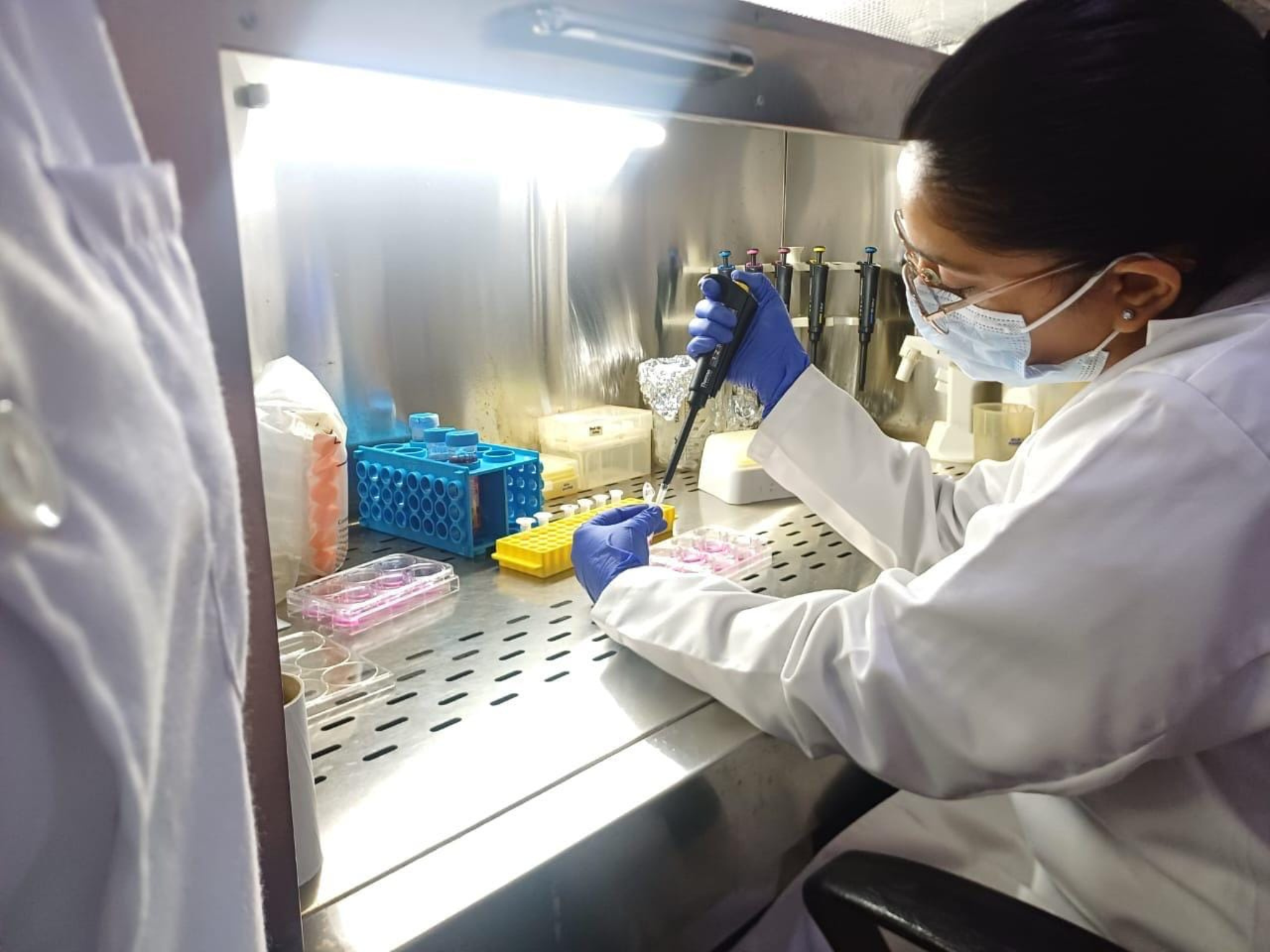
India produces nearly 250,000 biotech, food tech and engineering graduates a year, but the alternative protein industry still struggles with job-ready talent. Here’s how to plug the gap.
India has been pumping the accelerator on its biotech ecosystem, with the government introducing financial instruments and policies designed to propel this sector’s growth.
Alternative proteins are part of this effort, given that they form one of the six pillars of the country’s BioE3 strategy, which focuses on accelerating tech development and commercialisation by setting up biomanufacturing hubs and biofoundries.
However, this smart protein sector is facing a talent problem, despite India producing nearly a quarter of a million graduates in areas like biotech, food tech and engineering every year.
“There is a dearth of specialised, hands-on skills required for smart protein research and manufacturing,” states the Good Food Institute (GFI) India in a new analysis of India’s food tech talent landscape.
The study maps technical skill gaps across the plant-based, cell cultivation, and fermentation value chains, particualrly in high-growth areas like bioprocessing, cell culture, extrusion technologies, analytical methods, and novel food safety and regulatory pathways.
This is because, even though India’s academic institutions provide strong theoretical foundations in core sciences, a lack of hands-on exposure and alternative-protein-specific modules limits the sector’s ability to progress.
Why India’s alternative protein ecosystem has a skills gap

In interviews with industry stakeholders, GFI India found that 60% of respondents used on-site training to upskill new hires with the essential missing skills. It’s why a quarter prefer to recruit lateral candidates who already possess the prerequisite skills.
Alternative protein startups cited the need for stronger hands-on training in areas like animal cell culture and molecular biology, and operating high-moisture extruders, bioreactors, 3D food printers, and sensory analytical instruments. Industry representatives also highlighted a lack of food safety courses dedicated to novel foods like cultivated meat and precision-fermented proteins.
GFI India noted that, unlike international institutions like Imperial College London, the National University of Singapore, and Tufts University, there are very few training programmes focused on knowledge-building in the smart protein sector in India.
Compounding this issue is the awareness-action gap among faculty. Surveys with academic stakeholders show that 84% of teaching staff are highly aware of this industry, but only 47% report adequate coverage of smart protein in their current curricula. That said, nearly 90% are open to incorporating alternative protein modules in their courses.
Academic experts suggest forming a consortium to appeal to authorities on the importance of such courses, a bottom-up approach designed to gain broader system recognition and fast-track the introduction of smart protein modules.
“Following approval and implementation, student and faculty interest (and demand) could drive future curriculum revisions that incorporate smart protein topics as core elements of degree programmes,” the study states.
According to industry stakeholders that spoke to GFI India, expertise in AI-driven data analytics, life-cycle assessments, techno-economic analyses, environmental, social, and governance frameworks, and novel food regulatory affairs will become crucial as the sector matures over the next five years.
Industry-academic collaboration crucial to scale up smart protein sector

“India has a strong foundation of scientific talent, but translating this potential into a future-ready smart protein workforce requires deliberate, coordinated action,” said Sneha Singh, managing director of GFI India.
“Our analysis shows that curriculum innovation, deeper industry-academia collaboration, and hands-on training are essential to ensure graduates are equipped with the practical skills the sector needs to scale sustainably and competitively,” she added.
The report outlines three key recommendations to bridge the skills gap in India’s alternative protein sector. First, institutions should leverage provisions from the 2020 National Education Policy, which ease course revision and implementation.
Through a first-track approval process, universities could proactively embed smart protein modules into relevant biotech degrees. Moreover, they can create theoretical courses for government-certified national programmes to expand access to a wider range of learning audiences.
Second, academic institutes should partner with the alternative protein industry to conduct hands-on training schemes, including industry-academia workshops, certificate courses, internships, and co-supervised capstone projects. This would help prepare students for the real-world application of their knowledge.
Finally, GFI India reiterates academics’ recommendation to build a national consortium of government skill-building councils, startups, industries, and research institutes. This committee could identify complementary industry and student needs to develop new upskilling programmes, and institute structured feedback loops to monitor skill gaps and take into account syllabus improvements.
“This would ensure new teaching materials are created and updated regularly, keeping degree programmes tailored to evolving industry needs,” the report states.
To enable scale and coherence in this model, GFI India suggests the development of multiple training centres, where larger institutes with advanced lab facilities would function as regular training hubs that support learners from regional universities, colleges, and vocational training centres.