

Wisconsin Governor Vetoes Bill Attempting to Ban Cultivated Meat


Wisconsin’s bid to restrict the labelling and sale of cultivated meat has been rejected, with Governor Tony Evers vetoing the bill as it would create “more questions than it would answer”.
A Wisconsin bill attempting to ban the sale of cultivated meat has been labelled as “vague and arbitrary” by Governor Tony Evers, who has vetoed the effort and argued that it would cause confusion among customers.
AB 554 would have forced cultivated meat products to contain the phrase ‘lab-grown meat’ before being sold, and even then, it could only be served if it’s ordered by a customer (a rather redundant requirement).
The proposal would have prohibited companies from selling cultivated meat to students, patients or inmates of any government institutions, unless a superintendent or physician in charge deems it necessary for their health.
Failure to meet these conditions could be fined between $100 and $500, while also risking imprisonment for up to three months for a first offence. This would increase to a penalty between $500 and $1,000 and a risk of imprisonment for six months to a year for each subsequent violation.
But in a rare common-sense approach to anti-cultivated-meat legislation, Evers has vetoed the bill in its entirety, going against the grain of many of his counterparts in other states.
Why Wisconsin’s bid to ban cultivated meat was vetoed
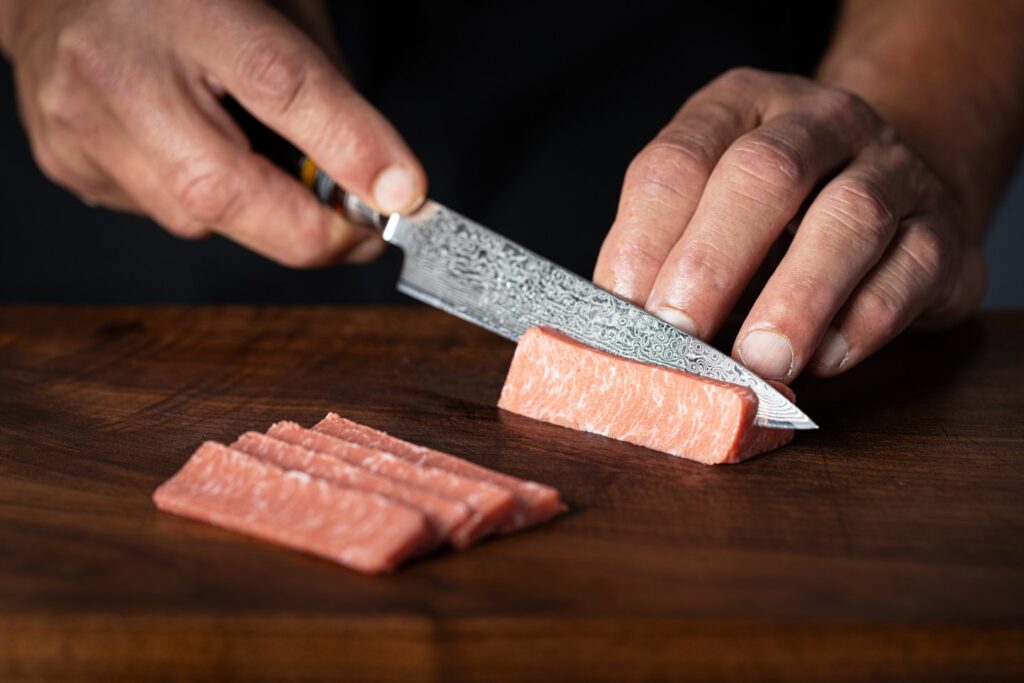
AB 554 was introduced in October 2025 by a group of 14 state legislators, 12 of whom are Republicans and two are Democrats. It sought to follow in the footsteps of other states that had either put restrictions on how cultivated meat can be labelled, or outlawed its sale altogether.
Evers, a Democrat, disagrees with the idea. “I object to its vague and arbitrary drafting and the confusion it would create if enacted,” he wrote in his veto message last week.
“By way of one absurd example, under the bill, lab-grown meat can only be sold to a customer if it is ordered by that customer. However, the bill also prohibits offering to sell lab-grown meat. It would appear the bill authors have not considered how a customer could know to order lab-grown meat if it is prohibited from being offered for sale to them,” he outlined.
“As a further example, the bill’s definition of animal includes a mammal, a bird, a reptile, an amphibian, a fish, or a mollusc, but excludes a crustacean. It is unclear why oysters, mussels, and scallops would be covered by the bill, but lobsters, shrimp, and crabs would not,” he added.
The criminal penalties associated with the bill also pushed Evers to reject it. “I object to the potential that a grocer or restaurateur could be held criminally liable and even face jail time under this bill due to product mislabeling, despite those entities having no role in the labelling process for products they offer,” he wrote.
“I support truthful labelling, and I believe consumers should know what is in the products they buy and consume. However, I cannot sign a bill into law that is likely to result in creating more questions than it would answer.”
Cultivated meat still faces opposition across US states

Evers’s rebuke means AB 554 can now only be passed if two-thirds of both the House of Representatives and the Senate vote in favour of it.
It’s a unique win for the cultivated meat industry, which has become one of the most popular targets for state legislators across the US. Eight states have now banned or put a moratorium on the sale of cultivated meat: Florida, Alabama, Mississippi, Montana, Indiana, Nebraska, Texas and South Dakota. Many others have put restrictions on their labelling.
In South Dakota, Governor Larry Rhoden had also vetoed a House bill that would have seen cultivated meat added to the list of adulterated food products, effectively placing a permanent ban on their sale.
“By categorically and permanently prohibiting the sale and transportation of these products within South Dakota, the bill risks placing an undue burden on interstate commerce, proposes a protectionist economic benefit to in-state industries, and invites expensive constitutional challenges,” he had said.
However, Rhoden suggested an amendment to a similar bill in the Senate, advocating for a moratorium on these proteins for five years (instead of 10, as the bill suggested). This was passed and signed into law last month.
Responding to the Evers’s veto in Wisconsin, Jason Mugnaini from the Wisconsin Farm Bureau told Brownfield Ag News: “This is something that’s looking to imitate with lab-cultured cells not connected to an animal. I mean, it’s just gross, but we need to make sure there are labelling standards around those before those products get to market.”
He expects the issue to return in the next legislative session, alongside a similar bill for cultivated dairy: “Legislation got introduced late in the session on lab-grown milk and lab-grown dairy products, so I think there’s an opportunity to bring this stuff back for sure, and we’d like to see those types of protections and labelling standards put into law before we start seeing these things on store shelves, confusing consumers.”
Last week, Mississippi became the first US state to ban the sale of cell-cultured dairy products, with Governor Tate Reeves allowing the bill to pass without his signature. Violators could have their licenses revoked or suspended, and face fines of up to $500 a day, with a maximum penalty of $10,000.