

‘Still Serious’: Beyond Burger & Steak the First Plant-Based Meat Products Certified As Climate Solutions

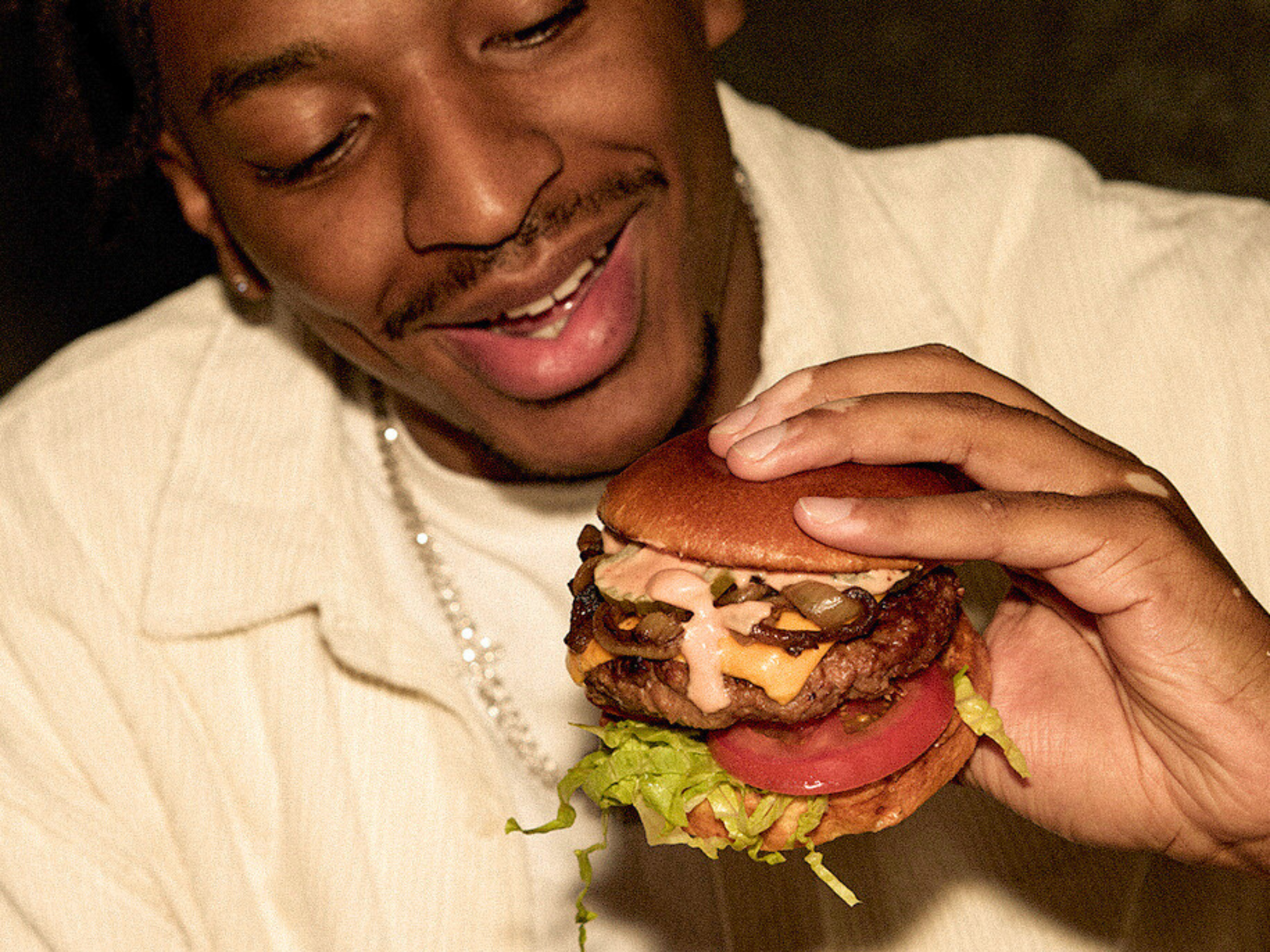
Amid debate about the company’s shifting priorities, Beyond Meat’s burger and steak have become the first plant-based meat products to qualify for the climate solutions certification.
“We’re still serious about fighting climate change… anyone else?”
That’s the quip Beyond Meat used to announce that two of its products now qualify as ‘climate solutions’ under a framework developed by the Exponential Roadmap Initiative (ERI) and Oxford Net Zero in 2024.
It denotes that the Beyond Burger and Beyond Steak lower global emissions by at least 50% than the weighted average of the market options they’re replacing. They’re the first plant-based meat products to qualify for this tag.
It comes amid the company’s rebrand to Beyond The Plant Protein Company, which has coincided with a shift beyond meat alternatives into categories like protein drinks. Having recorded its lowest annual revenue last year, its diversification and messaging have shifted to tap into the health and protein markets, leaving many to wonder whether sustainability remains one of its core communication focuses.
With the climate solutions certification, it hopes to respond with a resounding ‘yes’. “We believe in the power of plants to fuel our bodies and to heal the planet,” said founder and CEO Ethan Brown.
“We are dedicated to building a more sustainable, more humane food system, and I am thrilled that ERI has recognised Beyond Burger and Beyond Steak for their role in tackling the climate crisis, which has been part of our mission since day one.”
How Beyond Meat’s beef products qualified as climate solutions
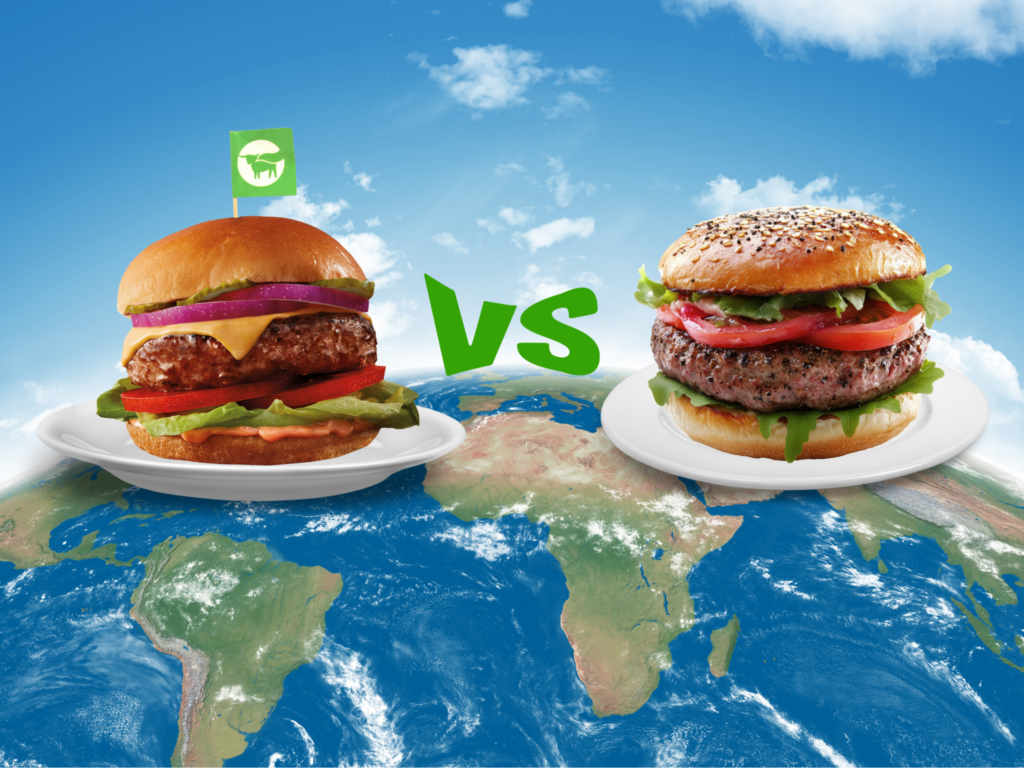
ERI’s climate solutions framework defines and qualifies both products against climate safeguards, identifying those that have significantly lower emissions than the standard options on the market.
Companies can also be certified under this framework. For this, they must prove that 90% of their revenue comes from climate solution products, have a near-term emissions target and a net-zero goal covering scopes 1, 2 and 3, disclose their progress annually, and be working more broadly to transform their sector.
Moreover, they have to show that their products don’t pose a significant threat to biodiversity and ecosystems, water and marine resources, or that they don’t extend the life of fossil-fuel-dependent technologies or create significant pollution. Last year, Oatly became the first food and drink company to qualify as a climate solutions business.
The certification for Beyond’s plant-based burger and beef is the result of an assessment conducted by ERI. The meat-free pioneer says fighting climate change and preserving natural resources have been a mission since its inception.
In December, the company published a third-party-reviewed life-cycle assessment of its Beyond IV beef platform, which revealed that this latest iteration of the Beyond Burger generates 88% fewer greenhouse gas emissions than a conventional 80/20 beef patty, and requires 28% less non-renewable energy, 92% less water, and 97% less land.
If land-use change emissions from the Beyond Burger supply chain are included, the vegan product produces 86% fewer greenhouse gas emissions than conventional beef.
The burger and steak’s climate solution qualification applies only to US products and is valid through February 2027. It’s based on the finding that the emissions from a quarter-pound uncooked patty delivered to retailers and foodservice outlets, as well as from 88g of cooked Beyond Steak, are at least 50% lower than those of comparable beef products on the market.
Beyond’s climate win comes amid the toughest period in its history
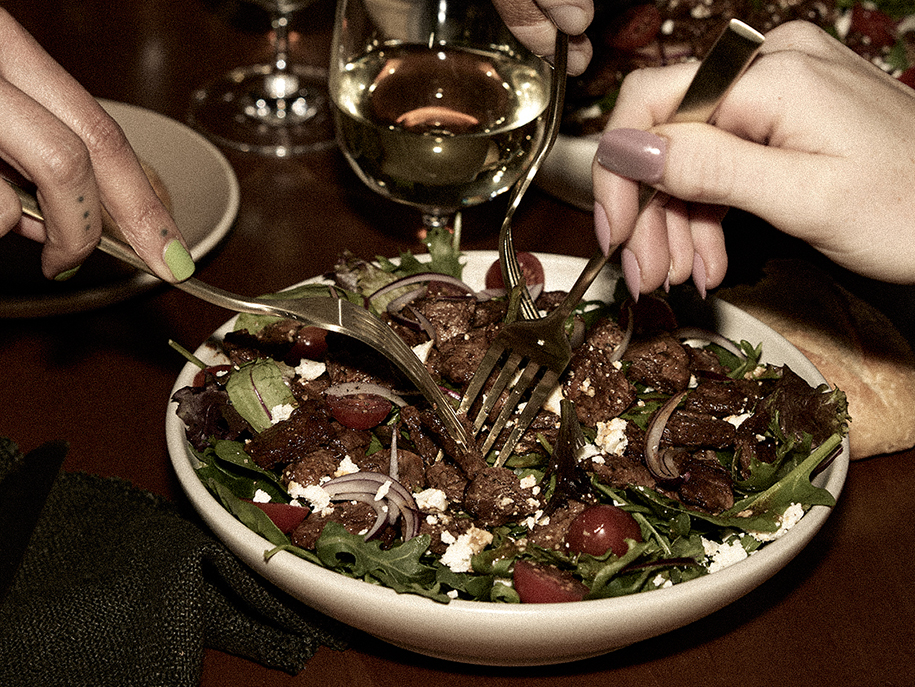
The production and consumption of a climate solution align with the global ambition to keep post-industrial temperature rises below 1.5°C by 2100. And when established market options are replaced – in this case, beef, the most polluting product in the food chain – the alternatives accelerate progress towards net zero.
“We are thrilled to recognise pioneering products such as Beyond Burger and Beyond Steak that support the global transition toward a net-zero economy,” said ERI co-founder and CEO Johan Falk.
“We created the climate solutions framework to highlight climate solutions, such as these Beyond Meat products, to remind companies that exponential growth of such qualifying products and services is just as important as decarbonisation of higher-emitting market alternatives,” he added.
The climate solutions qualification comes amid one of the most challenging periods in Beyond’s history. In 2025, its revenues fell by 15.6% to reach $275.5M, its lowest annual total as a public company. The company also executed layoffs and saw its stock fall to an all-time low, even receiving a delisting warning from Nasdaq.
To turn things around, it has diversified beyond meat mimics, launching a line of sparkling protein drinks, called Beyond Immerse, to capture a consumer market obsessed with protein.
“I believe that no company has innovated with plants under more scrutiny than Beyond ever. We’re now bringing the resulting hard-fought expertise and capabilities, our commitment to health and clean ingredients, and our brand to adjacent categories, where we believe we can be disruptive and win,” Brown told investors in the company’s Q4 earnings call this week.
“Far from stepping away from our mission to change the source of protein at the centre of the plate from animals to plants, we reaffirm it, and take to these promising adjacencies to introduce our brand to a much larger number of consumers than currently participating in the plant-based meat category,” he said.
“In the end, it is our aspiration that, though indirect, this expansion will lead more consumers back to Beyond at the centre of their plate as they enjoy our brand, clean ingredients, and commitment to their health in less controversial, more convenient products like Beyond Immerse.”