

Green Star: Michelin Guide to Phase Out Sustainability Award for Restaurants

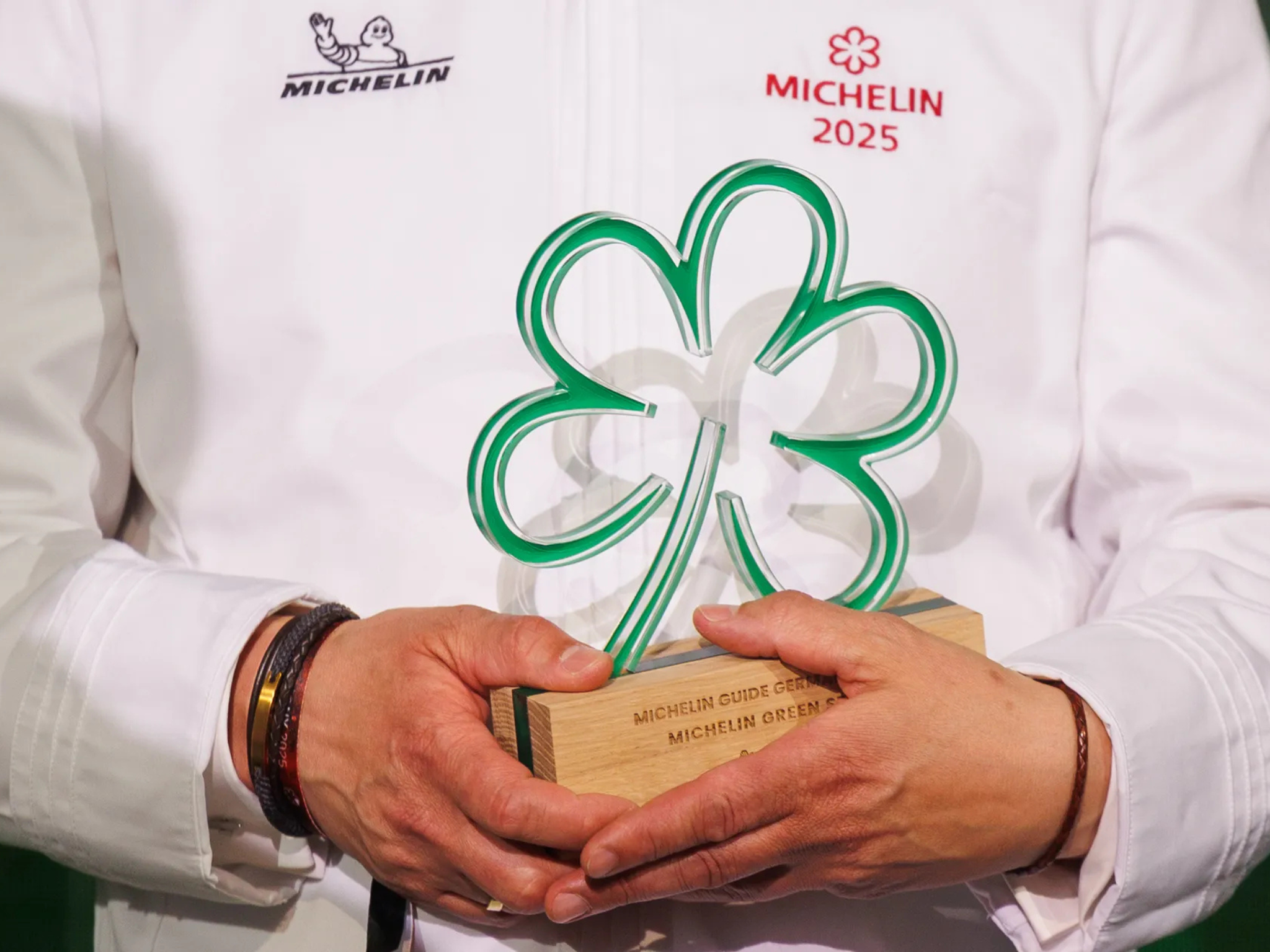
The Michelin Guide is retiring the Green Star by the end of 2026, six years after it first introduced the sustainability accolade, which was criticised by some as a greenwashing enabler.
In a major shake-up to its award system, the Michelin Guide is phasing out its popular and controversial Green Star.
Introduced in 2020, the accolade recognised restaurants that stood out for their commitment to sustainability, whether that was through their sourcing and suppliers, food waste, or material use.
As of last year, over 600 eateries worldwide had earned a Michelin Green Star, but the mark wasn’t without its critics, with many chefs and industry leaders bemoaning the lack of standardized criteria. Some even called the system a greenwashing tool for businesses.
The tyre manufacturer has now decided to discontinue the sustainability honour, saying it was “limited to gastronomy” and replacing it with Mindful Voices, an editorial platform highlighting people “pioneering new approaches in the fields of gastronomy, hospitality and wine”.
The right intention, though a lack of clarity in execution

The Michelin Green Star debuted in France and the Nordics in 2020, followed by an international rollout a year later. Any restaurant in the Michelin Guide was eligible to apply.
In an interview with Green Queen at the time, a spokesperson for the organisation said the distinction “aims to highlight role-model restaurants that embrace sustainability in their day-to-day operations”.
“Selected based on research and data collected from the Michelin Guide inspectors’ fieldwork, these restaurants have efforts in food waste reduction, recycling, the promotion of local and ethical ingredient sourcing, or many other virtuous initiatives,” they said.
These restaurants were adjudged to have had a “truly virtuous global approach” or implemented inspiring initiatives in their management, dealing with topics like product origin, seasonality, food waste reduction and valorisation, and the team’s ability to “sensibilise the clients to their sustainable ethos”.
On its website, the Michelin Guide noted that there was “no specific formula” for awarding a Green Star, since each eatery and its surrounding region have unique conditions. Its inspectors were said to be “looking for those at the top of their game when it comes to their sustainable practices”.
“They consider things such as: the provenance of the ingredients; the use of seasonal produce; the restaurant’s environmental footprint; food waste systems; general waste disposal and recycling; resource management; and the communication between the team and the guests about the restaurant’s sustainable approach,” the Guide stated.
This ambiguity, however, also drew scrutiny. The organisation hadn’t set a clear verification framework, and did not carry out any independent audits or systemic checks on the supply chain and operational procedures. Restaurants simply had to fill out a questionnaire about their practices, so the awarding of Green Stars was often seen as a publicity tool rather than a sustainability recognition.
Moreover, many farm-to-table eateries built on the premise of sustainability could not secure the Green Star, while others with just a few climate-friendly practices (think foraging) did. Plus, the logo – a green version of the standard Michelin star symbol – was confusing to many, and used by some restaurants to claim they were Michelin-starred.
Michelin Guide removes Green Star amid expansion beyond gastronomy
Still, the Michelin Green Star did have its fans. “It’s disappointing – one of our dreams was to have one,” Piers Milburn, owner of Green Star recipient Pythouse Kitchen Garden in the UK, told the Guardian.
“We think it’s quite irresponsible for Michelin to build a platform for businesses to thrive from for an accolade and then whisk it away. We were enormously proud of it, and now we feel let down by them,” he added. “I pray Michelin is not stepping back from sustainability.”
The Michelin Guide did not give a specific reason for its decision, and a spokesperson reiterated that the organisation was still committed to a “more responsible approach to gastronomy”.
“The Guide’s ambition is evolving towards a broader and more universal expression, one that now encompasses our three pillars of excellence: gastronomy, hospitality and wine,” a spokesperson said.
This is where the Mindful Voices platform comes in, through which the guide will publish editorial content about the leaders who are “rewriting the rules” in these fields. “The introduction of Mindful Voices should not be seen as a step backwards, but rather as a progression designed to reinforce this commitment,” they added.
Despite the withdrawal of the Green Star, the Michelin Guide has ramped up its recognition of sustainability in another way, awarding its culinary stars to more and more vegan restaurants over the last couple of years.
Today, seven fully plant-based eateries hold a Michelin star: Dutch establishment De Nieuwe Winkel (two stars), Beijing outpost Lamdre (two stars), Germany’s Seven Swans, Switzerland’s KLE, London’s Plates, Seoul’s Légume, Berlin-based Bonvivant, and Austria’s Jola (one star each).
The latter four received the honour only in the last 18 months. Meanwhile, Alain Passard’s legendary three-starred French eatery, Arpège, announced a switch to an almost all-vegan menu, with the exception of honey sourced from its own beehives.
For several years, New York City’s Eleven Madison Park was the only plant-based eatery to have three Michelin stars; it controversially reintroduced meat to its menu last year.