

Ahead of Ingredion Aquisition, Tate & Lyle Doubles Down on Cell-Cultured Sugar Alternatives

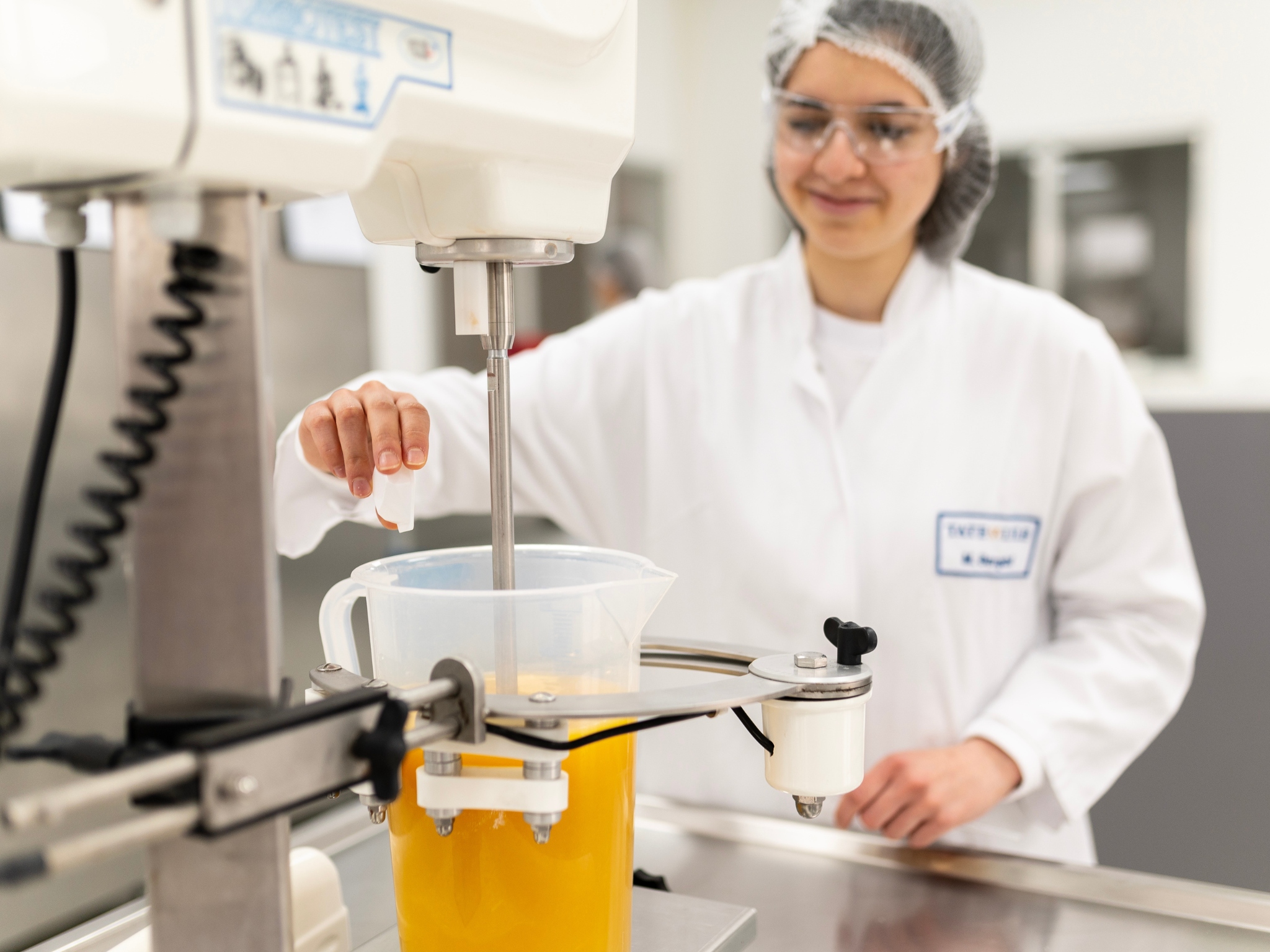
As part of its sugar reduction approach, Tate & Lyle has expanded its plant cell culture partnership with BioHarvest Sciences to include multiple plant-based sweetener molecules.
British ingredient giant Tate & Lyle has broadened its ongoing collaboration with Canadian plant cell culture company BioHarvest Sciences to develop next-gen sugar substitutes.
The firms first partnered in late 2024 to create plant-based molecules that can slash sugar in food and drink products and address demand for affordable, sustainable, and nutritious alternatives.
Now, they have expanded the scope of their agreement to include multiple sweetener molecules, enabling manufacturers to choose from a flexible toolkit of solutions for different formulation needs.
“We are enabling access to differentiated, plant‑based sweetening solutions designed to support a range of sensory, application and economic requirements,” BioHarvest CEO Zaki Rakib said of the partnership.
The deal was agreed just weeks before Tate & Lyle, which manufactures sucralose for Splenda, agreed to a £2.7B ($3.6B) takeover by US-based rival Ingredion. The deal could trigger a 3% workforce cut at the former, and is set to generate combined annual revenues of $9.9B.
Complementary sweeteners to meet evolving consumer needs
“As we define what customers ultimately look for in next‑generation sweeteners – sugar‑like taste, solutions anchored in nature, reduced calories and responsible use of resources – it is clear that several unmet needs in the market today are unlikely to be addressed with a single sweetener,” said Victoria Spadaro‑Grant, chief science and innovation officer at Tate & Lyle.
Its focus, therefore, is on developing complementary sweeteners that can be used independently or in tandem with each other, enabling product-specific optimisation. To do so, it’s drawing on BioHarvest’s Botanical Synthesis platform, a non-GMO technology that produces high-value plant-derived compounds without growing the plants themselves.
The biotech startup combines plant cell biology, elicitation technologies, AI-driven development and industrial-scale bioreactors to create “precision botanics” with enhanced potency, purity, consistency and commercial scalability.
Its plant cell culture platform helps reduce the industry’s reliance on traditional agricultural extraction for rare or hard-to-source botanicals, aligning with Tate & Lyle’s focus on ingredients that deliver performance, scalability and responsible sourcing.
A seven-country survey by the ingredient major last year found that over 50% of respondents planned to cut back on sugar over the next 12 months, with strong interest in fruit- and plant-derived sweeteners that taste great. In fact, they were more intent on reducing sugar than calories or fats.
This aligns with 2025 research by Tate & Lyle’s would-be parent company, Ingredion, in which 64% of global respondents said they were actively consuming less sugar, citing health reasons. Another 42% were doing so to lose weight.
This is also driven by the rise in GLP-1 use worldwide. In the US alone, the share of consumers using Ozempic, Mounjaro and other weight-loss drugs rose from 10% to 18% between 2024 and 2025. Previous research shows that two-thirds of GLP-1 users have reduced or quit their intake of sugary sodas, and 45% are consuming less sugar than before.
In fact, when asked what they wanted to consume less of in 2025, the top answer among Americans was sugar (cited by 45%). At the same time, non-sugar sweeteners are viewed very positively among Gen Z and millennials, more than half of whom believe they’re either as healthy or healthier than sugar.
Sugar reduction can help enhance public and planetary health

A legacy sugar producer, Tate & Lyle sold its sugar business to American Sugar Refining in 2010, pivoting to produce health-forward ingredients for food and beverage manufacturers.
It came amid sugar’s enlarging impact on human health. Today, roughly 8% of our calories come from the ingredient, whose consumption has quadrupled in the last 60 years. But added sugars are empty calories linked to a host of ailments, including cardiovascular disease, cancer, and yes, obesity and type 2 diabetes.
In the last three decades, the number of people with diabetes has doubled, and 95% of them have type 2 diabetes. In the next decade, half of the world could be overweight or obese.
“Expanding the scope of our collaboration with BioHarvest to include multiple plant-based sweetener molecules reflects the technical progress achieved to date and the aim to further expand our broad toolbox of sweetening solutions,” said Spadaro‑Grant.
“The flexibility from the expanded collaboration with BioHarvest is critical as customers seek food and beverage category‑specific solutions that balance taste, cost and labelling requirements, while supporting sugar and calorie reduction.
“This programme strengthens our innovation pipeline in a disciplined and efficient way and reinforces our commitment to advancing the future of sweetness through differentiated, science‑led solutions.”
There’s also a climate change argument for reducing sugar. Research suggests that keeping added sugar intake to the recommended value of 5% of daily calories (as prescribed by the WHO) would free up 483 million tonnes of sugarcane and 128 million tonnes of sugar beets, opening up opportunities for land rewilding, carbon sequestration, diversifying into non-sugar crops and increasing carbon efficiency.
Despite its business pivot and the GLP-1 boom, Tate & Lyle has struggled financially – its revenues fell by 3% last year. It will now be integrated into Ingredion, at a time when sugar alternatives are, at least in theory, all the rage.
A host of startups are making ‘sweet proteins’ for use in sugar-free sweeteners, including Oobli, Amai Proteins, MycoTechnology, Pentasweet, Perfect Day, Sweegen, Microfarmtory, and Nanjing Bestzyme. Others, like Better Juice, Austria Juice, BlueTree Technologies, IncreBio, and Neoh, are commercialising sugar reduction tech.