

How AI Can Plug the Upstream-Downstream Gap in Scaling Up Bio-Based Products

New Wave Biotech and iMEAN have teamed up to help biomanufacturers address the cost and viability gaps between the upstream and downstream parts of their scale-up efforts.
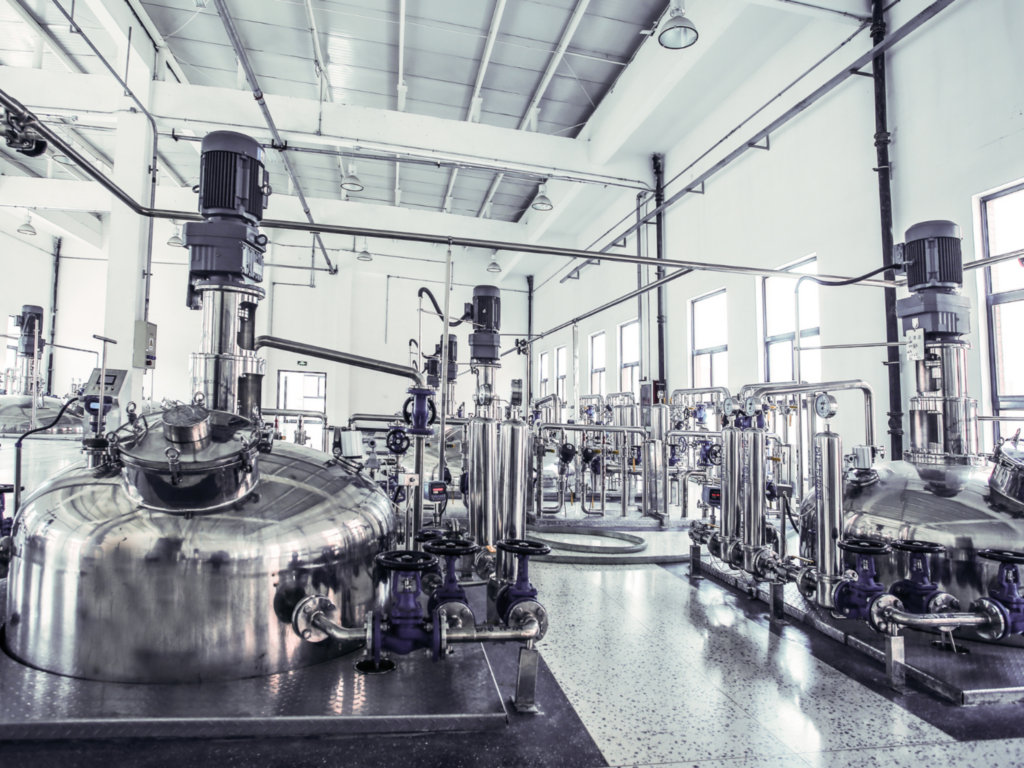
One of the most recurring obstacles to large-scale manufacturing of bio-based products and novel foods is the disconnect between strain design and media optimisation, and purification and extraction.
This upstream-downstream gap plagues companies’ ability to scale up their biomanufacturing processes. It leads to costly redesigns and unexpected bottlenecks at scale, stretching R&D timeline by three to 10 years, with failure rates above 75%.
“The problem is that these stages have traditionally been developed by separate teams using completely different tools and data. There’s no feedback loop,” says Zoe Yu Tung Law, co-founder and CEO of London-based New Wave Biotech.
“By the time the downstream team sees the problem, the most expensive decisions have already been locked in,” she tells Green Queen.
This is why her firm, which leverages artificial intelligence (AI) to optimise downstream processing, has teamed up with France’s iMEAN, which uses the tech to support strain design and upstream modelling for biomanufacturers.
Together, the biotech startups are offering companies an end-to-end solution for bioprocess optimisation, from organism design through to downstream purification, with integrated cost and sustainability analysis.
This can solve what Law describes as a “nightmare” for bioprocess scale-up. “An organism engineered for high intracellular production might look great on paper, but it creates complex mixtures of impurities and by-products that can make purification extremely difficult and expensive,” she says.
“A company may spend years optimising that strain without realising the downstream consequences until they try to scale,” she adds.
How New Wave Biotech and iMEAN are combining their expertise
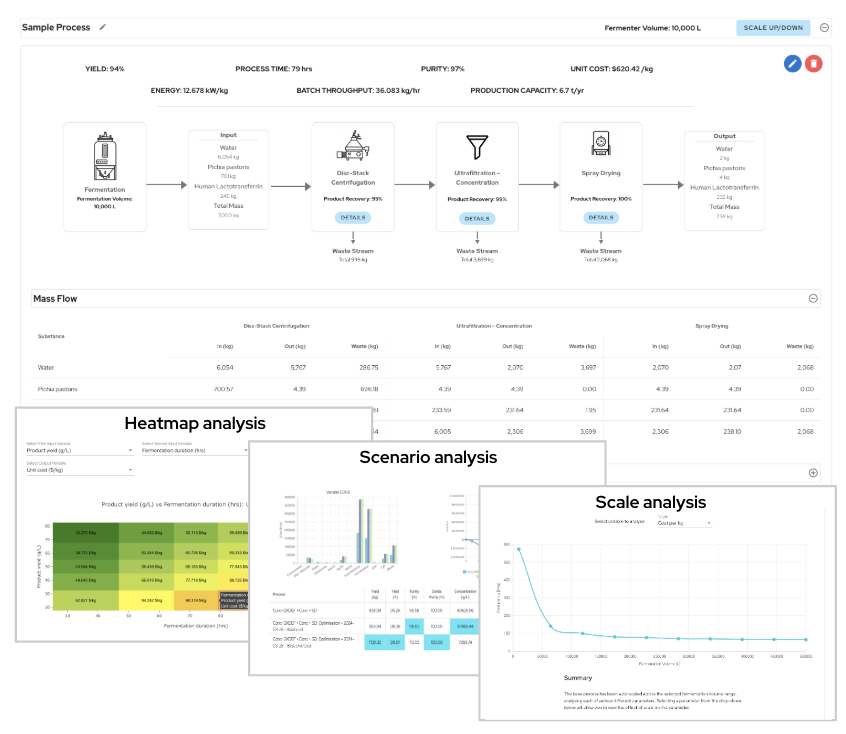
The joint offering helps companies anticipate the downstream consequences before committing to upstream choices, enabling them to digitally screen, simulate, and optimise entire bioprocesses.
New Wave’s platform, Bioprocess Foresight, combines mechanistic modelling with machine learning to optimise downstream bioprocessing across 16 unit operations, integrated with techno-economic analysis and a life-cycle assessment methodology built specifically for biotech processes.
Meanwhile, iMEAN uses advanced genome-scale metabolic network reconstruction and kinetic pathway modelling to help biomanufacturers design optimised organisms and fermentation processes, reducing R&D timelines and costs.
“iMEAN brings advanced metabolic modelling and fermentation expertise; New Wave Biotech brings downstream process simulation with integrated cost and sustainability analysis. The depth of specialism on each side is what makes it work – companies get focused expertise in both domains rather than one generalist tool trying to cover everything,” explains Law.
“A customer might come to iMEAN because they need to optimise their strain or fermentation conditions, or to us because they’re struggling with purification costs or need to understand the economics of scaling. The partnership means that, for the first time, the outputs from one side inform those of the other.
“So if iMEAN’s modelling shows that a particular strain design will produce the target molecule intracellularly, our models can immediately show what that means for downstream complexity and cost – and whether switching to an extracellular secretion strategy would be more viable overall. Companies work with both teams, and the insights flow between us.”
Modelling across upstream and downstream unlocks ‘most viable process’
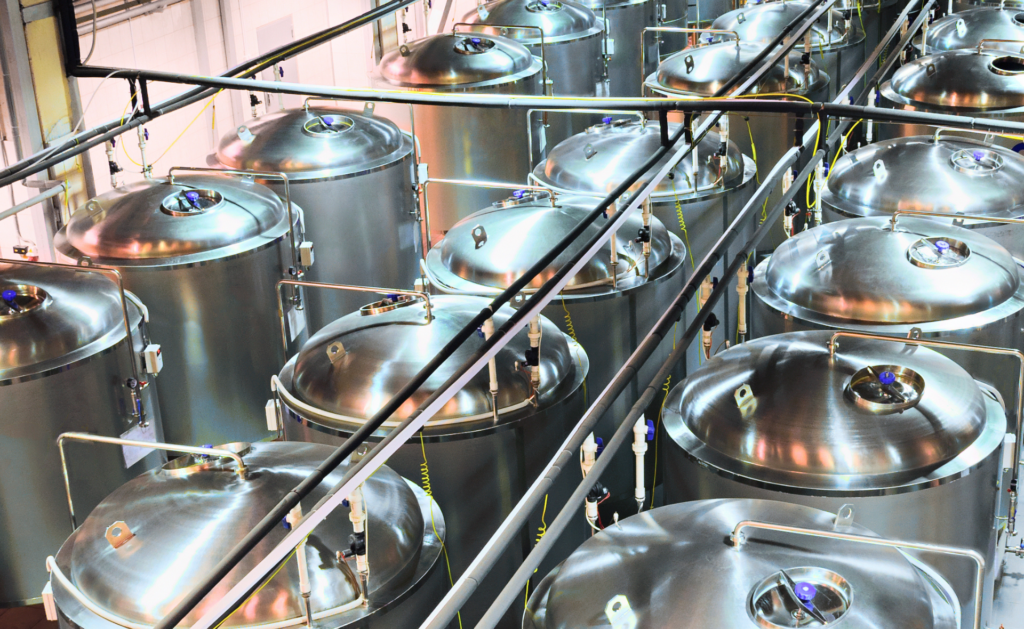
Law highlights how downstream processing typically accounts for 50-80% of total manufacturing costs. “But those costs don’t just come from how downstream is run – they’re heavily influenced by upstream choices that are made without visibility into their downstream consequences,” she says.
“Which organism you use, how it produces the target molecule, what by-products and impurities it generates – all of these shape what’s possible and economically viable downstream.”
The new partnership solves this issue by connecting the modelling across both stages. “iMEAN can model how a strain will behave and what it will produce; our platform can predict what that means for purification performance, cost, and sustainability,” says Law.
“Together, companies can optimise across the full process from the start – evaluating upstream and downstream options side by side rather than sequentially. If downstream modelling shows that intracellular production will be uneconomic to purify, iMEAN can model whether an extracellular secretion strategy is feasible.
“That continuous feedback between upstream and downstream modelling is what unlocks the most viable process overall – not just the best-looking upstream or the best-looking downstream, but the best combination.”
New Wave’s technology has also delivered an 8.6x improvement in yields and a 55% reduction in unit costs for its partners, enabling them to require 92% fewer experiments to reach optimised process conditions.
Further, iMEAN’s metabolic models have delivered over €600,000 in R&D savings and a 2.8x increase in production for clients in 6 months, rather than the years it would typically take.
The role of AI in bioprocess scale-up
So how does AI fit into all this? “Both companies use a hybrid AI approach – we combine physics-based models that capture how processes actually work with machine learning that picks up patterns from data,” says Law.
This is important for two reasons. “First, pure machine learning needs huge datasets to be reliable, and in biomanufacturing, you rarely have that, especially at early stages. Our approach means we can make accurate predictions from very limited data – sometimes a single experiment,” she explains.
“Working with the Centre for Process Innovation in the UK, this approach achieved prediction accuracy 1.4x to 4x better than industry averages from a single experimental run,” she says.
“Second, because our models are grounded in the actual physics and biology of what’s happening – not just correlations in data – they’re explainable. Engineers and scientists can understand why the model is making a particular prediction, which builds trust and makes the insights actionable.
“In practical terms, it means companies can virtually test thousands of production scenarios, seeing the yield, cost, and environmental impact of each option across the full process,” Law adds. “And with this partnership, that visibility now extends from organism design all the way through to the final purified product.”
The partnership will benefit any product made via fermentation or biomanufacturing, including alternative proteins, functional enzymes and lipids, cosmetics ingredients, bio-based pigments, and pharmaceuticals.
“We work with companies at every stage of scale – from those developing new bio-based products through to large multinationals optimising existing production lines, ” says Law.
“The common thread is that all of these products go through the same fundamental stages: you design an organism to produce something, you grow it in a fermenter, and then you have to extract and purify the final product.
“iMEAN covers organism design and fermentation modelling, New Wave Biotech covers the extraction and purification side, and we bring cost and sustainability analysis across the whole process. Together, companies get a complete picture of how their production will perform technically, economically, and environmentally – before committing to physical trials.”