

German Retailer Rewe Group Invests in Fibre-Based Sugar Reduction Startup Neoh


Austrian startup Neoh, which has developed a sugar replacement solution with plant-based functional fibres, has bagged new funding from investors including Rewe Group.
Could plant-based fibres be the solution to our sugar rush?
That’s the mission Austria’s Neoh is trying to achieve. The startup makes Zero+, a low-GI sugar replacer made primarily from plant-based fibres. So far, it has used the ingredient as a base in its own line of chocolate bars.
Now, it’s looking to expand the sweetener into other categories too. To do so, it has raised several million euros in fresh funding from German retail giant Rewe Group, Zintinus, and Teseo Capital.
“If we want meaningful sugar reduction in mainstream retail, the solution must work in real production environments, across high-volume categories, and without compromising taste,” Clément Tischer, head of food tech at Rewe Group, said in a LinkedIn post. “Zero+ has the potential to do exactly that.”
Zero+ significantly lowers blood glucose and insulin impact
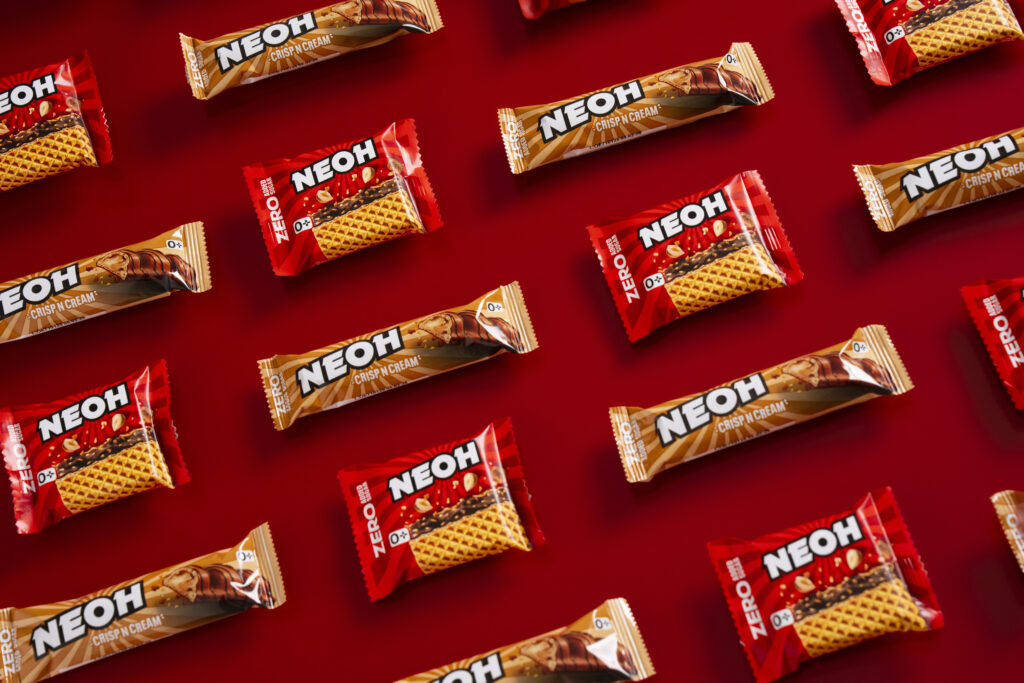
Founded in 2017 by CEO Manuel Zeller, Neoh’s technology was developed over 15 years and enables the company to replace refined sugar with functional dietary fibre.
The ingredient is made from 90% fibre from agave, chicory and corn, which is mixed with polydextros, small amounts of erythritol, sucralose and acesulfame K, as well as natural flavourings.
Zero+ has the same sweetness as table sugar, with a significantly lower impact on blood glucose, insulin, and C-peptide levels. This has been tested and confirmed by a clinical study conducted by the Medical University of Vienna in 2022.
Moreover, it’s gut-friendly, thanks to the high amount of plant fibre content. Fibre-rich foods trigger the body’s natural GLP-1 response, boosting satiety and regulating blood glucose. It’s why this macronutrient is becoming increasingly popular among gut-health-conscious consumers and users of weight-loss drugs like Ozempic.
Neoh explains how 100g of sugar contains 400 calories and zero fibre. In comparison, the same amount of Zero+ comprises just 160 calories (a 60% reduction), 4g of natural sugars, and 70g of fibre.
“The team of Neoh has built a technology that enables the complete replacement of sugar through functional fibres, while maintaining sensory quality and industrial processability,” said Fabio Ziemssen, partner at Zintinus. “Consumers want less sugar – but not at the expense of taste, texture, or indulgence.”
Sugar doesn’t just affect the sweetness of food; it also affects its flavour, consistency, colour, viscosity and shelf life. Zero+ is said to behave just as sugar does during processing and can therefore offer very similar attributes.
Neoh expands sugar replacer’s applications with B2B expansion
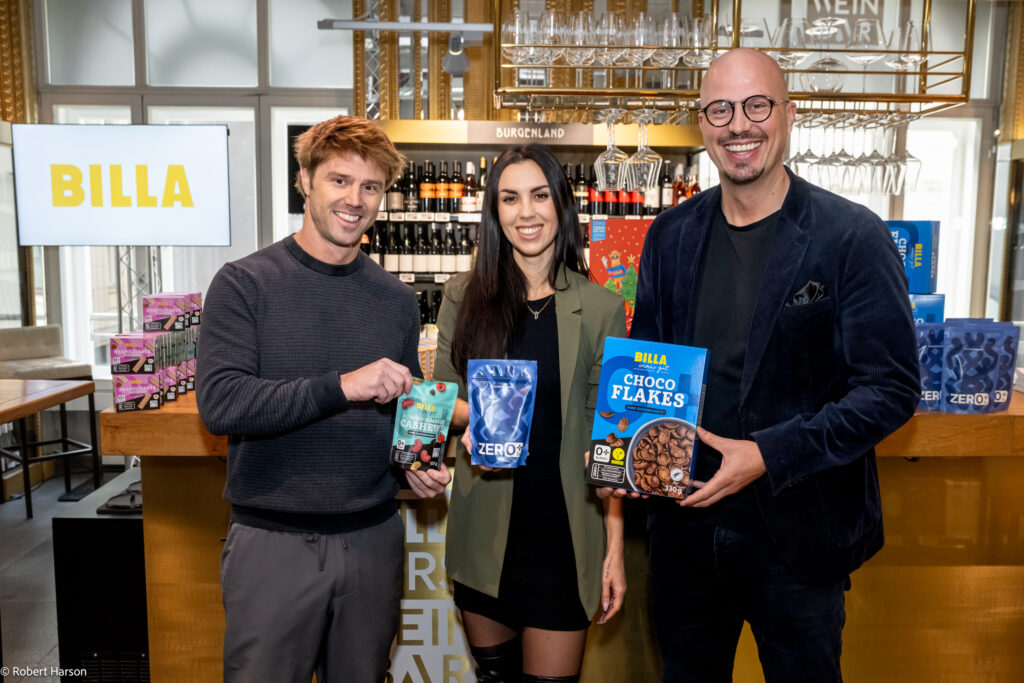
In its initial years, Neoh operated as a CPG company, selling chocolate bars, wafers, and cookies. It has since expanded to a B2B model, supplying Zero+ to manufacturers and retailers for an array of applications.
This includes Rewe Group’s Billa supermarket chain, which offers treats such as Neapolitan slices, mini chocolate biscuits, chocolate-raspberry cashews, chocolate and vanilla puddings, and breakfast cereals made with Neoh’s sugar replacer.
The ingredient has appeared in ice creams, flavoured waters, sparkling drinks, doughnuts, and other baked goods, too, with partners including Dunkin’ Austria, Nöm, Anker, Stamag, and Biogena. Plus, the startup is developing protein bars, sauces (like ketchup), jams, and even yoghurts.
“This is not a short-term trend. It is a structural shift in consumer demand, regulation, and portfolio strategy,” said Rewe’s Tischer. “With Zero+, we see a technology that delivers where many alternatives fail: strong sensory performance, industrial scalability, and applicability across categories.”
In 2025, Neoh’s consolidated revenues reached €14M, with a net loss of €3M, largely due to the volatility of the cocoa supply chain, according to Just Food. It’s why many companies are now banking on cocoa-free chocolate alternatives, a potential new market for Neoh, which is expecting sales in excess of €20M in 2026.
Another startup working in the sugar-fibre axis is London-based Zya, which has developed an enzyme that can convert sugar into fibre inside the digestive system. Israeli firm Better Juice is using microbial enzymes to also convert fruit sugars into dietary fibre and non-digestible sugars in a range of food and drink products.
Fellow Israeli player BlueTree Technologies uses ultra-filtration technology to remove sucrose and lactose from juices, beer and milk without affecting sweetness, and Thailand’s IncreBio uses precision fermentation to control the pathway of sugar-reducing microbes in bioreactors to make Incredible Juice, which has a 70% lower natural sugar content.
Elsewhere, several companies are working on sweet proteins, a class of sweeteners derived from natural proteins and fermentation. Oobli is approved to sell three sweet proteins in the US, and Amai Proteins and MycoTechnology are cleared to commercialise one each. Others include California’s Sweegen, Colorado-based MycoTechnology, and Chilean company Naturannova.