

Pentasweet Breaks Ground on $76M Factory for Precision-Fermented Sweet Proteins


Lithuanian food tech startup Pentasweet has begun construction of its €65M ($76M) precision fermentation facility to produce the sweet protein brazzein.
Building on the global momentum for sugar alternatives, Lithuania’s Pentasweet has kicked off construction on an 8,000 sq m sweet protein factory.
The food tech startup produces brazzein, a natural sweet protein found in the West African Oubli fruit, which is 500-2,000 times sweeter than sucrose. It enables food and beverage companies to reduce or replace sugar without compromising on taste, functionality or costs.
The upcoming facility at the Vilnius City Innovation Industrial Park is supported by a €65M ($76M) investment, and is set to begin operations in the first half of 2027. It’s designed to produce brazzein equivalent to tens of thousands of tonnes of sugar annually.
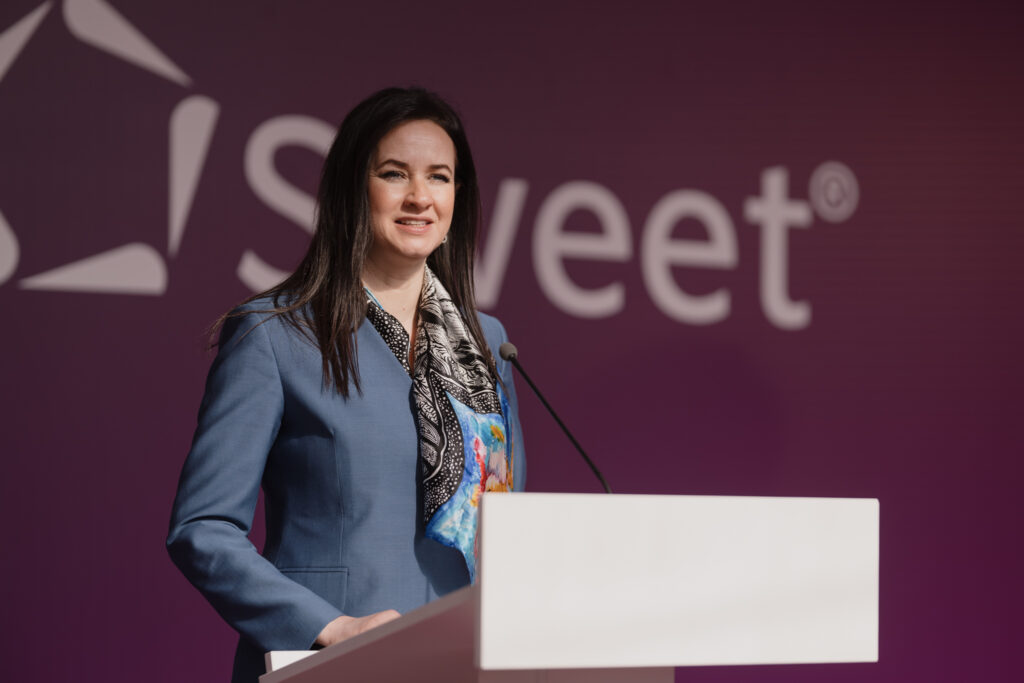
“Lithuania is consistently strengthening its high-value-added economy and is capable not only of creating innovation but also of turning it into real projects,” said Inga Ruginienė, Lithuania’s prime minister.
“The Pentasweet factory is the first brazzein production centre of its kind in Europe, demonstrating that Lithuania can be among global leaders in life sciences,” she added.
Pentasweet’s brazzein is 1,500 times sweeter than sugar
Globally, one in nine adults suffers from diabetes (mostly type 2), and nearly half of the population is overweight or obese. Excess sugar consumption has been linked to an increased risk of both conditions, underscoring the need for sugar-reducing solutions such as sweet proteins.
Brazzein is naturally found in Oubli, though harvesting enough of the fruit for large-scale production of brazzein isn’t possible. The remoteness of its source locations makes this a challenge, contributing to what is already a lengthy and laborious process with little yield.
Pentasweet, founded in 2022, is one of several startups leveraging precision fermentation to solve that bottleneck. The technology involves inserting a DNA sequence into microbes to teach them to produce the desired molecules during fermentation.
The Lithuanian firm genetically engineers food-grade yeast to produce brazzein in a controlled and scalable manner. Its process eliminates agricultural variability and ensures consistent supply and quality, while enabling a more efficient use of raw materials – it plans to direct the resulting sidestreams towards energy generation, such as biofuel production.
Brazzein offers a clean taste and has no impact on blood sugar or gut health. It is naturally digested as a protein, and is therefore known not to cause laxative effects.
Given the heightened potency of the sweet protein – Pentasweet’s brazzein is 1,500 times sweeter than sucrose – the ingredient can be used at low inclusion rates to replace sugar, supporting cost-in-use efficiency and reducing logistical burdens.
Moreover, Pentasweet’s protein is highly water-soluble and heat-stable, and a small-scale evaluation has exhibited high taste acceptability and virtually no bitterness or off-flavours. This makes it suitable for a wide range of applications, including confectionery, jams, dairy, and protein-fortified products.
“Our main goal is to contribute to the promotion and development of healthier dietary solutions. We believe that the broad application of brazzein in the food industry has strong potential to replace added sugar or other sweeteners. This enables the creation of healthier products without compromising taste or increasing cost,” said Pentasweet co-founder Danas Tvarijonavičius.

New factory to create 30 highly qualified jobs
According to Pentasweet, its large-scale factory will be able to produce volumes equivalent to Denmark’s total sugar consumption over a two-month period once phase two of construction is complete. It has been granted the status of a major investment project by Lithuania’s economy and innovation ministry, since it can boost the domestic life sciences sector and open up export opportunities.
“Innovations of this scale do not happen by chance – they require not only a strong scientific base, talent, and a functioning ecosystem, but also active government involvement. Pentasweet reflects the result of targeted investment and collaboration, where technology developed in Lithuania successfully transitions into high-value-added manufacturing and targets global markets,” said economy minister Edvinas Grikšas.
The construction is partly financed through a loan from national development bank ILTE, and the facility is described as a “technologically complex” project where structural, architectural, and engineering solutions must be fully aligned with a highly sensitive production technology.
“This is a meaningful investment not only in the economy but also in people’s health. Solutions that enable reduced sugar consumption have great potential to transform the food industry and everyday habits,” noted Prime Minister Ruginienė.
Most processes at the factory will be automated, creating around 30 new highly qualified jobs, from biotechnologists and engineers to automation specialists. The availability of such talent is why Vilnius was chosen as the location for the plant.
“Talent is concentrated here, modern infrastructure is being developed, and a favourable environment is being created for high-value-added projects,” said Vilnius Mayor Valdas Benkunskas.
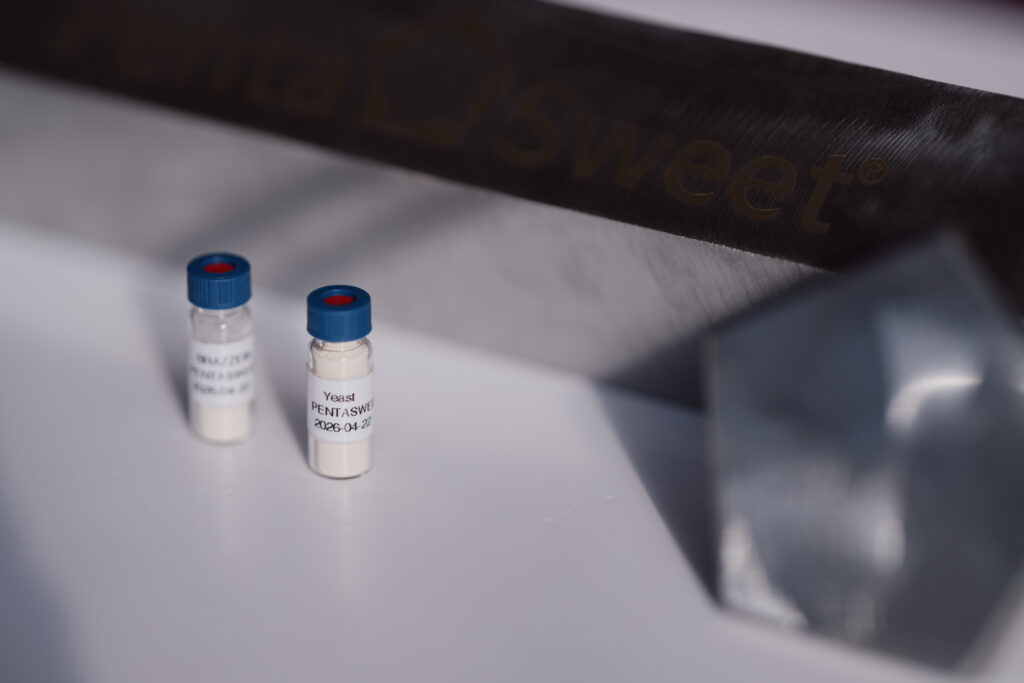
“Brazzein production is an extremely complex process that can only be executed by organisations with [a] very high level of expertise. This is the result of decades of development in the life sciences sector for Lithuania,” added Tvarijonavičius.
He told AgFunderNews that Pentasweet plans to file for food additive approval in the EU this year. A bunch of companies are already cleared to sell precision-fermented brazzein in the US, including Oobli, Perfect Day, Sweegen, Microfarmtory, and Nanjing Bestzyme.
Oobli and Israel’s Amai Proteins, meanwhile, have too received approval from the US Food and Drug Administration to commercialise monellin, a sweet protein originally found in serendipity berries. Plus, MycoTechnology has been cleared to sell a sweet protein derived from Hungarian honey truffles in the US.