

Upside Foods: Cultivated Meat Leader Expands Into Life Sciences with Cell Culture Media Company

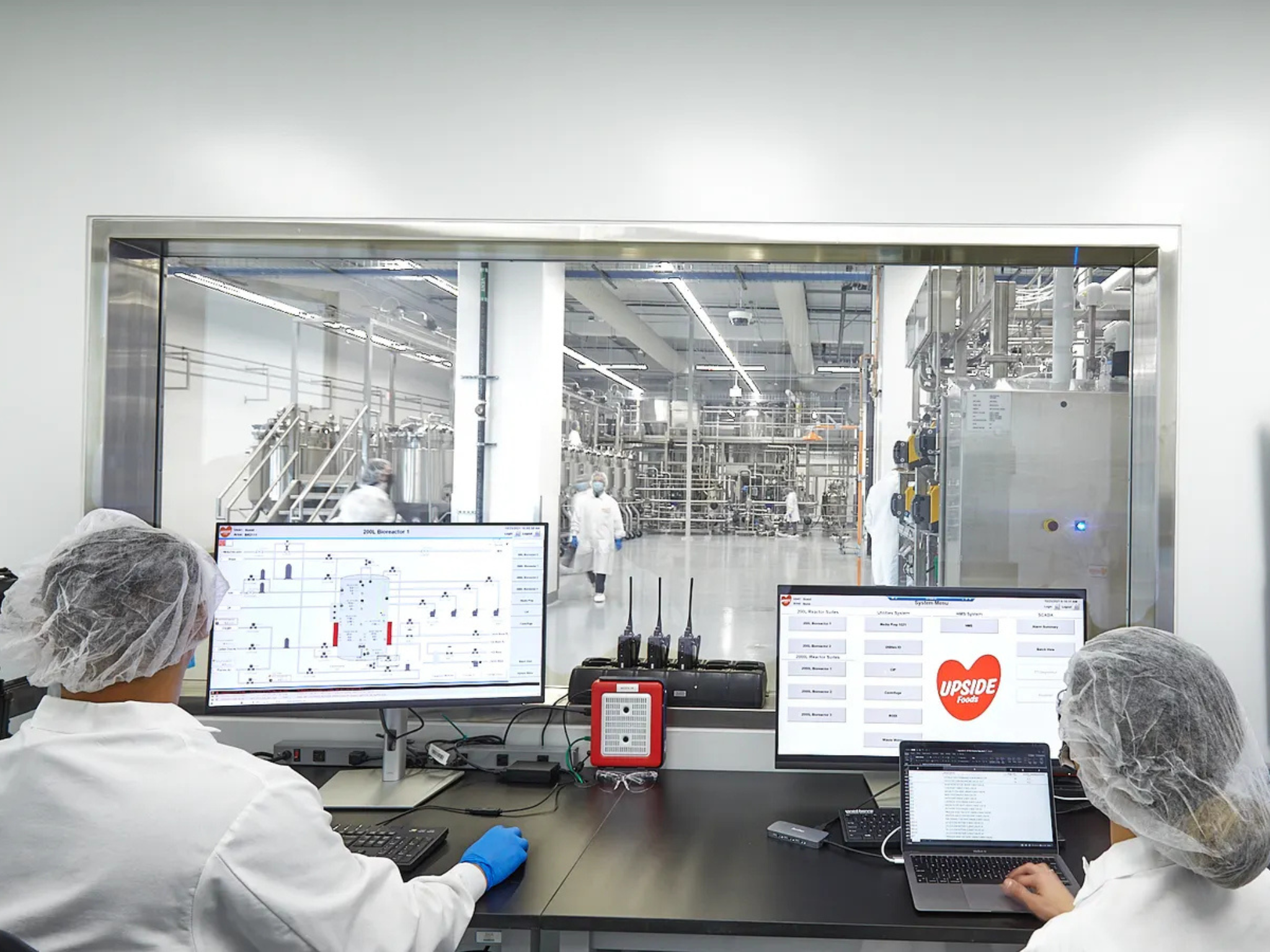
US cultivated meat pioneer Upside Foods is branching out its cell culture expertise by launching a new division targeting the life sciences sector, called Lucius Labs.
One of the leaders of the cultivated meat category has diversified beyond food to offer cell culture media and analytics services to the life sciences industry.
California-based Upside Foods, among the only companies approved to sell cultivated meat in the US, has spun off a new business, Lucius Labs, which will offer an array of media formulations, buffers and stem cell formulations to accelerate companies’ R&D and help lower their costs.
In a LinkedIn post last week, Upside Foods CEO Bob Newman said the company was looking for a new senior sales manager “to help build a new vertical business in the life sciences industry, with initial focus on cell culture media”.
“Our team has developed deep expertise in cell culture media based on extensive work in cultivated meat, and we are selling cell culture media into adjacent industries,” he said.
As reported by AgFunderNews, his initial post mentioned Lucius Labs, but it has since been edited to remove the name of the new division.
Lucius Labs will target ‘human and animal health’
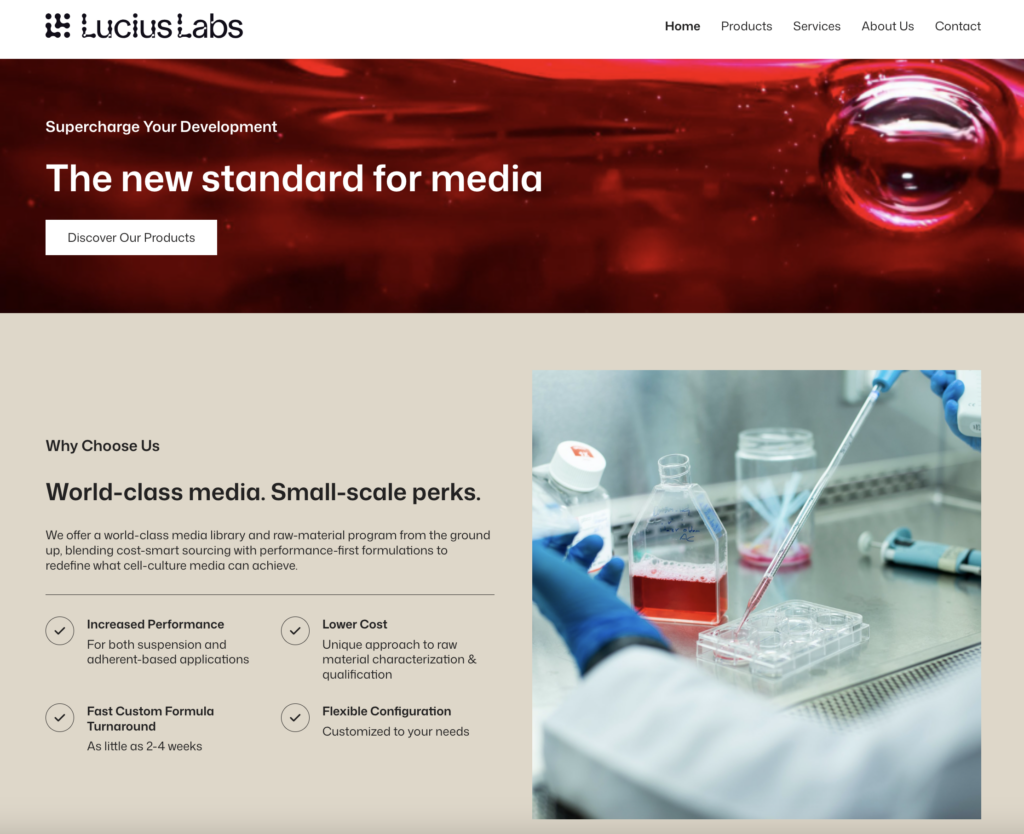
On its website, Lucius Labs suggests it’s “setting the new standard in media” by offering a “world‑class media library and raw‑material programme from the ground up, blending cost‑smart sourcing with performance‑first formulations to redefine what cell‑culture media can achieve”.
“It’s no secret that the legacy approach to cell culture media is outdated, inefficient, and expensive,” it says. “Bringing together an expert team to reinvent media development solved for huge barriers: our significant benefits in cost and custom formula turnaround time – without any drawbacks to performance – unlock massive potential for life-saving technologies.”
The website further states that Lucius Labs can help boost performance for both suspension- and adherent-based applications, lower costs with a unique approach to raw material characterisation and qualification, and produce tailored formula in as little as two to four weeks.
Its analytics services have a range of assay offerings (lab tests to find and measure the amount of specific substances in samples), covering 63 targets, including amino acids, minerals and dozens of other elements. Lucis Labs says these often require 10 times less biomass.
“Cell culture media products will target human and animal health bioprocessing applications, including tissue engineering, stem cell therapy, cell therapy, gene therapy, organoid production, viral vector production, vaccine production, and antibody production,” Newman wrote, after omitting Lucius Labs’s mention from the post.
Upside Foods’s diversification reflects cultivated meat’s troubles

Upside Foods’s foray into life sciences is likely a way for it to generate revenue in the near term. It is the most well-funded cultivated meat company on the planet, having raised more than $600M. However, it hasn’t sold any products since hitting pause on its restaurant plans in 2024.
It comes during a tumultuous time for the category, where investment has dipped dramatically since the highs of 2021. Cultivated meat startups raised $139M in funding in 2024, a 40% decline from the previous year, and things fell even further last year, with the category only attracting $36M in the first nine months.
The cash squeeze and failure to fundraise have led to the closure of some leading startups, including Believer Meats (which, like Upside Foods, had secured both FDA and USDA approval to sell cultivated chicken) and Meatable.
The latter’s sudden shutdown came months after it acquired parts of the cultivated meat platform of UK firm Uncommon Bio, which pivoted its business strategy to focus on therapeutics instead.
Reacting to the formation of Lucius Labs last week, Elliot Swartz, senior principal scientist for cultivated meat at the Good Food Institute (GFI), identified this “emerging trend in the cultivated meat sector to bring in revenue from other products and services besides meat products”.
GFI founder and president Bruce Friedrich, meanwhile, called it “such a huge and positive move”.
Upside Foods – which conducted multiple rounds of layoffs in 2024 and 2025 – has paused its plans to build a large-scale factory in Illinois, and instead has been working to expand the capacity of its existing EPIC facility in Emeryville. At full capacity, this would be able to churn out as much as 400,000 lbs of cultivated chicken.
In an interview with Green Queen last year, the company said it was working to commercialise shredded chicken made using suspension technology, instead of the tissue process used for its fillet, whose high concentration of cultivated cells (99%) made large-scale production unfeasible. It was targeting approval and launch for the new product in 2025, but that has yet to materialise.
Separately, Upside Foods has been battling with state legislators in the courts, having filed lawsuits against Florida and Texas‘s bans on cultivated meat. Judges have allowed both cases to move forward. “This is a safe, new way to produce real meat,” Uma Valeti, co-founder and CEO of Upside Foods, said last week. “The government shouldn’t ban it just to shield entrenched interests from competition.