

Bonvivant Becomes Sixth Vegan Michelin-Starred Restaurant in Flexitarian Germany


Bonvivant Cocktail Bistro, a one-Michelin-starred restaurant in Berlin, has ditched dairy and eggs from its brunch offerings, completing its transition to a fully vegan menu.
Plant-based haute cuisine is on fire, as more and more of the world’s best restaurants transition away from animal products.
Berlin’s Bonvivant Cocktail Bistro, which has held a Michelin star since 2023, has become the latest to do so. The erstwhile vegetarian eatery turned its entire dinner menu vegan at the start of 2025, and after another year of R&D, it has now eliminated dairy and eggs from its brunch menu too.
This makes Bonvivant the world’s sixth fully vegan Michelin-starred restaurant, a list that has seen three additions in the last year. It’s a sign that, despite Eleven Madison Park’s decision to bring back meat to its menu, the appetite for plant-based fine dining remains as large as ever – especially in Germany.
The country represents Europe’s largest market for plant-based food (something other nations have taken notice of), and is home to the world’s biggest flexitarian population. And its policies align with this shift, with the latest national dietary guidelines urging citizens to eat less meat and dairy, and more plant-based foods to promote human and planetary health.
Bonvivant turns to plants for elevated taste, creativity and sustainability
Bonvivant has been around since 2019, built on a vegetable-forward philosophy that emphasises local sourcing, seasonal ingredients, and environmental friendliness.
“We cook vegan food, mainly with ingredients from Brandenburg, and adhere absolutely to the seasons, using everything from ‘leaf to root’,” head chef Nikodemus Berger told the Michelin Guide. “We donate food to food banks, use energy-efficient appliances, teach our staff and ensure our employees are fairly paid. The fight against discrimination and for diversity is close to our hearts.”
The eatery’s switch to a fully plant-based dinner menu last year “demonstrated how diverse and enjoyable” vegan fine dining could be, it wrote in an Instagram post.
“We are taking the next step with our brunch service to show that a high-end brunch experience is also possible without animal products. For us, this marks a consistent further development of our concept and an exciting new challenge for our team,” it explained.
Speaking to Restaurant Ranking magazine, Berger outlined that Bonvivant’s decision to turn fully plant-based was “in favour of the best taste, the highest creativity and climate friendliness”, noting that the transition took time as his kitchen wanted to create zero compromises on taste without using meat or dairy alternatives.
Germans hungry for planet-friendly diets
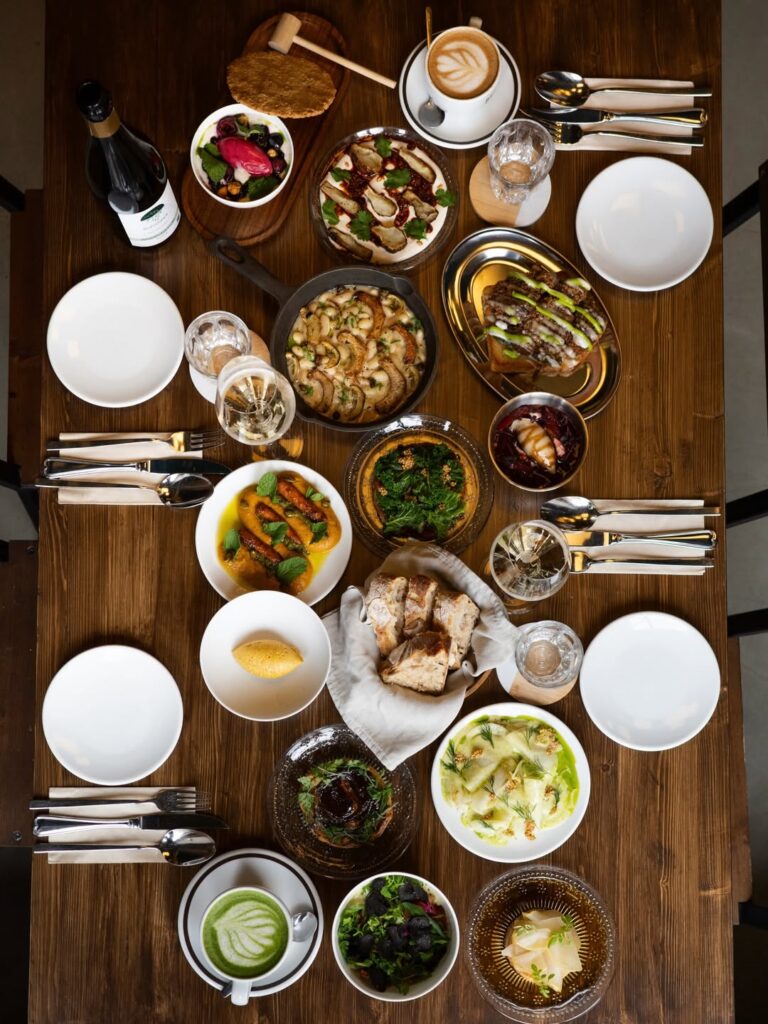
“We were never interested in creating cuisine that imitates animal products, but rather in creating independent innovations that delight our guests with their taste, texture and presentation,” said Berger.
This is in line with how Germans are eating now. Polling shows that half of adults here want to change their diets by either reducing meat or eating more plant-based food, and they’re more likely to have eaten a vegetable-based meal over plant-based meat over the last 12 months. Shifting taste preferences are the primary factor pushing them away from meat and dairy.
Bonvivant said the move to a plant-based menu enables it to “unleash even more culinary creativity and operate even more sustainably – without compromising on taste”. “We want to prove that vegan dining is not about sacrifice, but a forward-looking form of culinary culture,” it stated.
Climate and health experts in Germany and internationally agree that plant-rich diets are the best way to keep the food system resilient in the face of the climate emergency. This is the basis of the Eat-Lancet Commission‘s Planetary Health Diet, as well as the German nutrition guidelines.
Revised in 2024, the latter guidance recommends making 75% of diets plant-based and halving meat consumption, based on the idea that the larger a food group is, the more you can eat from it.
And German citizens have heeded these calls. Annual meat intake was 13% lower in 2024 than a decade before, while milk consumption reached an all-time low that year. At the same time, the production of plant-based proteins has doubled since 2019, catering to the 51% of consumers who follow a flexitarian, vegetarian or vegan diet.
Bonvivant implores restaurants ‘not to lose sight of sustainability’
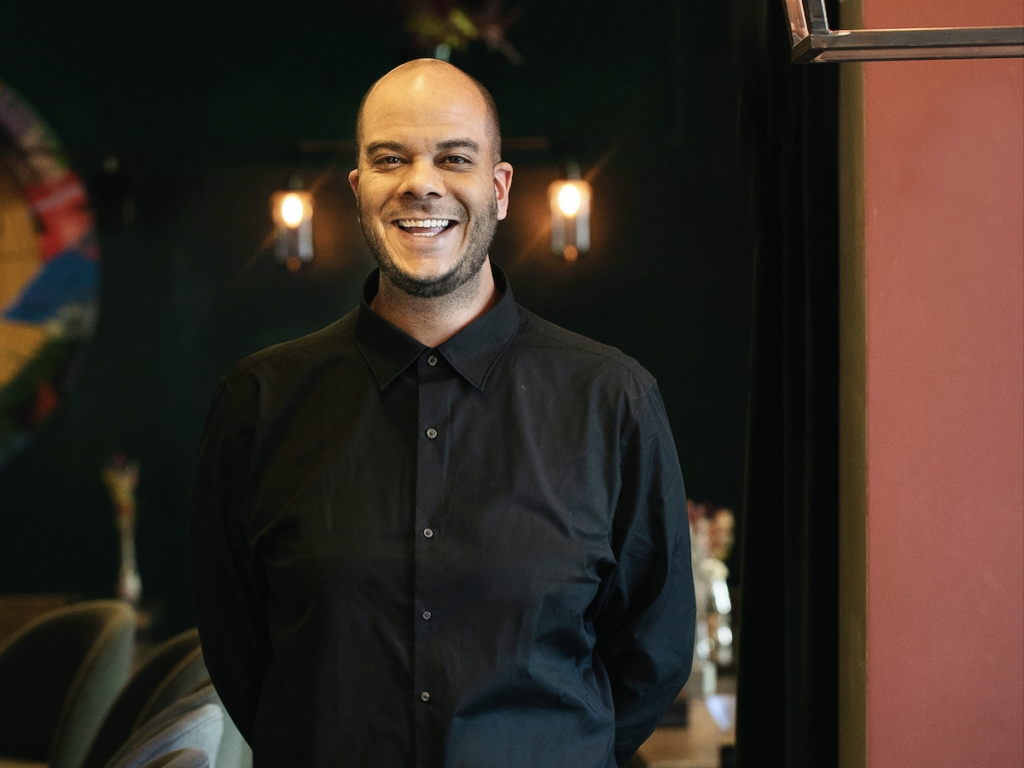
“Vegan cuisine is a forward-looking form of culinary culture, and we want to convince as many people as possible of this,” Bonvivant owner Jules Winnfield told Restaurant Ranking.
Her restaurant’s turn comes amid the wider trend of plant-based restaurants either shutting down or adding animal products to the menu. Daniel Humm’s three-star outpost, Eleven Madison Park, is the most prominent example of the latter, reintroducing meat four years after eliminating it.
“Giving up has never been a good option,” said Winnfield. “We are delighted not only to prove to our guests that vegan Michelin-starred cuisine is a win in every respect, but also to encourage colleagues not to lose sight of sustainability and contemporary cuisine.”
Bonvivant, which has won a Michelin Green star, joins Dutch establishment De Nieuwe Winkel (which has two stars), Germany’s Seven Swans, Switzerland’s KLE, London’s Plates, and Seoul’s Légume (all one-starred) as the only vegan restaurants to have a Michelin star. The latter two entered the guide just last year.
Also in 2025, Alain Passard’s legendary three-starred French eatery, Arpège, announced a switch to an almost all-vegan menu, with the exception of honey sourced from its own beehives.