

UK Startup Shellworks Bags $15M to Expand Plastic-Free Packaging from Waste & Microbes

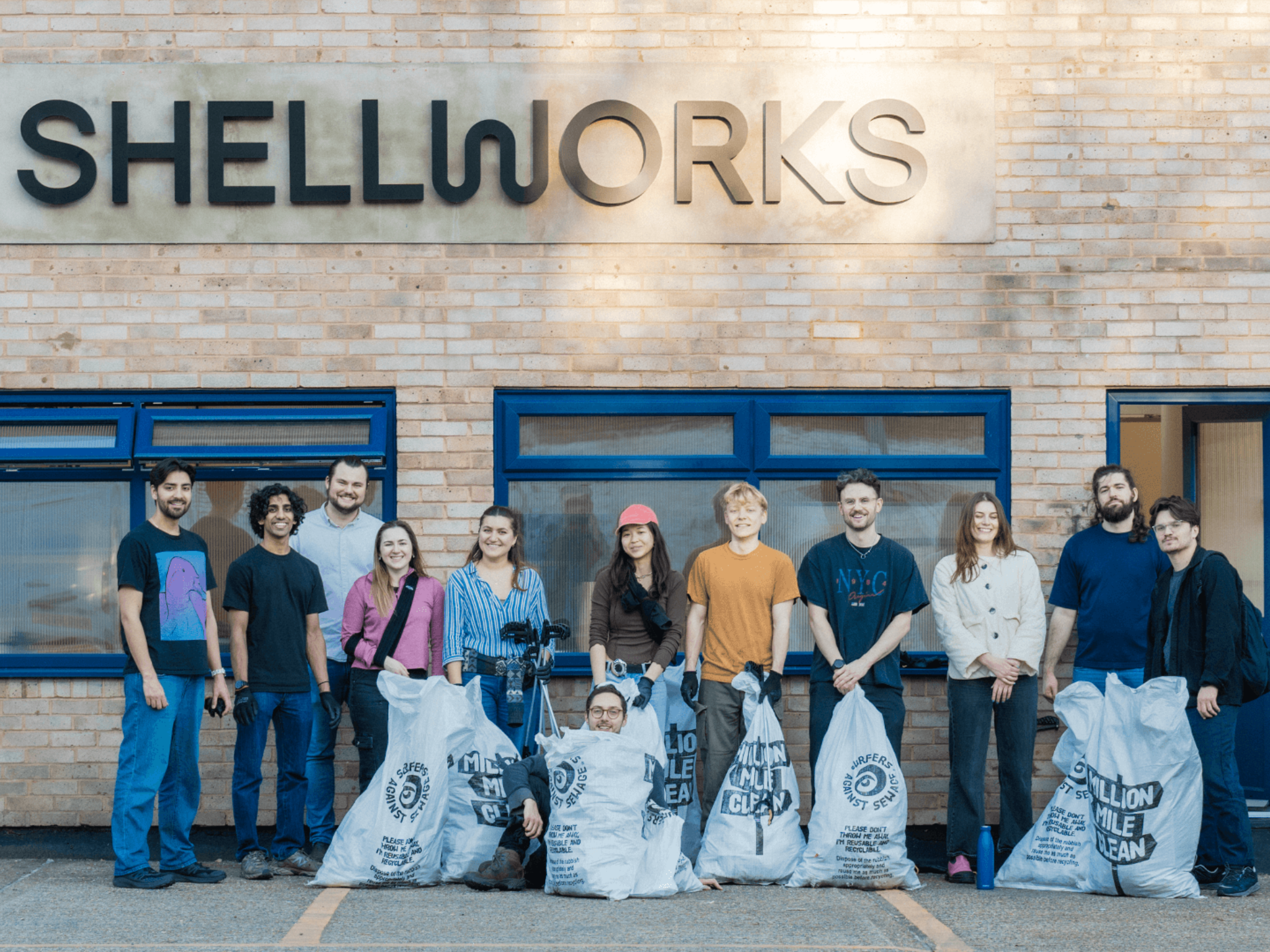
British sustainable packaging firm Shellworks has raised $15M in Series A funding for its plastic-free Vivomer material, which is produced via the microbial fermentation of waste.
London-based Shellworks is eyeing an expansion of its microbial alternative to plastic packaging with the closing of its latest investment round.
The $15M Series A financing was led by Parisian impact investment fund Alter Equity, with further participation from Nat Friedman, JamJar, and existing backers like Founder Collective, Local Globe, and Third Sphere.
The new capital will enable Shellworks to acquire more brand partners for its waste-fermented plastic-free packaging line, Vivomer, as well as make a move into the EU and the US.
“For too long, the conversation around sustainable materials has been dominated by the perception that they’re too expensive for mass adoption,” said Shellworks co-founder and CEO Insiya Jafferjee. “We’re proving that’s no longer true.”
Félix Mounier, associate at Alter Equity, noted: “Shellworks represents exactly the kind of innovation we need to see in the materials economy. They’re not just creating a better material, they’re building the infrastructure to make it accessible at scale. That’s what will drive real change and contribute to the plastic-free economy we are supporting at Alter Equity.”
Vivomer has caught the eye of Unilever and Pamela Anderson
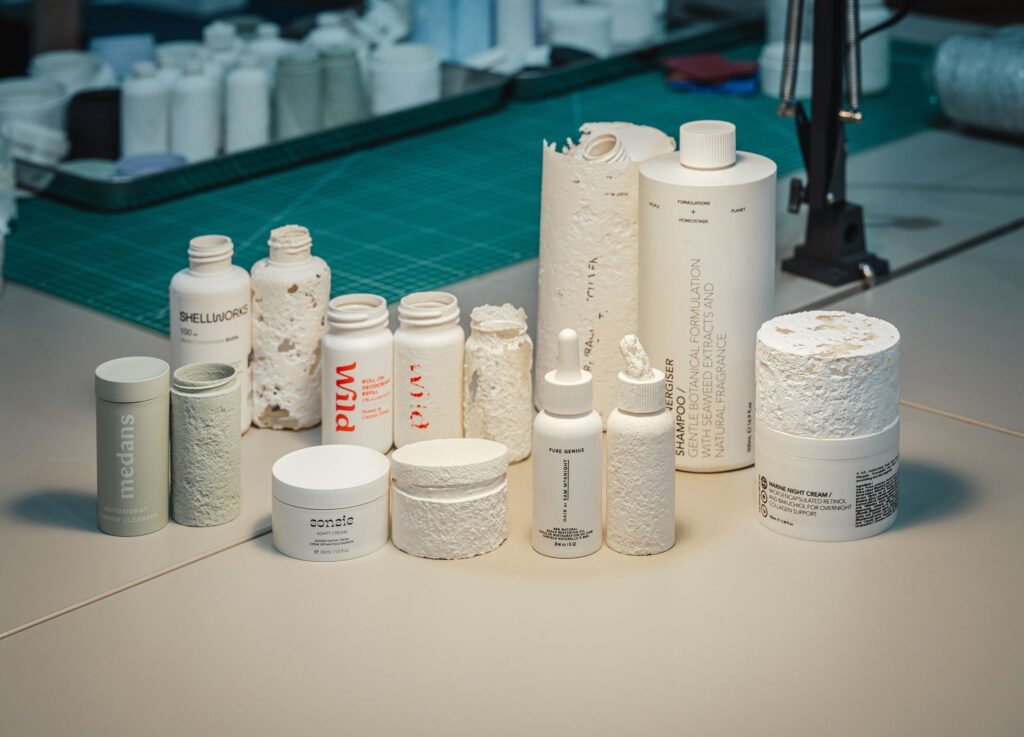
Founded in 2019 by Jafferee and chief product officer Amir Afshar, Shellworks uses microbes to ferment second-generation feedstocks, like used cooking oil, into Vivomer. This is a natural, biodegradable polymer that comprises minerals and pigments suitable for home composting.
Vivomer is free from fossil-based or conventional synthetic plastics. Petrochemical-derived plastic takes 20 to 500 years to break down and is responsible for 3.4% of global emissions – that share will only increase as production triples by 2060. These materials are hard to recycle and end up populating landfills and leaking microplastics into our soil and water supply.
Shellworks’s material doesn’t contain any toxic additives or create persistent microplastics, instead biodegrading entirely into elemental compounds (water and CO2) when disposed of.
Vivomer can be finetuned to be rigid or flexible, and in both matte and glossy finishes, lending itself to a range of applications, from pipettes and droppers to jars, bottles, and screw caps.
The BPA- and PFAS-free material is already being used by a number of innovators, including sustainable personal care company Wild, whose refillable shower gels, roll-on deodorants, and soaps are encased in Vivomer packaging.
“Vivomer is at the forefront of sustainable material innovation and has helped Wild deliver on our mission “Their desire to drive change and solve problems has been amazing to watch, and their passion for a better packaging future is infectious,” said Freddy Ward, co-founder and CEO of Wild, which was acquired by Unilever last year.
Aside from Wild, Shellworks’s sustainable material is being used by brands like Haeckels, Abel, Eclo, Hair by Sam McKnight, Wildsmith, Katao Botanicals, and Sonsie Skin, the new beauty label by Pamela Anderson.
“When people known for shaking things up believe in what you’re building, it validates that we’re onto something,” Jafferjee said of the latter in a LinkedIn post. “The funding will help us build the infrastructure that makes this accessible at scale. The path from here to genuine scale is no longer speculation and now just execution.”
Shellworks builds on renewed momentum for plastic-free packaging
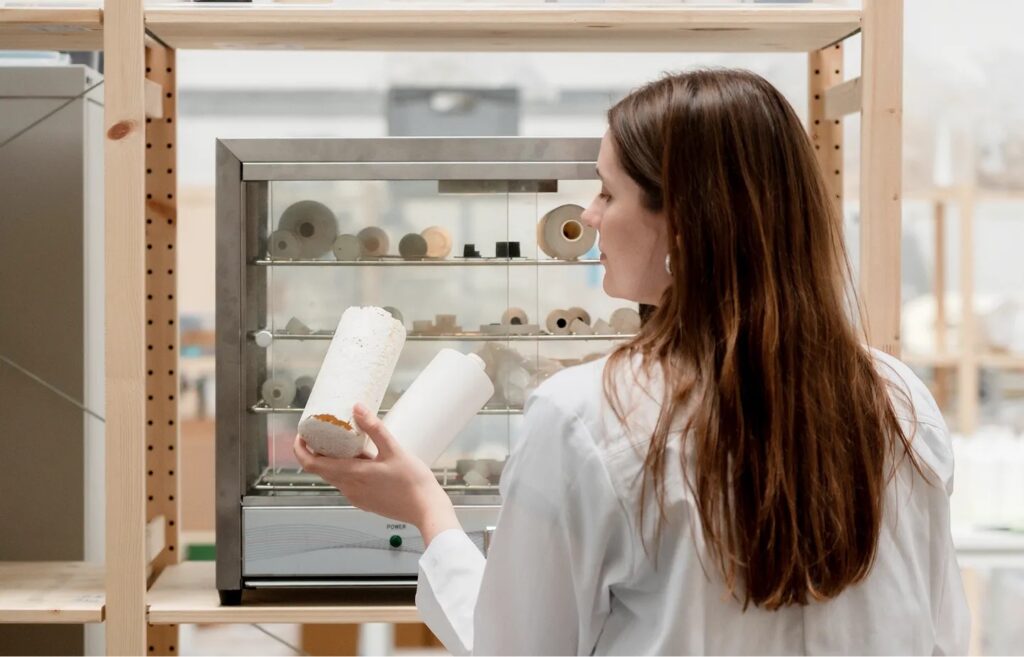
Eco-friendly plastic alternatives tend to be more expensive; Shellworks says it has achieved a crucial milestone in its bid to close the price gap. Vivomer is already cost-competitive with aluminium, glass, and paper, despite producing at a fraction of the scale (around five million units annually).
This is key, since 64% of Europeans want to keep purchasing sustainable products, but only if they cost the same or less than conventional options. As part of their efforts, despite inflation, 37% of these consumers reduced their use of plastic packaging in 2025.
The cost accomplishments will also enable Shellworks to become a viable long-term partner for companies looking to transition away from plastic packaging. That positioning can be evidenced by the availability of Wild products at Tesco and Target, as well as its partnership with personal care brand Phil’s at Whole Foods, marking its move “beyond premium into mass-market retail”, Jafferjee said.
The alternative materials sector has faced its fair share of challenges recently. For instance, Melbourne-based Great Wrap, which produced compostable stretch wraps, recently filed for administration with reported debts of A$39M ($25.5M).
Investors at VC firm Supply Change Capital point to a structural misalignment between startups’ innovations and corporate priorities for the future of packaging. Only 42% of sustainable packaging companies that raised money between 2016 and 2022 have gone on to secure further investment, and total funding in this category was higher in 2022 than between 2023 and May 2025.
However, there are now eight billion tonnes of plastic in the environment, with 141 million tonnes of plastic packaging created annually. Overall, 430 million tonnes of plastic waste are generated globally each year, and only 9% is recycled. So the market for low-impact solutions is still vast.
It’s why investors are still interested in sustainable plastic alternatives. Australia’s Uluu and UK startups Xampla and Notpla all attracted funding for plastic-free packaging solutions over the last 12 months.
Shellworks, meanwhile, will use the fresh capital to target the growing wellness sector in Europe and the US by establishing regional production facilities focused on hard-to-crack technologies like blow moulding.