

Huel Unveils Protein Ramen As First New Product Category After Danone Acquisition

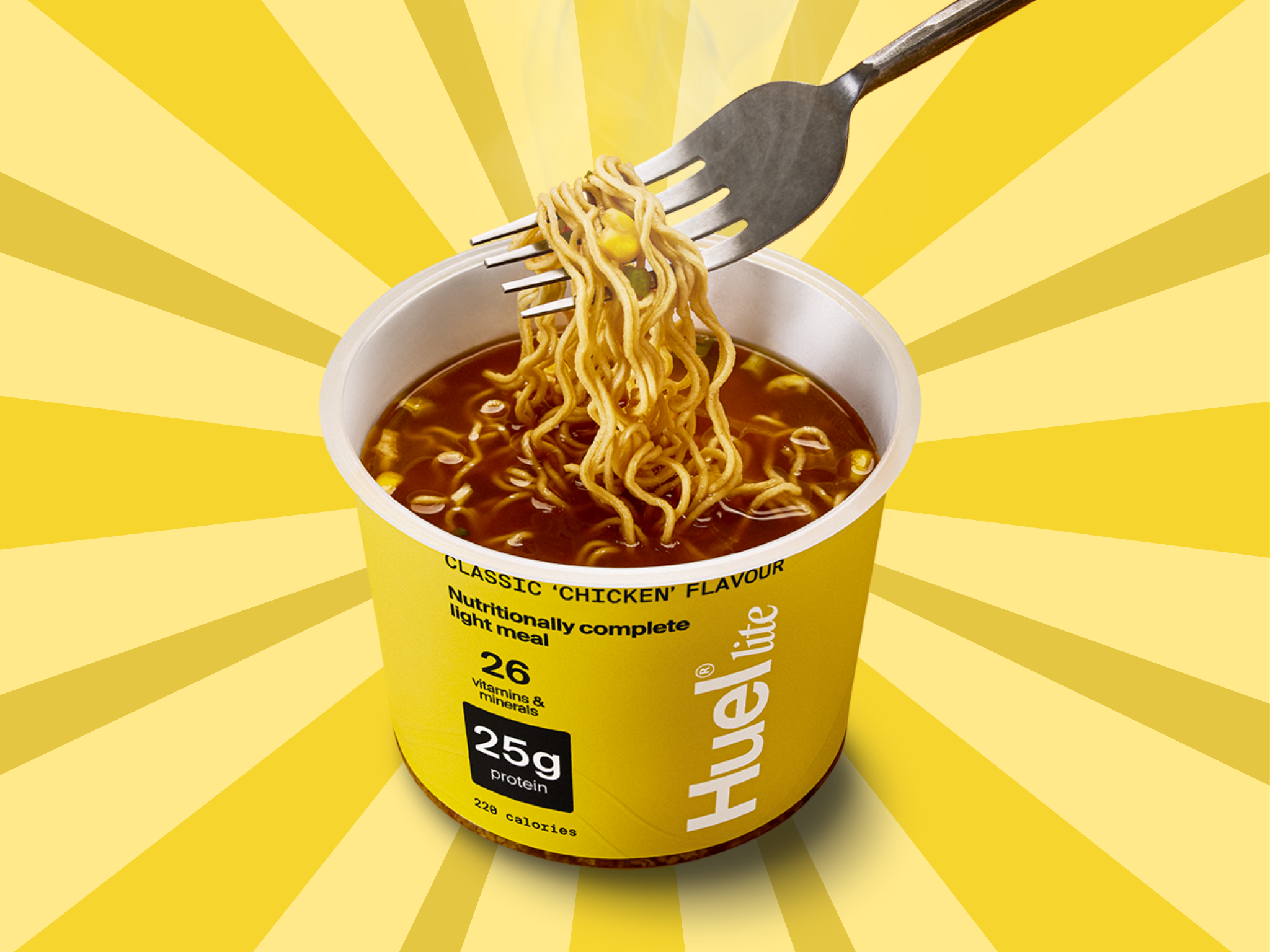
Danone-owned plant-based nutrition brand Huel has unveiled a line of instant ramen that delivers 25g of protein and solves the texture problems of its Hot and Savoury range.
In one of its first launches since being acquired by Danone, Huel is expanding its instant meals range with an entirely new format to deliver its plant-based nutrition solutions.
The UK brand has unveiled Lite Ramen, the latest addition to its Hot and Savoury lineup, which contains 25g of complete plant protein, 3.8g of fibre, and 220 calories per portion, alongside 26 essential vitamins and minerals.
The range is currently available in the UK in three plant-based flavours – classic chicken, spicy Thai, and sweet chilli – with katsu curry set to be introduced at a later stage. A European rollout is expected either later this month or in early July, and there are plans to eventually bring the ramen to the US, too.
“We said a while ago when we delisted some of the Hot and Savoury Pots that it would not be the last time that you saw Hot and Savoury in that form,” Mark Lee, Huel’s junior brand experience and community manager, noted in the brand’s discussion forum.
“The Ramen Lite is filling this nice little niche and will be a great option for an on-the-go, healthy, warm, and nourishing noodle meal that is full of flavour,” he added.
Huel’s ramen launch reflects demand for protein and fibre
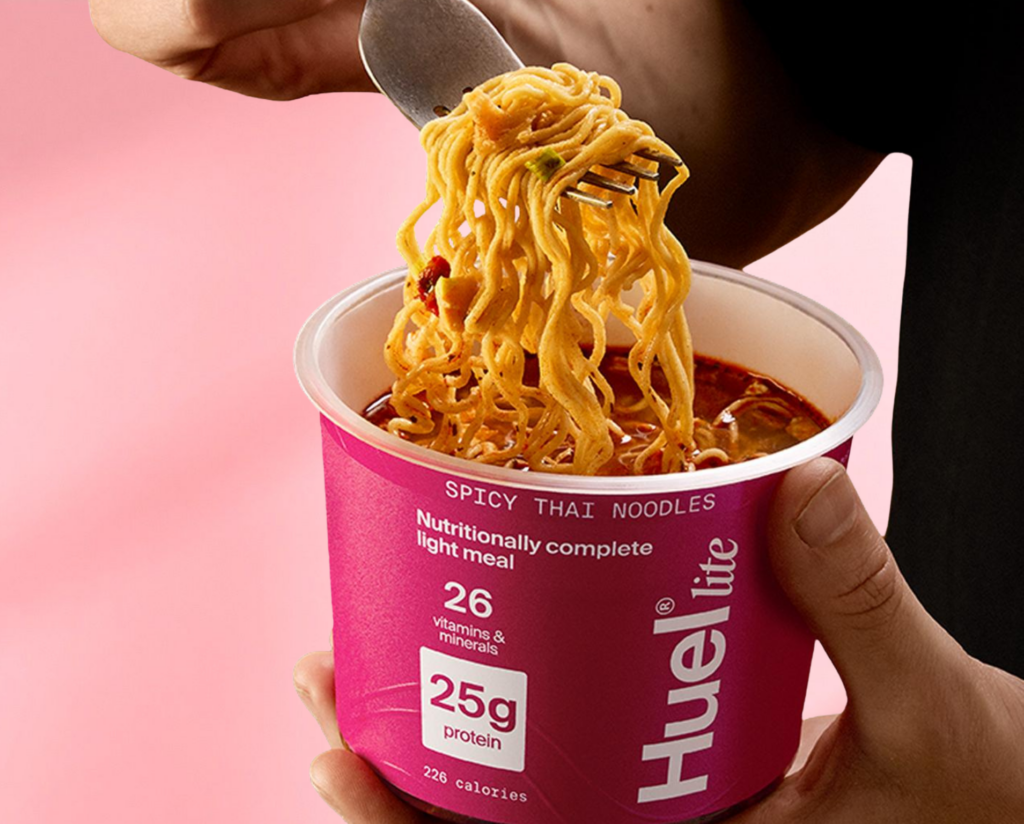
Each packet contains protein noodles, dehydrated vegetables, a sauce, and a vitamin and mineral blend. The noodles are made from wheat gluten, pea protein, wheat, buckwheat and konjac flours, pea fibre, and tapioca fibre. They’re complemented with 14-18% textured pea protein, depending on the variant.
By using a blend of plant proteins, Huel ensures that the ramen products contain all essential amino acids, making them a source of complete protein.
“Wheat protein contains good amounts of amino acids, including cysteine and methionine, but is low in lysine. Pea protein is low in cysteine and methionine but high in lysine,” the company explains. “Combining ingredients ensures everything is covered whilst keeping Huel Ramen plant-based.”
The micronutrient mix includes potassium, calcium, magnesium and zinc, as well as vitamins B12 and D, which are often harder to source in vegan diets.
With the new range, Huel is aiming to meet growing consumer demand for protein and fibre. According to a recent survey by Huel’s parent company, Danone, 45% of Brits are seeking foods with added benefits like protein or fibre.
This is driven by online trends like fibermaxxing and fibrelayering, as well as the rise in GLP-1 use in the UK. Searches for Mounjaro and Zepbound skyrocketed between 2024 and 2025, with over 1.5 million Brits now taking a weight-loss drug (a share that has nearly doubled in this period).
GLP-1 users experience a 25-40% decrease in muscle mass over 8-16 months (several times greater than non-medicated weight-loss approaches and age-related muscle loss), so protein is a priority for these consumers. Dietary fibre, for its part, can trigger the body’s natural GLP-1 response.
Huel is betting on that with its better-for-you ramen. It’s a shift that’s evident in the US, too. Celebrity-backed Immi is one of the leading players in this space, offering pot noodles with up to 19g of plant protein, and instant ramen packets with 28g of protein. Others in this category include Fly by Jing, Hethstia, Chef Woo, and more.
Plant-based food resurgent in the UK
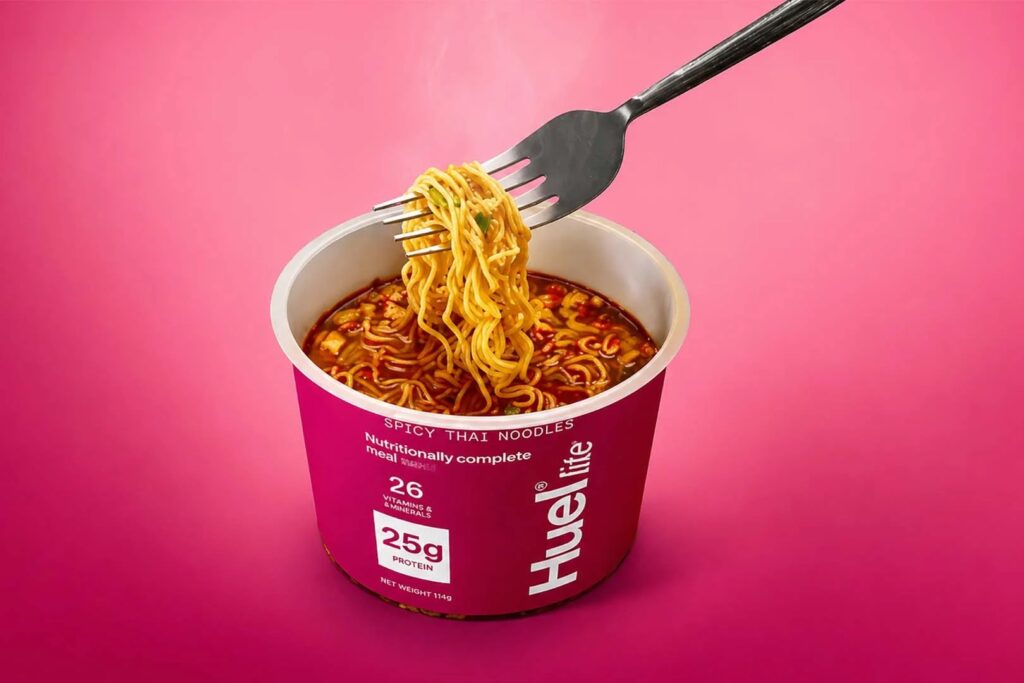
The protein-packed ramen solves a long-standing sensory issue posed by Huel’s Hot and Savoury range of instant and on-the-go meals.
“Most protein powder doesn’t dissolve. It’s viscous. It clumps. And when you’re building a hot meal around it, it has opinions about texture that are very difficult to argue with,” Lee Boakes, VP of new product development and nutrition at Huel, explained in a LinkedIn post. “For a long time, H&S had a mouthfeel the polite among us called ‘distinctive’. The less polite called it other things.”
The Huel team landed on ramen as an ideal solution. “Hot and Savoury has a thick coating sauce. Ramen has a broth. Light, flavourful and genuinely drinkable,” he said.
“Getting our nutrition into a thin, clear and drinkable format while keeping the protein where it needed to be was a different problem entirely,” Boakes added. “The insoluble protein that haunted Hot and Savoury development didn’t disappear just because we changed format. We just found new and innovative ways to work the problem [out].”
Huel’s ramen isn’t just restricted to the Lite category. Next week, it will launch a ramen under its Black Edition label at Tesco, the UK’s largest retailer. This range will kick off with an Asian-style beef noodle flavour, containing 40g of protein and 358 calories per serving.
The products come months after Huel was purchased by Danone in a $1.15B deal, as part of the French dairy giant’s expanded nutrition focus. “What they have achieved in the fast-growing complete nutrition space fully resonates with Danone’s mission of delivering health through food,” Danone CEO Antoine de Saint-Affrique had said at the time.
“Combining their range and best-in-class digital capabilities with Danone’s global reach and deep nutritional expertise offers exciting opportunities into the new and fast-growing nutritionally complete space,” he added.
The launch comes amid a resurgence of plant-based food in the UK. Nielsen analysis showed a near-1% uptick in demand for chilled vegan food across UK supermarkets in 2025, rising to 1.7% in the final quarter of the year.
Lidl blasted past its target to increase alternative meat and dairy sales by 400% by 2025, recording a near-700% hike since 2020. And Tesco reported that the sector was “back in growth”, with sales of whole-food proteins by 12%. Subsequent analysis has estimated that the share of protein sales from plant-based foods in the UK is set to double from 14% in 2025 to 29% in 2040.