

FDA Admits Defining Ultra-Processed Foods is ‘Challenging’, Says It Won’t Ban Them

The Trump administration is finding it difficult to land on a standardised definition of ultra-processed food, according to the FDA’s acting deputy chief, who reiterated that the agency doesn’t plan to ban these products.
Establishing a streamlined definition of ultra-processed food (UPF) is turning out to be more challenging than the US government might have thought.
The Food and Drug Administration (FDA) has been working with the US Department of Agriculture and other federal agencies to develop a definition of these foods, which have become a focal point of the Trump administration’s food policy.
UPFs have been linked to a host of health ailments, including early death. That said, many experts warn against conflating processing with nutrition, suggesting that most research points to the ill effects of consuming junk food that’s poor in nutritional credentials, rather than food that has been overly processed.
The contentious nature of these foods stems from the fact that there’s no standardised definition of UPFs. That’s what the FDA is struggling with – its acting deputy commissioner for food, Donald Prater, said the agency has found it “quite challenging” to set a definition because there are a variety being used out there.
Speaking at the IFT First trade show in Chicago, he stated that the FDA is evaluating different proposals to “try to find something that makes sense”, since the science on UPFs is still evolving.
Further, he confirmed that, despite calls for the government to ban these products, the food regulator doesn’t intend to do so, echoing comments made by health secretary Robert F Kennedy Jr earlier this year.
Lack of standardised definition causes confusion
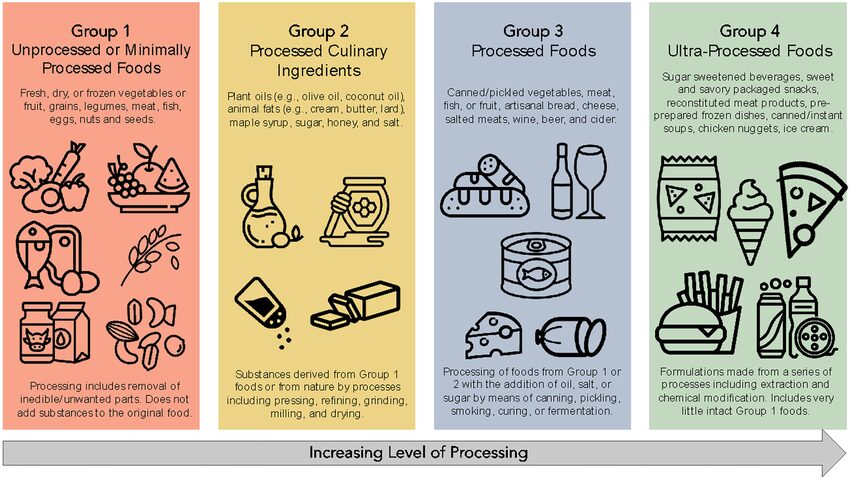
Under the Nova classification that birthed the concept, food is grouped into four categories: unprocessed or minimally processed (like fresh produce), processed culinary ingredients (like olive oil and salt), processed foods (like certain cheeses and artisan breads), and UPFs.
The latter group is made up of foods made with industrial formulations and techniques or containing cosmetic additives thought to be of little culinary use. Put simply, they’re thought of as foods you can’t make in your home kitchen.
The problem is, this is too broad a brush to paint food with. Under this classification, UPFs include an ice cream tub from Ben & Jerry’s, a pack of Oreos, a can of Campbell’s soup, a flavoured yoghurt from Chobani, a box of Kellogg’s All-Bran cereal, and a barista oat milk from Oatly.
The lack of consistency is what has led many health experts to discourage using Nova’s definition of UPFs as a blanket marker for unhealthy food. For example, whole-grain cereals and supermarket breads contain important nutrients, especially fibre, while plant-based alternatives to meat and milk offer protein with much more fibre and less saturated fat than their animal-derived counterparts.
Studies have concluded that these products don’t carry the same health risks as, say, a KitKat bar or a bottle of Coke, so bundling them all in the same category is misleading.
This makes a standardised definition of UPFs crucial. US startup Wisecode has come up with its own version, classifying food as minimal, light, moderate, ultra, or super-ultra-processed – the latter two groups comprise products with many additives, industrial formulations, emulsifiers, and flavour enhancers.
These are highlighted by a verification label called the UPF Standard. The Non-UPF Program and the Non-UPF Project have also launched their own verification marks over the last couple of years.
FDA’s role isn’t to ban UPFs, says deputy chief
The FDA is tackling UPFs at a time when they make up 55% of Americans’ calories, rising to 67% among children. These products now top consumers’ list of health concerns – 72% of them are trying to avoid these products in their diets, and 79% feel they’re a “significant threat” to public health.
They’ve also been a target of the Trump administration, which blamed “highly processed foods” for diet-related diseases in the new (and highly criticised) dietary guidelines. Meanwhile, a MAHA-aligned non-profit paid $8M to air a highly controversial Super Bowl ad attacking UPFs. It starred boxer Mike Tyson, who has been convicted of rape (for which he served a three-year term in prison) and has a history of domestic violence.
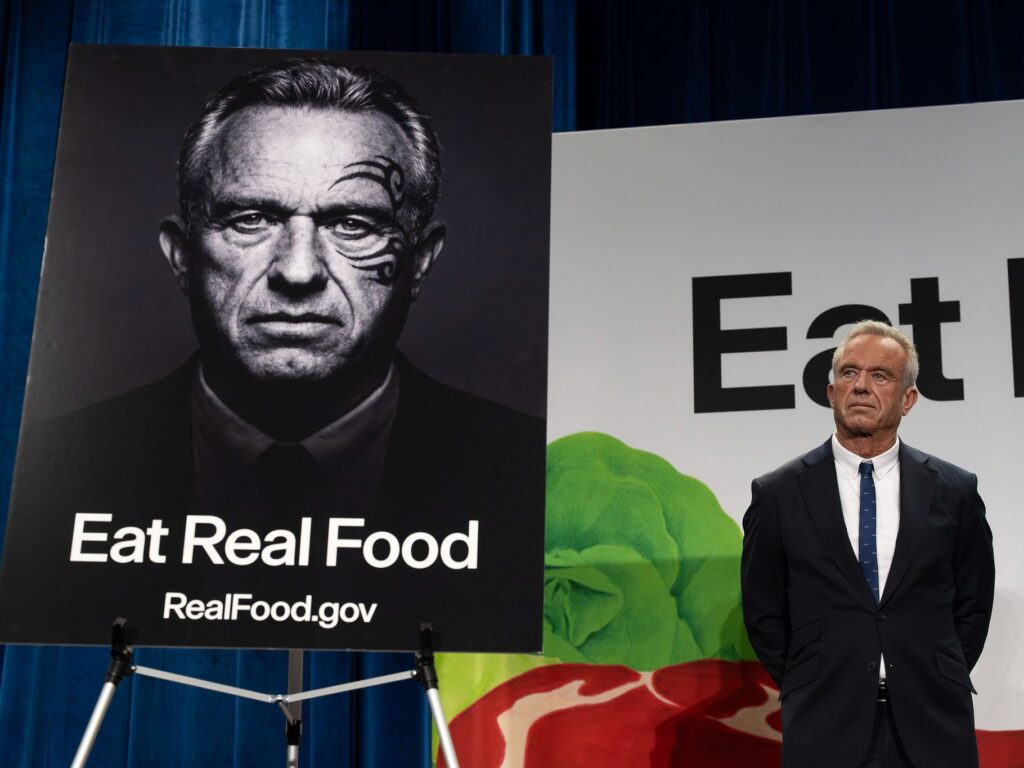
RFK Jr himself has described UPFs as “poison” and previously pledged to remove them from school lunches. Congress is already considering a bill that would ban UPFs from being marketed to children and require them to carry front-of-pack warning labels.
The health secretary recently said the FDA “will act” on a petition calling for the revocation of the GRAS status of certain UPFs. However, an outright ban seems to be off the table.
“As Secretary Kennedy recently said, FDA’s role is not to ban ultra-processed food,” Prater said. “Our role is to ensure that the food supply is safe, that labelling is truthful and not misleading, and that consumers have the information they need to make informed choices for themselves and their families.”
He added that developing a definition is still a priority for the agency: “Just because it’s a tough challenge, it doesn’t mean it’s something that we should shy away from.”
It’s unclear when the FDA will release its eventual definition, and what that would include. The obstacles it’s facing are reflective of the complexity of UPF categorisation, and the importance of getting the definition right for food formulations and policies.