

ADM Invests $16M to Expand Natural Colours as Food Companies Shift Away from Artificial Dyes

Food processing giant ADM has pumped $16M into expanding its Kentucky facility to meet the fast-growing demand for naturally derived alternatives to artificial food dyes.
In a sign of the colossal impact of the MAHA-led backlash against artificial dyes, one of the food industry’s largest suppliers is investing millions to expand its capacity to produce natural food colours.
ADM is investing $16M in its Boone County, Kentucky, facility to significantly ramp up production of its Colors from Nature portfolio, which offers dyes made from fruits, vegetables and botanicals for food and drink manufacturers.
The investment will add 14,000 sq ft of manufacturing space and state-of-the-art production capabilities by early 2027, enabling ADM to increase the capacity of its existing liquid and dry-blended colour solutions and serve the growing demand from its clients.
“As customers respond to evolving consumer preferences and changing regulatory expectations, colour has become a crucial part of successful reformulation,” said Calvin McEvoy, ADM’s president of global flavours.
“This investment strengthens our ability to deliver high-quality, reliable and scalable natural colour solutions from our Colors From Nature portfolio, while further positioning Northern Kentucky as a critical hub for ADM’s North American colours business,” he added.
ADM’s natural colours can help companies manage conversion complexity
ADM’s natural colour capabilities include proprietary products and technologies that help customers solve the complex formulation challenges that come with conversion to natural dyes. The firm says its solutions can simplify product development and commercialisation efforts for food and drink manufacturers.
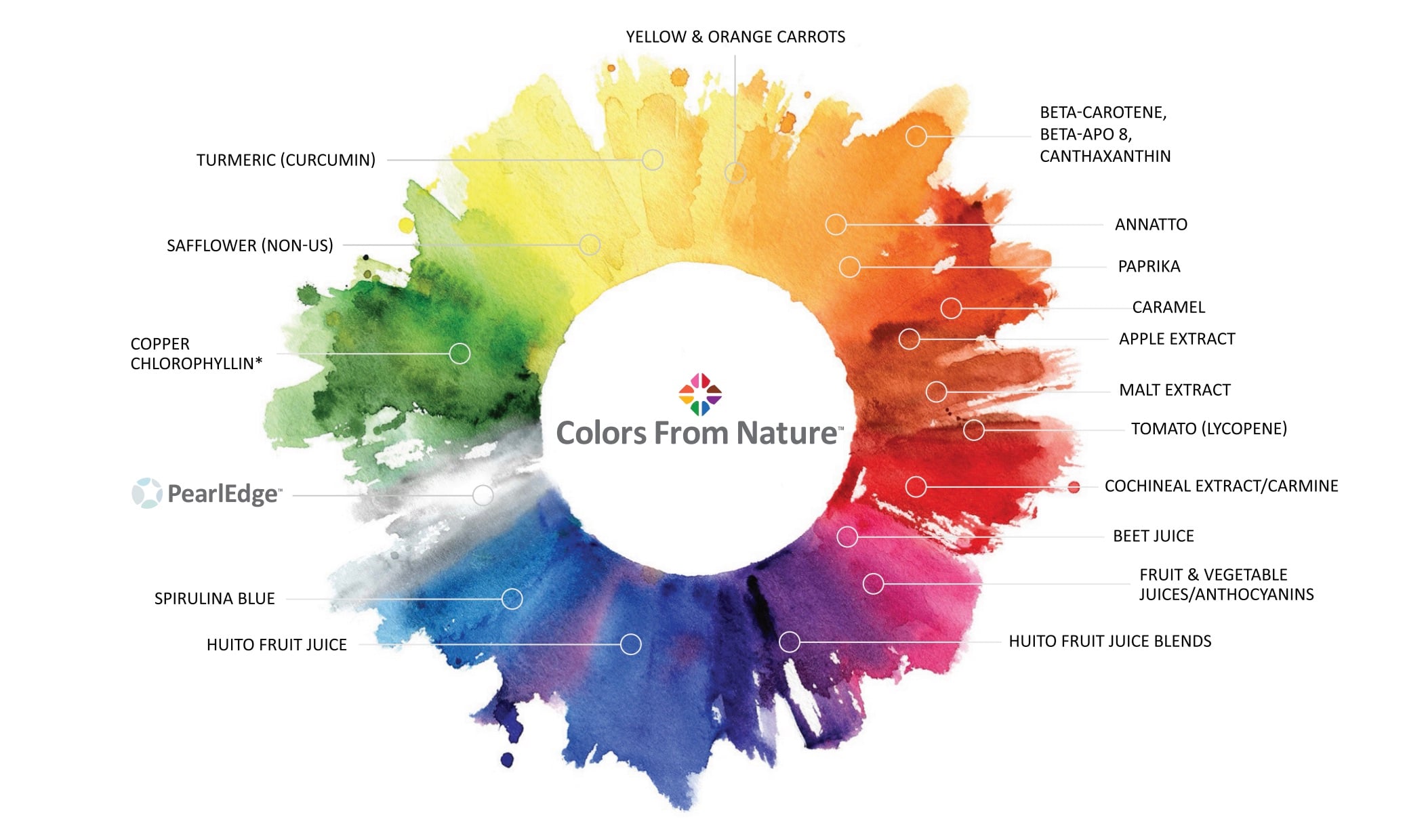
Its Colors from Nature portfolio spans an array of shades, including red, pink, blue, green, yellow, purple, and more, which are mostly derived from plants. For instance, its raw materials include carrots (black, yellow and orange), huito fruit, spirulina, red cabbage, beets, purple sweet potatoes, elderberries, hibiscus, and more.
“Customers are looking for partners who can help them manage complexity, from sourcing and formulation to scale-up and commercialisation,” said McEvoy.
“By combining our global raw material network, localised manufacturing capabilities, and deep formulation expertise, ADM is well-positioned to help customers bring products to market that meet consumer expectations for appearance, taste, clean-label appeal and performance.”
ADM has operated in northern Kentucky since 2014, when it acquired Wild Flavours. It employs more than 1,300 staff throughout the region, and says it has made several investments in production capabilities, innovative technology and local talent to expand its facilities’ role in supplying food and beverage producers.
Aside from the Boone County expansion, it recently invested $26M in a neighbouring facility in Erlanger to boost its capacities for food and drink reformulation, with the capital helping add 40 more jobs to the region.
“ADM’s continued investment is a strong reflection of Northern Kentucky’s ability to support innovative manufacturers as they grow,” said Boone County judge/executive Gary Moore. “This expansion will create quality jobs while strengthening our region’s food and beverage manufacturing sector and helping ADM meet growing demand for naturally derived colour solutions.”
Artificial food dyes are dying
According to ADM, the North American colour conversion market is valued at over $1B, and is driven largely by growing regulatory and consumer pressure on manufacturers to transition from artificial to natural dyes.
That effort is being spearheaded by Robert F. Kennedy Jr. ’s Make America Healthy Again movement. The US health secretary has been pushing food manufacturers to move away from synthetic dyes, and two-thirds of Americans support this call.
Artificial food dyes appear in nearly a fifth of packaged food and beverage products in the US. In fact, research from Innova Market Insights shows that 28% of launches from Big Food companies in 2025 contained such colours.
Shortly before President Donald Trump took office for a second time, the Food and Drug Administration (FDA) banned the use of Red Dye No. 3, a petroleum-derived colourant identified as harmful to both human and planetary health.
Set to come into effect in January 2027, the move brightened the spotlight on Red 40, the industry’s most used pigment. Sourced from the petroleum industry and made via a chemical reaction between two types of sulphonic acids, it’s been linked to hyperactivity in children.
Industry behemoths like Nestlé, Mars, Kellogg’s, General Mills, Kraft Heinz and others have responded by eliminating artificial colours from various products, and the FDA even has a public tracker for such pledges.
That has led to a boom in fortunes for natural dye makers, especially fermentation specialists. In June, Phytolon raised $23.6M to launch its yeast-derived food pigments, starting with beetroot red, which itself was approved for use in the US by the FDA in February.
The same month, University of Cambridge spinout Sparxell closed a $5M funding round for its plant-based colours, which can replace fossil-fuel-derived pigments in the textile, cosmetics, food, packaging, paint and automotive sectors.
In January, Octarine Bio secured $5.8M to launch precision-fermented pigments for food, textiles, and personal care, two months after Chromologics closed an $8M round to launch its food-grade, microbial alternative to synthetic red dye in the US and Europe.