

In A GLP-1 World, Danone Survey Finds Gut Health the Main Driver of Plant-Based Dairy


A major survey by French dairy giant Danone has revealed that health is the biggest driver of plant-based dairy consumption globally, with gut digestion a chief factor, spelling out an opportunity for fibre-enriched, GLP-1-friendly alternatives.
The taste of oat milk matters less than how it feels to your gut, according to a new study by Danone.
The French dairy giant behind plant-based leaders Alpro and Silk surveyed 42,000 adults from 14 countries across Europe, North America and Asia to find out what drives people towards these alternatives. A second survey of over 2,500 plant-based dairy users in the US, the UK and Germany evaluated their agreement with statements on product benefits.
Nearly a quarter (24%) of people described themselves as flexitarian on meat and dairy, and 3% said they follow a vegan diet. More than half (55%) reported consuming non-dairy alternatives, and 42% were frequent users.
Consumption was more prevalent among younger demographics (63% of Gen Zers and 62% of millennials), those reporting financial ease, people with allergies or digestive issues, and those following special diets.
And among those who purchase these alternatives, vegan yoghurts seem to be the most popular (consumed by 61%), followed by dairy-free milks (59%) and coffee creamers (47%)
In the three countries in the second poll, oat milk was the most consumed alternative in the UK (50%) and Germany (76%), while almond milk came out on top in the US (58%).
Published in Food Quality and Preference, the study suggests that when it comes to the main drivers of plant-based dairy consumption, health trumps everything.
Digestibility and non-bloating among the chief health drivers
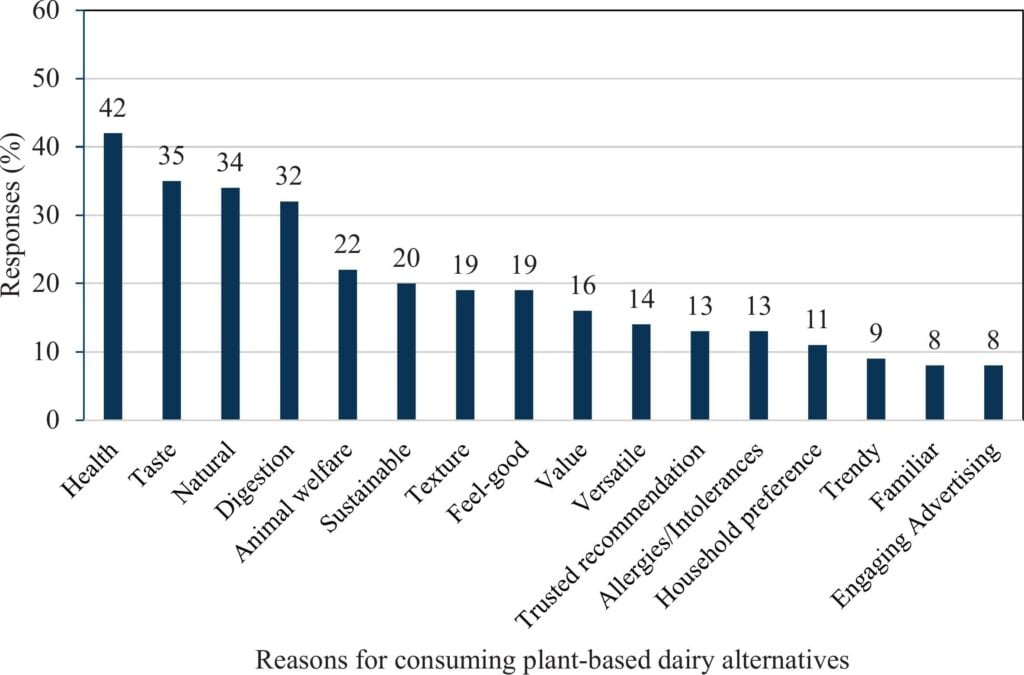
According to the survey, taste and naturalness are key drivers of plant-based dairy consumption, cited by 35% and 34% of respondents, respectively. Both are trumped by health, which influences 42% of people to consume non-dairy products.
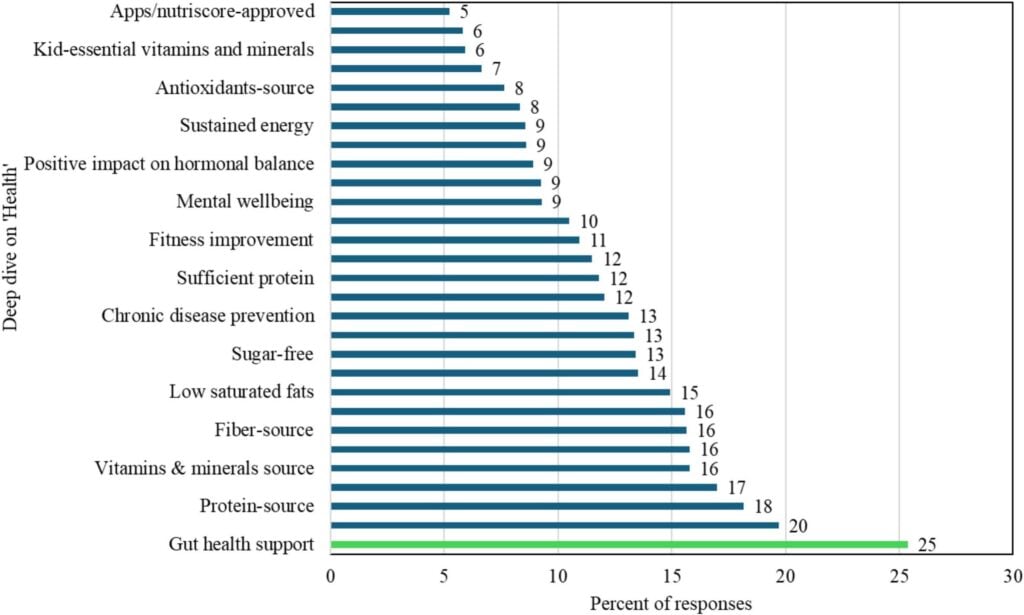
Among those who selected health, their main motivator is gut health support (selected by 25% of this cohort), followed by protein concentration (20%), micronutrient supply (18%), and fibre content (16%).
Meanwhile, a third (32%) of consumers selected digestibility as a factor in choosing dairy alternatives, and among them, nearly half endorsed attributes related to comfort, specifically ‘light on the stomach’, ‘gentle on the stomach’ and ‘non-bloating’.
The proportion of consumers who selected health as the key reason was significantly higher among participants from Japan (59%), the UK (50%), Spain, the US (both 49%), France and Hungary (both 45%). These people are also more likely to be aged 45-65, women, and flexitarian.
Across Germany, the UK, and the US, more than 80% of regular plant-based dairy consumers endorsed statements about digestive comfort, with particularly high agreement for ‘easy to digest’ (92%), ‘light on my stomach’ (88%), and ‘gentle on my stomach’ (88%).
The study noted that the higher prevalence of digestibility as a driver in France, Mexico, Spain, Poland, Italy, the UK, the US and Hungary aligns with previous research suggesting that digestive comfort and lactose avoidance are central motivations in places with either high self-reported lactose intolerance prevalence or strong health consciousness.
Older consumers are also more likely to be concerned about digestive comfort, bloating, and fat content of foods, indicating that they pay more attention to the nutritional value, salt and sugar content of plant-based milks, and that health consciousness increases with age.
Notably, omnivores and flexitarians were more likely to cite digestibility as a reason to consume non-dairy alternatives, reinforcing the idea that these products “bring diversity to diet rather than replacement”.
Plant-based dairy producers should focus on gut health and GLP-1 market

The findings bring GLP-1 drugs sharply into focus. These weight-loss medications have changed the way we eat and, consequently, how companies produce food.
According to the Boston Consulting Group, the number of Americans taking GLP-1 drugs has tripled since 2022, accounting for 9% of the total adult population (including both active and lapsed users). This is expected to further double by 2030, when a fifth of the population would have used them.
While the US has led the wave, Europe and Asia-Pacific are set to outpace the user base over the next five years as coverage expands and lower-cost formats arrive. Between a quarter and a third of non-users in China and India who are aware of these drugs are interested in trying them, more than double the rate in the US (14%).
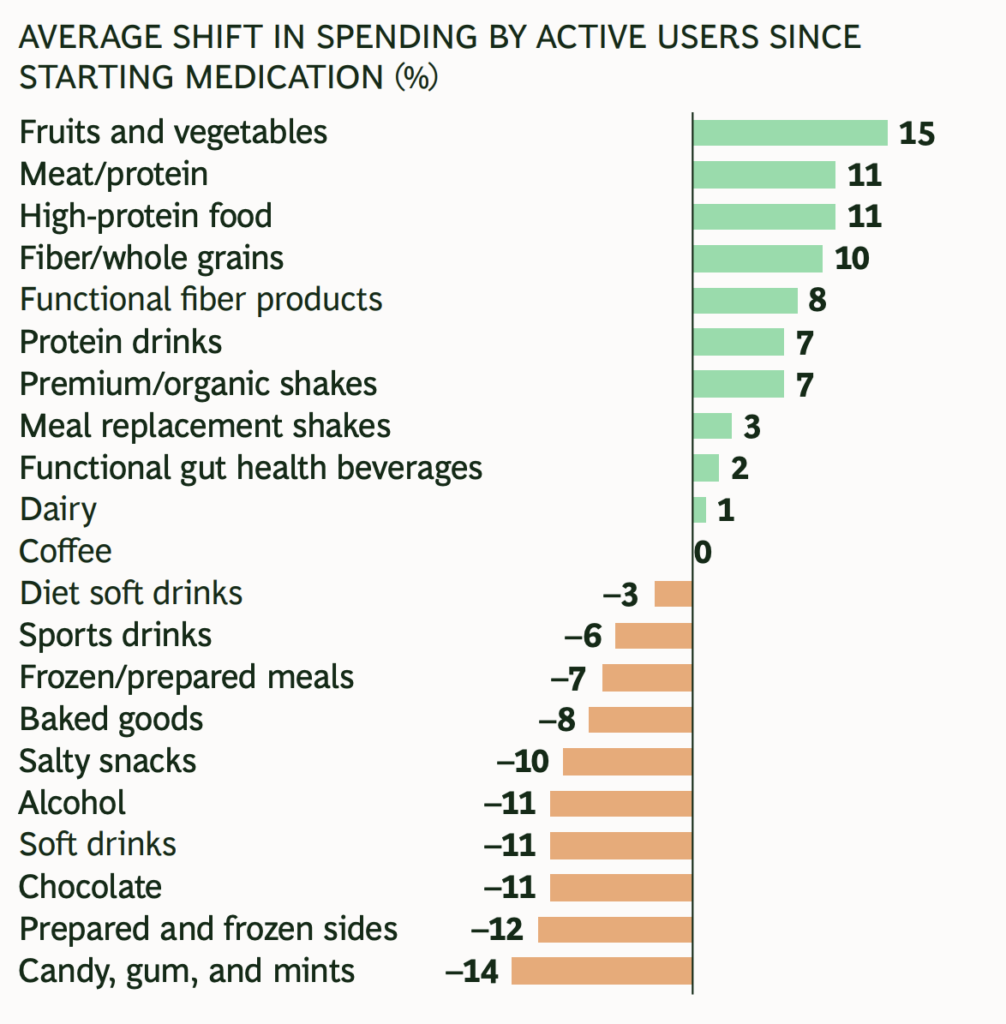
And internationally, active GLP-1 users plan to spend 11% more each month on high-protein foods, 10% more on fibre, 8% more on functional fibre products, and 2% more on functional gut health drinks. This is because protein helps offset the accelerated muscle mass loss with the use of these drugs, and dietary fibre triggers the body’s natural GLP-1 response, helping the gut produce short-chain fatty acids to regulate appetite.
It’s why plant-based dairy companies are coming up with fibre-rich products. Over the last year, Oatly has launched high-fibre oat milks in China and Europe (with a US launch slated for January), Plenish has introduced a calcium- and fibre-enriched oat milk in the UK, So Good has introduced fibre- and prebiotics-packed oat and almond milks, and Boring has brought out fibre oat milks in New Zealand.
Danone itself has recognised this shift, betting big on protein and fibre to fill the GLP-1 gap over the last year. It has made shrewd acquisitions to target these high-growth areas, expanding distribution of high-protein, high-fibre shakes and meal replacement drinks via the takeover of plant-based nutrition brands Kate Farms and Huel, respectively.
“These findings offer valuable insights into how consumers perceive plant‑based products today, and help identify new areas for research into the factors shaping these experiences,” said Virginia Messina, a registered dietitian and co‑author of the study.