

Beyond Meat Gets Nasdaq Delisting Warning As Stock Price Languishes Below $1

Plant-based giant Beyond Meat has received a deficiency letter from Nasdaq, warning that the public company faces a delisting risk after its stock registered below $1 for 30 consecutive business days.
As it overhauls its brand to drop the ‘Meat’ from its name, Beyond Meat continues to face financial risks from its floundering stock price.
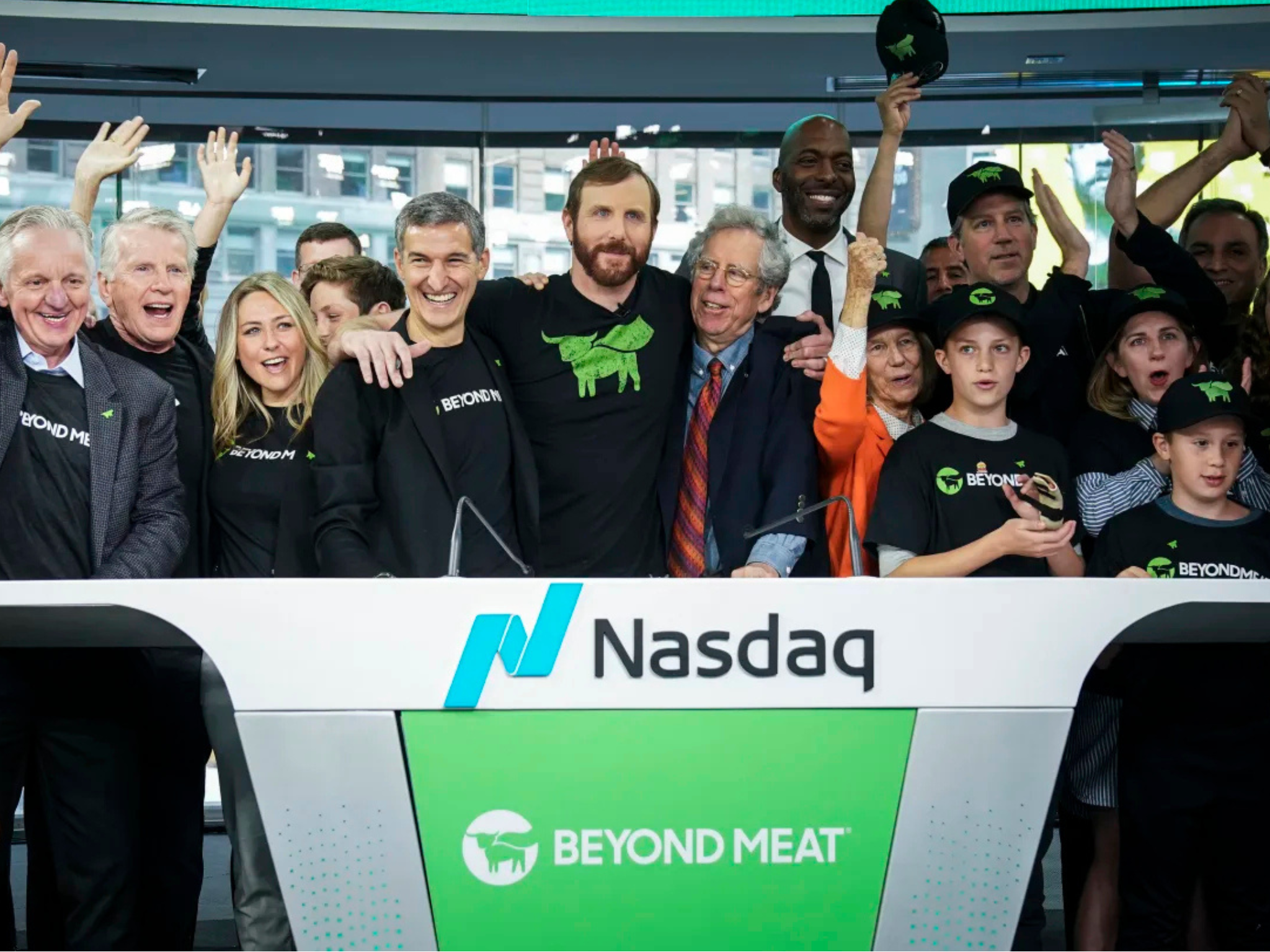
The El Segundo-based company, which went public to much fanfare back in 2019, is now at risk of being delisted from the Nasdaq Global Select Market.
In a deficiency letter received by Beyond Meat last week, the Nasdaq Listing Qualifications Department notified the firm that its share price traded below the minimum $1 threshold for 30 consecutive business days.
It means the maker of the Beyond Burger now has 180 days (until August 31) to regain compliance with the Minimum Bid Price Requirement. To do so, the closing bid price of its stock must be above $1 per share for a minimum of 10 straight business days before this deadline.
Beyond Meat’s stock price has been the subject of intense debate over the last year, when it fell to an all-time low amid a continued decline in sales, forcing the company to restructure its debt and deny bankruptcy rumours.
Beyond Meat considers a reverse stock split to regain compliance
The development was reported by Beyond Meat in a filing with the US Securities and Exchange Commission (SEC), in which it noted that the deficiency letter will have “no immediate effect” on its Nasdaq listing, where it will continue to trade under the BYND symbol.
“The company intends to monitor the closing bid price of its common stock and may, if appropriate, consider available options to regain compliance with the Minimum Bid Price Requirement, including initiating a reverse stock split,” the document reads.
A reverse stock split consolidates a business’s existing shares into fewer, higher-priced shares without changing its overall value. Beyond Meat’s shareholders approved a series of 30 alternate amendments at a special meeting in November, including a reverse stock split.
So if the company’s board determines that this measure is in its best interests, it “has the authority and flexibility” to effect a reverse stock split and determine its ratio. This move could help satisfy the minimum share price requirement, though analysts suggest it doesn’t address a business’s underlying challenges.
If Beyond Meat fails to regain compliance within the 180-day period, it may be eligible for an additional 180-day extension. However, it would need to transfer to the Nasdaq Capital Market and meet all of its listing standards.
“In addition, the company would be required to notify Nasdaq of its intent to cure the deficiency during the second compliance period, by effecting a reverse stock split if necessary,” the filing states.
Can diversifying beyond meat keep the plant protein company afloat?
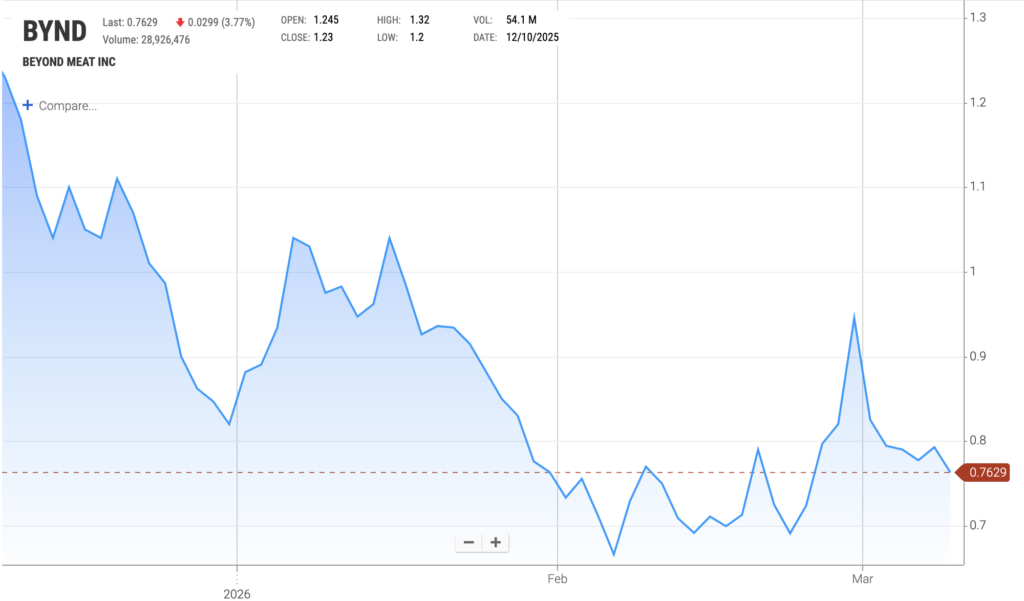
The Nasdaq warning comes as Beyond Meat’s stock price has shrunk by 76% over the last year. The company, whose valuation reached $14B following its blockbuster IPO in 2019, now has a market cap of less than $350M.
Its share price fell to a record low of 52 cents in October, before online traders fuelled a meme-stock-inspired rally, leading to a 1,000% climb. Subsequently, Beyond Meat’s stock floated around $1. It has been below this mark since January 16, with its highest closing bid price in this period being 95 cents.
The slide was triggered by a debt restructuring deal that sought to wipe out over $800M of the company’s debt, which was approved by shareholders in 2025. Prior to the transaction, it had $1.15B in debt, thanks to 0% convertible notes maturing in 2027. Under the new exchange offer, this was swapped for higher-interest 7% notes that are due in 2030.
Beyond Meat’s struggle to sell its plant-based meat products hasn’t helped its case. In its Q3 2025 earnings report, the firm posted a 13.3% year-over-year decline in revenue and revised its Q4 sales forecast to $60-65M, below analysts’ estimates of $70M.
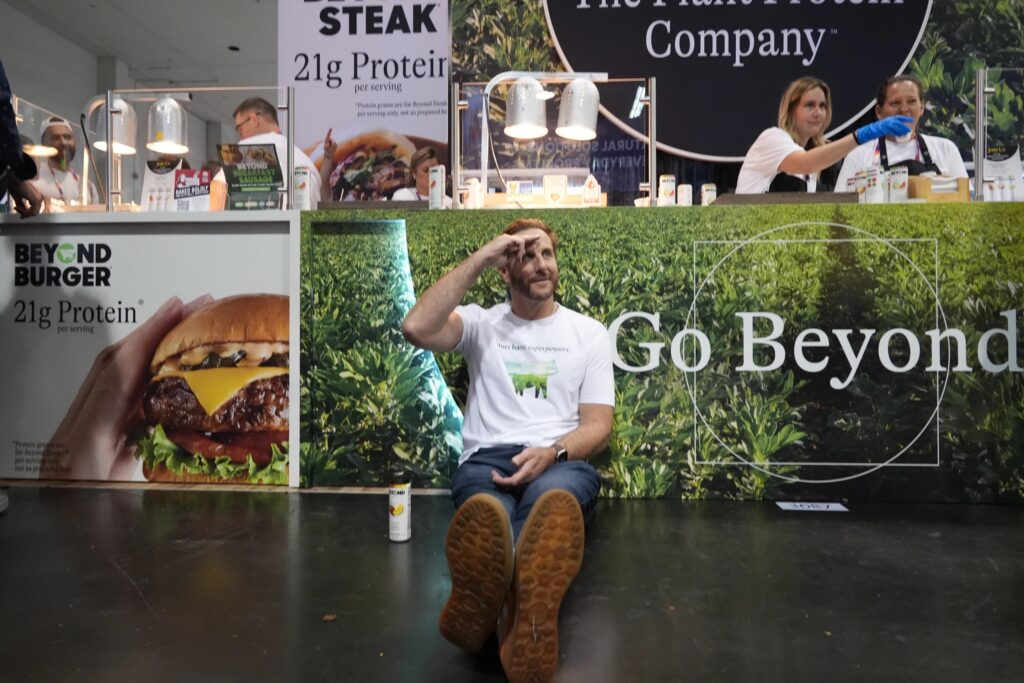
To turn things around, the plant-based pioneer has diversified beyond meat alternatives, launching a clean-label Beyond Ground line of minced products that aren’t intended to mimic meat and contain just four ingredients. It then introduced Beyond Immerse, a range of plant-protein-boosted fizzy drinks, which sold out in days before being expanded with new flavours.
These launches followed founder and CEO Ethan Brown’s announcement that the company would begin eliminating the word ‘Meat’ from its branding. It followed through last week, updating its website and rebranding itself as Beyond the Plant Protein Company (officially, the business is still called Beyond Meat for now).
Following the deficiency letter, Beyond will hope that the plant protein pivot can help it stay afloat on the public market.