

Blended Proteins 4% Cheaper Than Meat As Supermarkets Drive Category in Netherlands

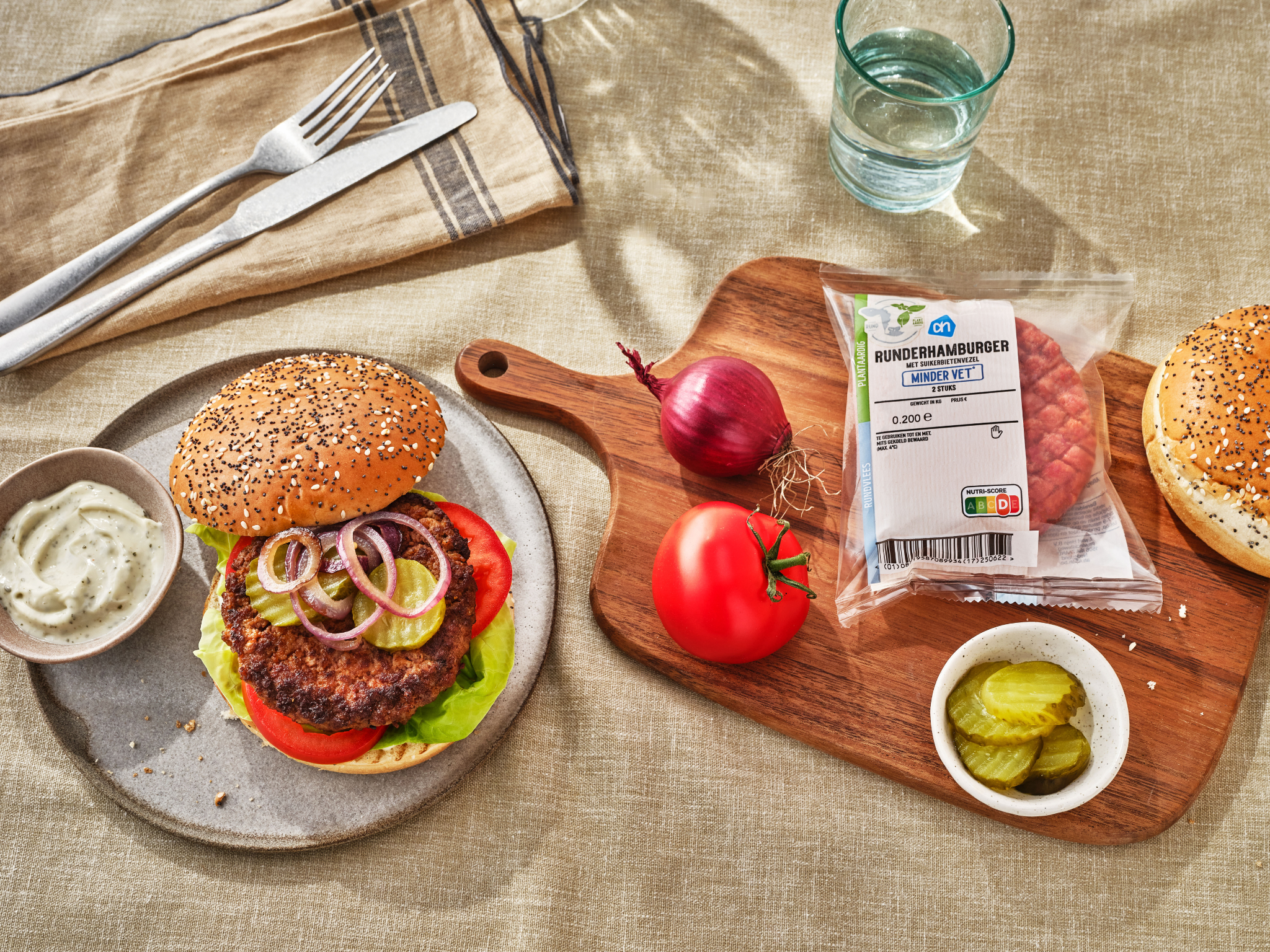
Private-label products make up the majority of blended protein launches in the Netherlands, which are 4.4% cheaper on average than meat and dairy, according to a new analysis.
Whether it’s the local grocer or the Grand Prix, blended meat is leaving its mark across the Netherlands’ food supply.
The country has emerged as the leader in this category, which comprises products combining animal proteins with plant-based ingredients for better health, environmental, and financial outcomes.
And a new study by Wageningen-based non-profit Foodvalley proves as much, finding that the average price of these ‘balanced proteins’ is 4.4% lower than meat and dairy. In many cases, blended proteins also outscore their 100% animal equivalents on the nutritional front.
“In the coming years, balanced meat will keep evolving. Even more so when meat prices do not go down significantly,” the report states. “For the coming twelve months, we foresee a doubling of SKUs in the meat aisles of Dutch retailers.
“Next to balanced meats, a growing number of introductions is expected in the dairy domain, specifically in quark, yoghurt, and cheese categories. Extra attention needs to be paid to legislation around naming in the balanced dairy category.”
Fava beans and pork the most popular blended meat ingredients
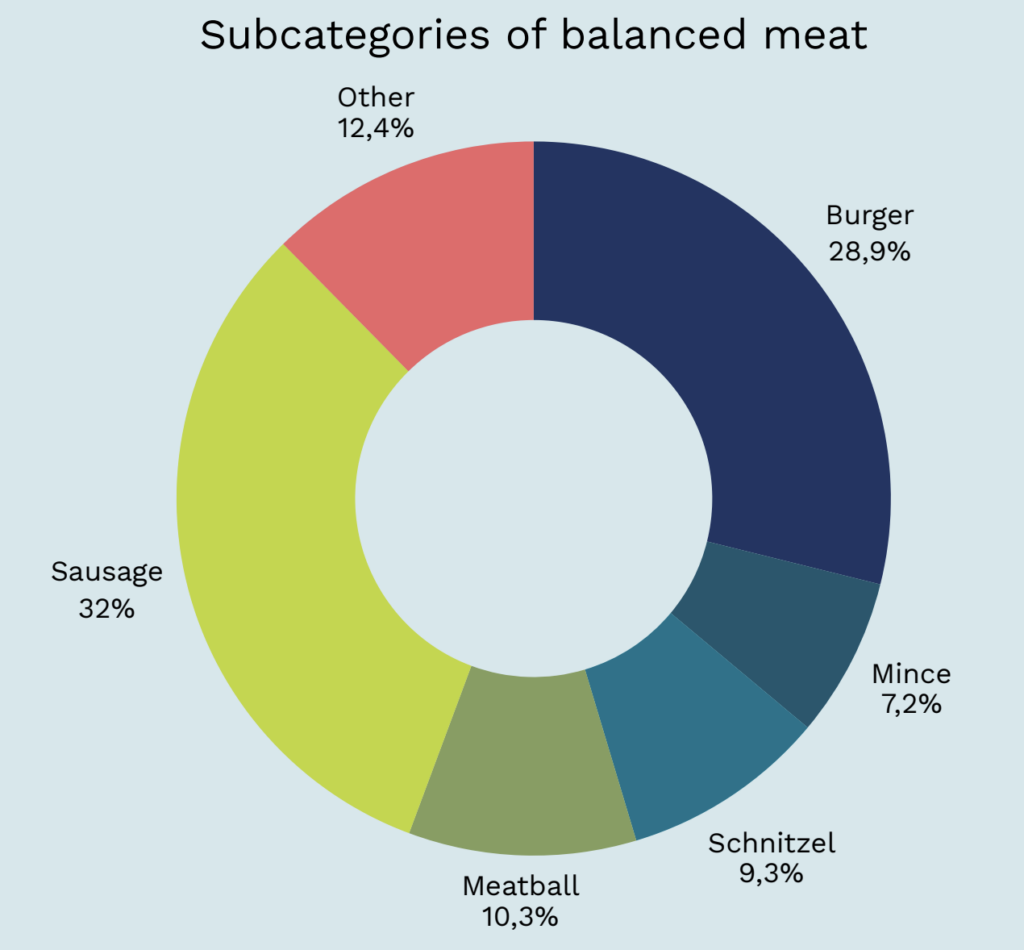
Foodvalley analysed 115 blended protein products, and 111 of these were meat-based offerings, such as mince, sausages, burgers, and ready meals. The four hybrid dairy innovations included two milks, a yoghurt, and a cheese snack.
Sausages were the most popular format, accounting for a third (32%) of all blended meat launches. Burgers weren’t too far behind (29%). In line with that, pork and beef were the most common animal sources in these products.
On average, the inclusion rate of plant-based ingredients stood at 10.5%. Fava beans were the most popular, appearing in around 55% of all “enriched” meat products, followed by sugar beet fibre (over 20%).
The research revealed a ‘soft’ communication strategy used by manufacturers, many of whom only list plant-based ingredients on the back of packaging. Products labelled this way (accounting for 70% of the total) tend to have significantly lower amounts of animal-free components (5.8%) than those that declare these on both sides of the packaging (19.5%).
By ‘cutting’ meat and dairy with plant-based ingredients, companies can lower the climate harms associated with animal proteins, offering consumers a way to eat more sustainably too. Perhaps the biggest lever, especially in the current era, is cost.
In 60% of cases, balanced proteins were cheaper than the animal counterpart, while 20% matched the latter in price. On average, the blended formats were €1.27 cheaper per kg or litre than conventional meat or milk.
Balanced proteins generally have better Nutri-Score ratings
Foodvalley’s analysis highlights how supermarkets are dominating this category in the Netherlands – 91% of all blended protein products analysed are sold by their private-label brands.
Lidl has been offering a cheaper-than-beef blend in the Netherlands since 2024, and a wave of its peers has joined the bandwagon, including Aldi and Albert Heijn (which launched a bumper 15-strong range of blended meat and milk products). But Jumbo leads the way with a 44% product share, followed by Albert Heijn (28%).
In a Nutri-Score comparison of 31 blended protein SKUs, 55% matched the conventional equivalents, and 35% products had a better ranking, a trend “likely driven by lower saturated fat levels and/or a higher fibre content”.
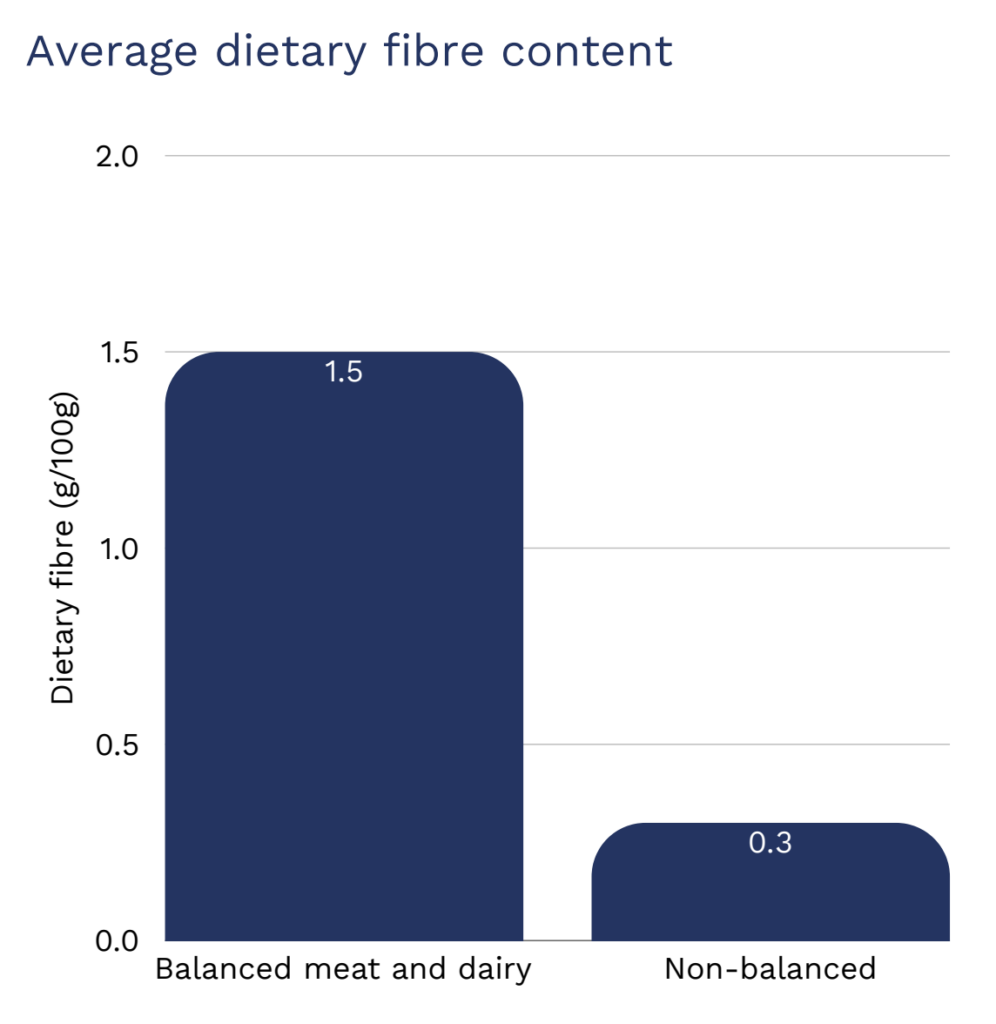
In 81% of the cases, balanced proteins had a higher dietary fibre content, while 12% of products matched their animal-based counterparts. Overall, fibre levels in the former are around five times higher.
100% meat and dairy products had a slightly higher protein content 70% of the time, with balanced proteins coming out on top in 20% of the cases. On average, the difference is 1.8g per 100g. And in any case, Dutch consumers eat 40% more protein than they need.
“Over the past two years, driven by rising meat prices and Dutch retailers’ desire to achieve protein transition targets more quickly, balanced products are making a comeback. Even if the percentages of non-animal ingredients in balanced products are still relatively low, the amounts of meat required are significantly less, given the high sales volumes,” Foodvalley said.
“Taste perception, pricing, way of communication, and availability will, amongst other characteristics, determine if there will be a full comeback of balanced meat, dairy or fish,” it added.
The organisation has now partnered with US non-profit Food System Innovations, which has held extensive taste tests for balanced proteins in the US and Singapore, to accelerate this category’s growth by highlighting the latest innovations and insights.