

BlueNalu Hooks $11M in Funding to Bring Cultivated Tuna to US Sushi Market


Californian food tech startup BlueNalu has raised around $11M to scale up production and support the commercialisation of its cultivated bluefin tuna toro.
As it awaits regulatory approval in the US, cultivated seafood startup BlueNalu has found success in increasingly rough investment waters for the industry.
The San Diego-based startup has secured around $11M in new convertible notes and preferred stock financings, taking its total funding to $129M.
This latest round was led by Agronomics, Siddhi Capital, and Lewis & Clark AgriFood, with additional participation from around 40 other existing investors, including strategic partners Griffith Foods, Pulmuone, and Rich Products Corporation. It will help BlueNalu scale up the production of its cultivated bluefin tuna toro, which it plans to sell in premium sushi and fine-dining restaurants in the US.
“The strong follow-on support from our investor base reflects continued confidence in our team, our business strategy and disciplined execution, our differentiated global positioning, and our long-term value potential,” BlueNalu founder and CEO Lou Cooperhouse wrote in a social media post.
“This confidence was earned in a year that tested the broader food tech and ag innovation sectors, and an environment defined by constrained capital markets and heightened scrutiny of early-stage companies,” he added.
Building manufacturing readiness for large-scale factory
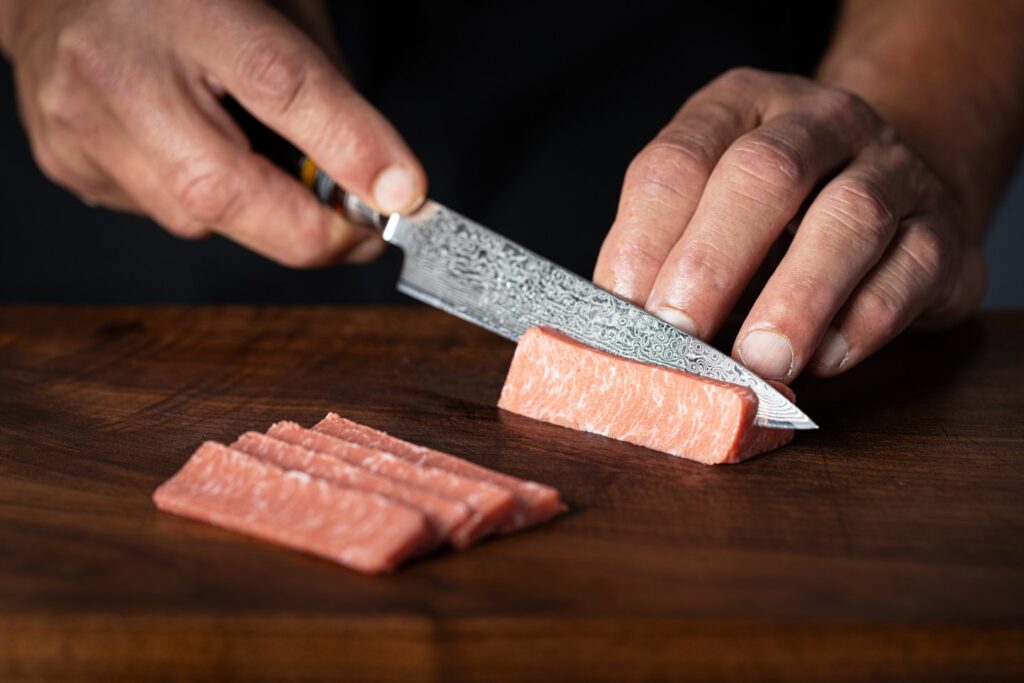
Founded in 2018, BlueNalu is targeting one of the most sought-after cuts of seafood. Bluefin tuna has a velvety texture, buttery flavour and nutritional attributes, and toro is the fatty part of the fish’s belly, used in high-grade sushi and sashimi.
But the species represents the ocean’s fastest and longest-distance swimmers, which makes it difficult to raise the fish in captivity, thus commanding a higher price. Its supply is limited and extremely variable in quality, and its stocks face declines due to overfishing and illegal, unregulated and unreported fishing.
Continued demand is driving the species towards endangerment and has prompted governments to place strict quotas to limit its fishing. Plus, tuna is one of the most polluted fish in the oceans, often contaminated with plastic debris and extremely high levels of heavy metals like mercury.
BlueNalu operates two facilities in San Diego: one is dedicated to core R&D and bioprocessing development, and the other (sprawling 38,000 sq ft) is focused on technology transfer, commercialisation, and small-scale manufacturing. The latter pilot facility serves as a bridge towards commercial-scale production, and will support the firm’s initial market entry.
It has also unveiled plans for a larger 140,000 sq ft facility, which would be able to manufacture six million lbs of product annually once operational. The new capital will allow the startup to advance its process optimisation and manufacturing readiness for this large-scale plant.
By focusing on one of the most expensive pieces of fish, BlueNalu will not suffer from the same price gap that plagues cell-cultured beef or chicken. In an interview with Green Queen in April, Cooperhouse noted that the company “will be able to sell our products at or near price parity from our early stages of commercialisation”.
“BlueNalu stands out in the cultivated protein space for its disciplined, differentiated approach and clear focus on premium foodservice demand,” said Steven Finn, managing partner at Siddhi Capital. “The company has built a strong foundation around culinary quality and market relevance as it prepares for initial commercialisation.”
BlueNalu eyes global markets ahead of US approval of cultivated seafood

BlueNalu has already filed a dossier with the US Food and Drug Administration, and will be able to begin selling its toro once it receives a ‘no questions’ letter from the agency. So far, only Wildtype has commercialised cultivated seafood in the US, with its sushi-grade salmon now available in restaurants in several states.
Ahead of the regulatory green light, BlueNalu is working closely with chefs, distributors, and strategic partners to provide a consistent, high-quality product with year-round availability.
“This financing will enable us to move forward with our planned introduction of cultivated bluefin tuna toro, followed by commercialisation activities to expand our production and distribution capabilities to premium foodservice operators, initially in the United States and ultimately in markets worldwide,” said Cooperhouse.
Outside the US, BlueNalu has submitted a dossier in Singapore, is part of the UK’s regulatory sandbox scheme, and is deepening its regulatory engagement in Saudi Arabia, Japan, South Korea, and the EU as well.
It has previously announced partnerships with Asian food giants Pulmuone (South Korea), Mitsubishi, Sumitomo (both Japan) and Thai Union (Thailand), Rich Products and Nomad Foods in the UK, Griffith Foods in the US, and Neom (Saudi Arabia’s upcoming future-facing city). Now, it’s looking to expand culinary and distribution collaborations to support an international rollout in the coming years.
The funding is an outlier in an otherwise grim investment landscape for cultivated meat. Startups in this segment only received $36M in the first nine months of 2025. In contrast, this technology attracted $139M in 2024, itself a 40% decline from the previous year.
That lack of investor interest sounded the death knell for many cultivated meat players this year, including Dutch startups Meatable and Upstream Foods, as well as Believer Meats, which had secured full approval in the US and opened the world’s largest cultivated meat factory months earlier.
“As an industry, cultivated protein has struggled to find its footing, while BlueNalu has clearly differentiated itself,” said Dave Taiclet, managing partner at Lewis & Clark Partners. “The company continues to stay focused on making impressive technological progress and significantly reducing the cost to scale into a commercially viable platform.”