

The Key to Consumer Acceptance of Precision Fermentation? YouTube

A new study shows that content creators on YouTube position precision fermentation in a positive light, but audience comments are largely sceptical, outlining an opportunity for the industry.
As consumers and investors cool on alternative proteins, companies have been left scrambling to find ways to keep attracting them.
Some have changed their packaging, others their ingredients. A few have made videos explaining how their production processes work, and some have splurged on big marketing campaigns to get their attention.
A new study by the University of Auckland suggests they’re missing a trick by ignoring a mammoth platform: YouTube. The researchers used AI to analyse nearly 350 videos and 16,500 viewer comments to unpack how people view future food technologies – specifically, precision fermentation.
This technology has been around for decades, and is used to make insulin, rennet for cheese, and vitamin supplements. In the world of alternative proteins, it involves inserting a DNA sequence into microbes to produce specific molecules when fermented, including dairy proteins without the cow and chicken proteins without the hen.
“Most creators overwhelmingly express positive sentiment [about precision fermentation],” the researchers write in the Future Foods journal. “We found that the consistent optimism among most creators likely reflects their roles as advocates or educators, aiming to present precision fermentation as an innovative solution to global food challenges.”
However, audience comments “reflected greater scepticism, raising concerns about affordability, scalability, and health implications”, highlighting the gaps and opportunities for companies in this space.
“YouTube… offers a rich and underutilised source of public discourse. It not only hosts publisher-generated content, but also facilitates direct viewer responses through comments and engagement metrics,” the study states. “Comments can reflect public sentiment, value orientations, and trust dynamics around food innovations and sustainability topics.”
YouTube content creators keen on precision fermentation, viewers not so much
The study found that the number of precision fermentation videos on YouTube has rapidly increased, from a negligible amount in 2018 to over 100 videos in each 2023 and 2024. Meanwhile, comments reached over 1,000 in 2019, but decreased slightly until 2022 and reached their peak in 2023. This was followed by a sharp decline in comment activity, before recovering in Q3 2024.
“The trends in both video and comment activity reflect that, despite fluctuations in the topic’s popularity, it is steadily gaining more and more attention,” it states.
The majority of videos were retrieved from YouTube’s Health and Knowledge categories, which made up 54% and 41% of the total. These were followed by the Business, Society and Food tags.
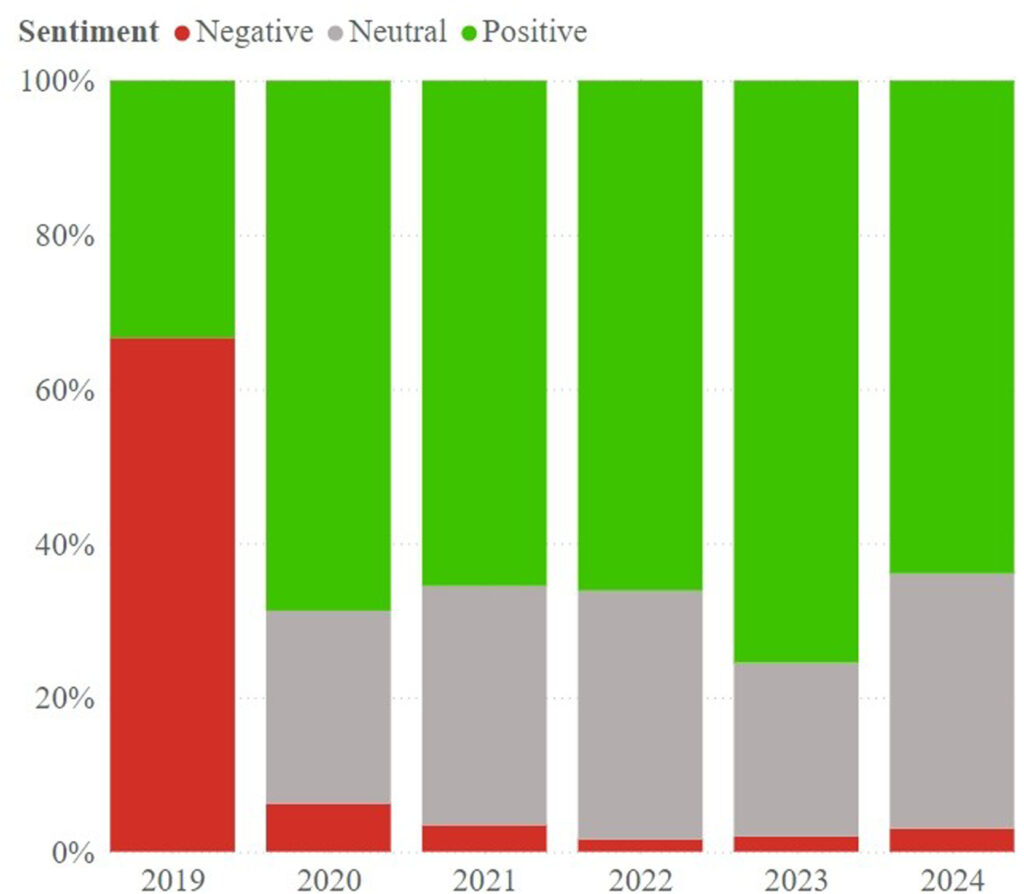
The research revealed that creator-driven sentiment is predominantly positive, with two-thirds (68%) of videos classed as such. Another 29% were identified as neutral, and only 3% were negative. “This suggests that creators, including influencers, industry professionals, and academics, tend to frame precision fermentation technologies in a more optimistic and forward-looking manner,” the study notes.
Meanwhile, over a third of the comments (34%) on these videos were of a negative manner, while an even larger share (47%) were neutral. Only 19% of public comments were positive. The proportion of negative comments also rose over time, while neutral ones remained steady.
“While videos on precision fermentation generally exhibit a predominantly positive sentiment, reflecting creators’ optimism and advocacy for the technology, audience reactions in comments remain more polarised, with scepticism and concerns becoming increasingly visible,” the researchers explain.
What can precision fermentation brands learn from the study?
The researchers clustered the videos into 34 topics, including areas related to consumer perceptions, environmental benefits, and technical processes. Some revealed concerns about the scalability of precision fermentation, others highlighted their potential to address ethical concerns.
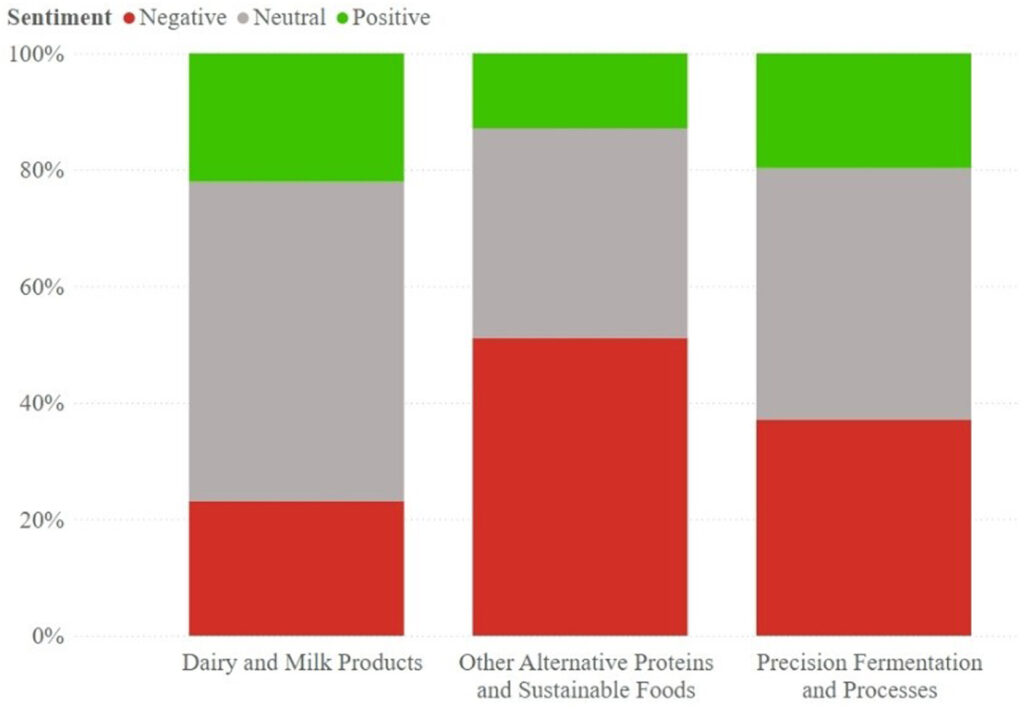
These topics were further grouped into three broader categories: dairy and milk products, precision fermentation and processes, and other alternative proteins and sustainable foods. Videos in the latter category received the highest share of negative comments (51%), significantly more than the other two.
In contrast, the dairy and milk products category – representing the most advanced precision fermentation sector – had only 23% of negative comments, with a similar number of positive ones. The researchers ascribed this to greater familiarity, with most precision-fermented products on the market being animal-free versions of dairy.
This aligns with previous consumer research. A five-country study involving Europe and the US recently revealed that over half of consumers would try a precision-fermented product if someone else gave it to them, and their interest in buying it increases after they’re told about the benefits of the technology.
The study cites research showing a “persistent gap between optimistic messaging from promoters and the cautious attitudes of consumers”, adding that food tech neophobia and lack of trust also “play significant roles in shaping resistance to food innovations”.
The growing share of negative comments indicates that greater visibility of these products has led to heightened public scrutiny. “This underscores the need for more transparent, evidence-based communication strategies that directly address consumer concerns,” the study says.
“While public engagement with precision fermentation remains polarised, the consistent optimism of creators presents an opportunity to thoughtfully counterbalance consumer scepticism. By… adopting inclusive, transparent communication strategies, stakeholders can align public perceptions with the broader goals of sustainability and innovation, paving the way for the successful adoption of precision fermentation and other transformative food technologies.
“The proactive insights gained through this framework can assist in navigating the complexities of market adoption, supporting the sustainable expansion of innovative food technologies, and helping companies to establish market entry strategies, refine communication plans, and foster product growth by addressing consumer concerns promptly and effectively.”