

Backed by Bezos, UK-Australian Project Turns Food Waste Into Microbial Protein with AI

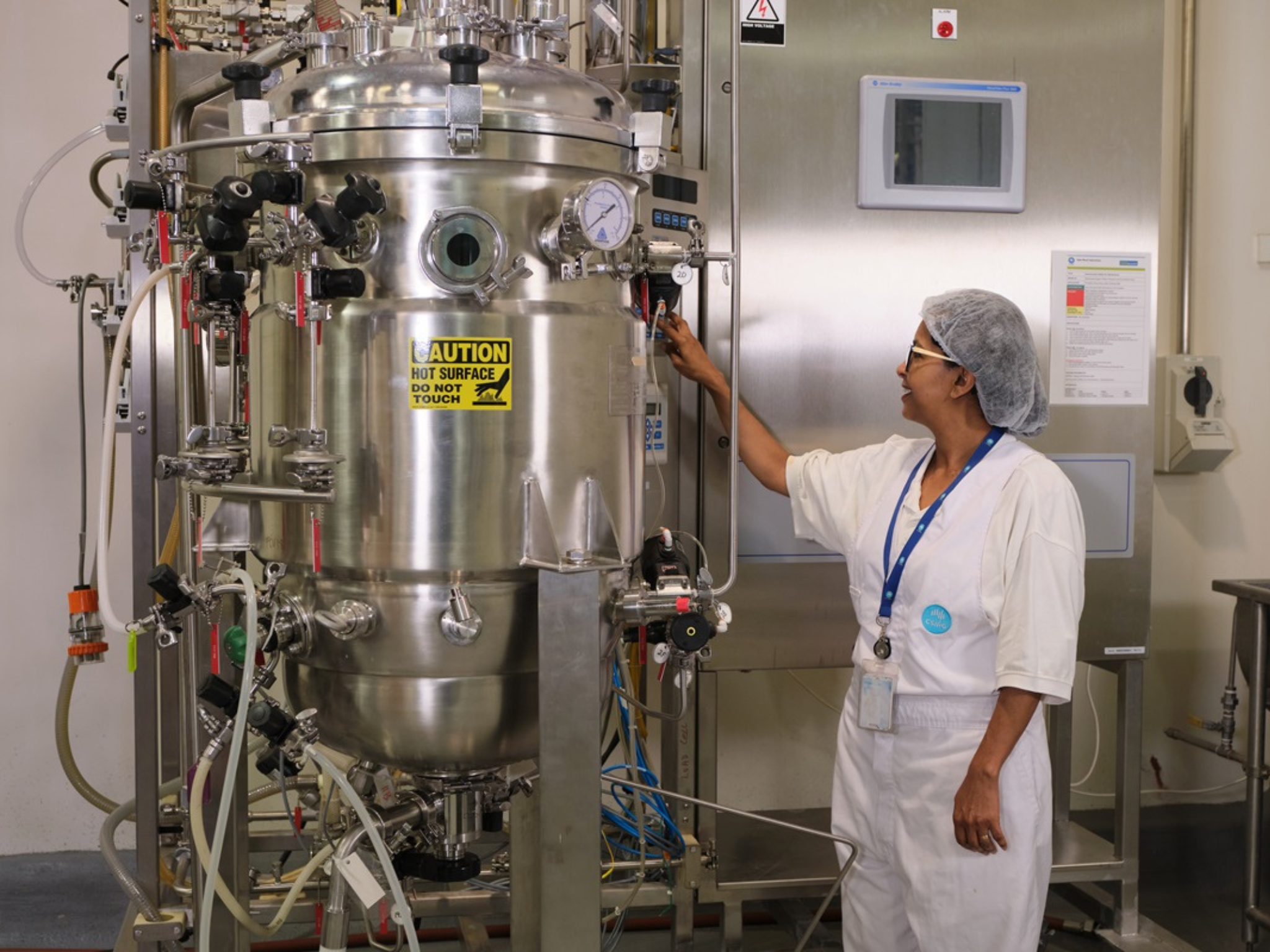
Australian national research agency CSIRO and the UK’s University of Leeds are developing an AI tool that can convert food waste into sustainable protein, in a project funded by the Bezos Earth Fund.
Replacing ruminant meat with more sustainable proteins and slashing food waste are two of the food system’s most effective levers to mitigate the climate crisis, according to environmental action group Project Drawdown.
Tapping into both solutions is an intercontinental project that leverages AI to create sustainable proteins that can boost climate resilience and global food security.
Backed by a $2M grant from the Bezos Earth Fund’s AI for Climate and Nature Grand Challenge, it brings together researchers from Australia’s national science agency, CSIRO, and the University of Leeds in the UK.
The funding was announced in October, but now, new details have emerged about how the project will develop an open-access artificial intelligence (AI) tool to convert food industry sidestreams into microbial proteins via biomass fermentation.
“This project will combine AI, fermentation science and real case studies to support [the] industry to turn that waste into sustainable protein at scale,” said Kai Knoerzer, project lead at CSIRO.
An AI tool that can produce upcycled proteins on par with current options
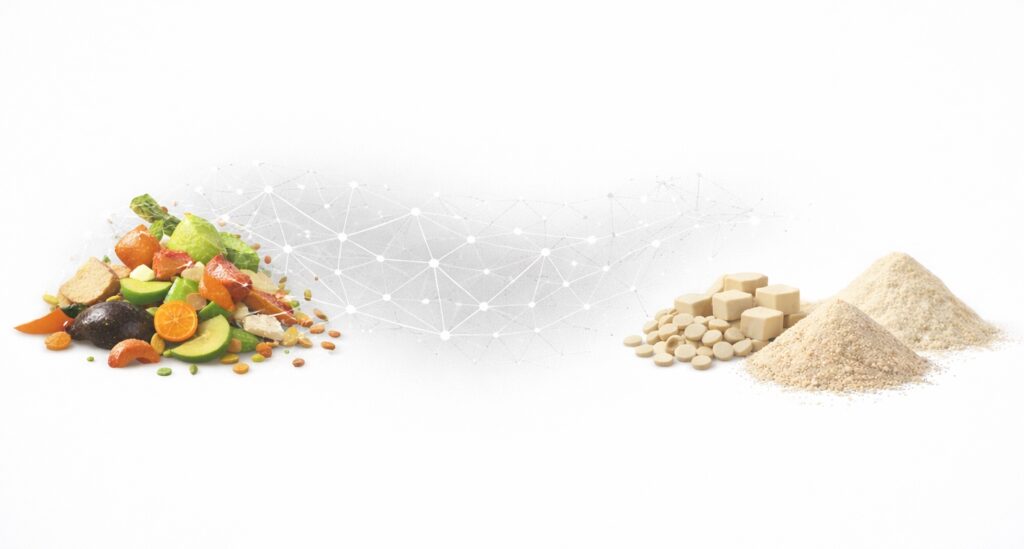
According to Knoerzer, billions of tonnes of nutrient-rich material are currently being lost each year globally. Indeed, UN data shows that a third of all food produced is wasted or lost, resulting in 10% of global emissions and $1T in economic costs.
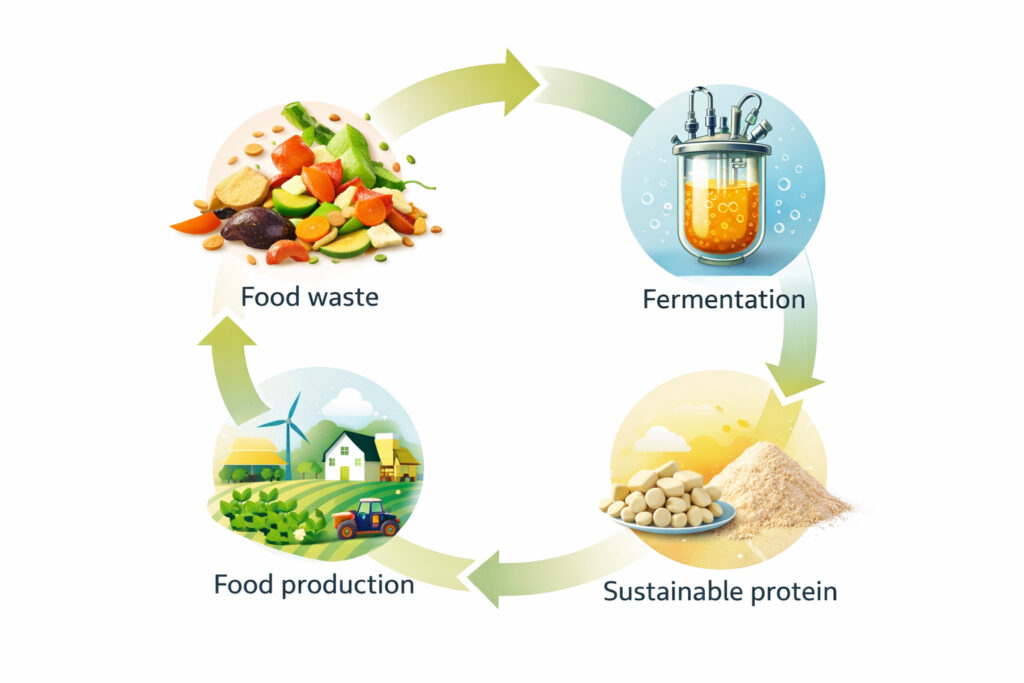
His colleagues and their counterparts in Leeds are using fermentation to turn agrifood waste into high-quality, eco-friendly proteins for use in a range of foods. The two-year project is leveraging vegetable crops that have been damaged or not picked, grain sidestreams like canola meal, rice bran or brewer’s spent grain, and byproducts from the cheesemaking industry.
The team is developing an AI tool that calculates optimal fermentation conditions to produce a microbial protein powder as a food ingredient for human or animal consumption. The aim is to make upcycled protein at scale that’s competitive with conventional protein alternatives.
For this protein to truly impact global food security, it must compete on price with what’s already on supermarket shelves, according to Nicholas Watson, professor of AI in food at the University of Leeds.
“We are excited to work with CSIRO and partners across the globe to bridge that gap, launching an AI platform to support the fermentation of agri-food waste,” said Watson, who is also the deputy co-director of the UK’s National Alternative Protein Innovation Centre.
The project is using age-old fermentation principles to tackle modern food challenges and futureproof the agricultural system. “When fermented using yeast… food waste can be transformed into valuable products within the framework of a circular bioeconomy,” said Knoerzer.
The intersection of AI, food waste and sustainable protein
The AI tool is being co-created with over 40 global stakeholders and trialled in three regional case studies. Though the tech has been criticised for its climate impact, fuelling a rise in fossil-derived energy and water use to run and cool data centres, some argue that advancements in alternative proteins could be key to winning the AI race.
Amen Ra Mashariki, director of AI and data strategies at the Bezos Earth Fund, said the project showed how AI could bolster climate action when developed responsibly and guided by science and local knowledge, ensuring its overall impact on the planet is positive.
CSIRO and the University of Leeds’s project was among 15 others that won grants in phase two of the fund’s $100M AI for Climate and Nature Grand Challenge. These included Food System Innovations, whose sensory analysis programme, Nectar, is collaborating with Stanford University to create an open-source AI model to drive alternative protein product development.
Food tech startups are increasingly using AI to develop future-friendly solutions. Jeff Bezos-backed NotCo utilises AI to create sustainable products for some of the world’s largest food companies, Israel’s Finally Foods uses it to grow dairy proteins in potatoes via molecular farming, and Spain’s MOA Foodtech has created an AI-led fermentation turnkey service to create high-value ingredients from food waste.
In fact, several companies are innovating in the waste-to-value food vertical. Yeastup and ProteinDistillery are both turning beer industry waste into proteins, Standing Ovation is using Bel Group’s cheesemaking byproducts to create animal-free casein, and Green Spot Technologies is upcycling spent brewer’s grain, tomato skins, and wine grape marc into nutrient-dense powders like cocoa alternatives.
CSIRO, meanwhile, works with a number of Australian food tech startups, including fermentation specialist Cauldron Ferm, and has incubated firms like Eclipse Ingredients, which makes recombinant breast milk proteins.
And as part of its $1B commitment towards food systems transformation, Bezos Earth Fund has also invested $100M to set up three Centers for Sustainable Protein at universities in North Carolina, London and Singapore.