

EU-Backed Startup Develops Superior Cultivated Meat Inputs That Could Benefit GLP-1 Users


ProFuse Technology has used EU funding to develop technologies that address key challenges in cultivated meat production and could help address muscle loss associated with GLP-1 use.
Can the cultivated meat industry benefit people on weight-loss drugs?
One company is attempting to do just that. ProFuse Technology, a supplier of cell culture media supplements, spent two years working on a project to solve the cost, scalability and functional challenges of cultivated meat, backed by €2.4M ($2.8M) in funding from the European Innovation Council (EIC).
As part of the effort, the firm has developed new cell lines and growth supplements that could lower the costs of producing cultivated meat. With the rise of GLP-1 drugs like Ozempic and Mounjaro, it expanded its focus into drug delivery to help deal with one of the most common side effects of these medications.
GLP-1 users experience a 25-40% decrease in muscle mass over 8 to 16 months (several times more than non-medicated weight-loss approaches and age-related muscle loss).
The team at ProFuse hopes to address this issue by applying its muscle-growth expertise to drug and dietary supplement discovery. That could also eventually feed back into cultivated meat, since the underlying challenge is the same: growing muscle more effectively.
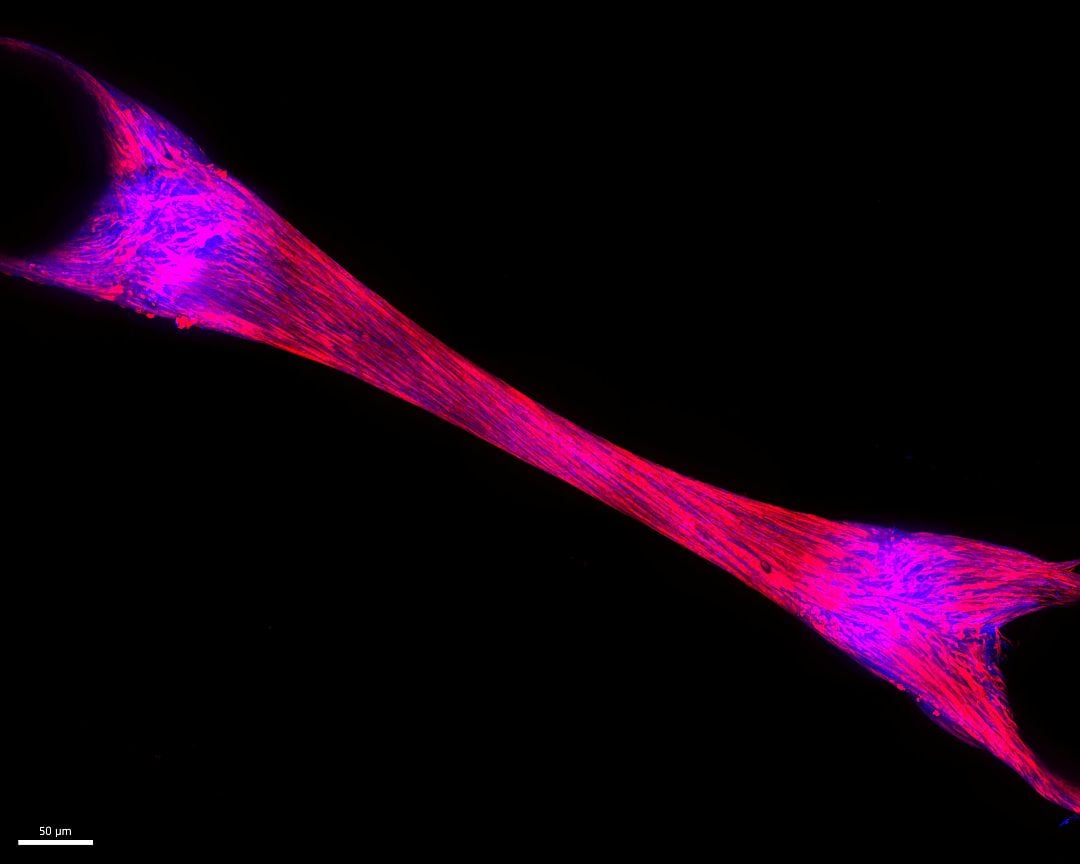
Cultivated meat project develops two key products
ProFuse’s EU-funded project built on the earlier SuperFusion initiative backed by the European Research Council, which worked on a method to induce muscle fibre formation for industrial meat production.
“Cultivated meat has three big challenges ahead of it: cost parity with farm-grown meat, scale-up, and quality and taste,” said Guy Nevo Michrowski, coordinator of the ProFuse project. “We specialise in enabling technologies for growing muscle. Steak is muscle, chicken breast is muscle.”
The project focused on cell lines, cultivation methods, artificial intelligence-based analysis, and culture media supplements (ingredients added to the nutrient-rich liquid used to grow cells in bioreactors) to develop two products: one to help muscle grow faster, and the other to provide a non-GMO source of beef muscle cells.
The first of these is ProFuse-S1, which can help young muscle cells become fully mature muscle fibres much faster and more efficiently – this is crucial since the latter are what give meat the texture, structure and protein content it’s known for.
The team then advanced a second generation of this supplement, ProFuse S-2. “The main goal was not just to do everything on a 2D surface, but to test it in a 3D system that more closely mimics how cultivated meat would be produced in a factory and how a steak looks on the plate,” says Michrowski.
To mimic the texture and flavour of meat, some cultivated meat producers use fibroblasts (connective tissue precursors) or embryonic stem cells. However, ProFuse focused on myoblasts, which are precursor cells that grow into muscle.
The ProFuse project further focused on developing the aforementioned non-GMO bovine muscle cell line adapted for cultivated meat production, with the aim of giving producers a reliable source of beef muscle cells that could be grown at scale.
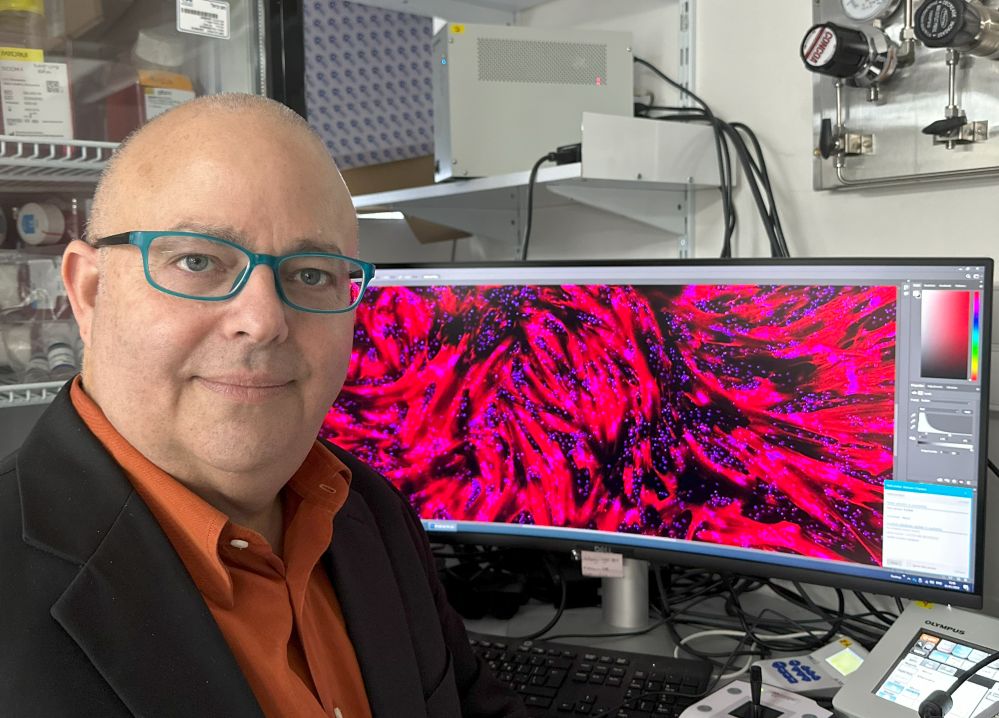
ProFuse’s cultivated meat inputs perform well in industry tests
A large part of the project was focused on taking the tech beyond the lab, with the team working with several cultivated meat companies to test the supplement and bovine cell line in their own production processes.
One of these was Israeli startup SuperMeat, which witnessed a reduction in production costs. The supplement helped save time, speed up the maturation of cells into functional muscle tissue, and significantly increased overall muscle yield, ultimately reducing the per-kg cost.
Meanwhile, an unnamed company from the Netherlands tested the bovine cell line. ProFuse said the initial phase of the collaboration successfully demonstrated cell adaptation, laying the groundwork for future integration as production timelines align.
The company adapted its ProFuse-B8 cell line to grow in serum media and tested how well the cells formed muscle on structures built to support tissue growth.
“Anything that we discover now that can help protect muscle and grow muscle can be used again in cultivated meat,” said Michrowski.
The EIC-backed project helped prepare these products for commercial use by developing licensing models, providing customers with the complete safety dossier for regulatory filings, mapping potential partners and suppliers, and kicking off proof-of-concept work to show customers where they could save time and costs.
ProFuse predicts that the cultivated meat market will hit €22B ($25.7B) by 2050. As it works to contribute to that potential, it’s banking on the GLP-1 boom, too. And it’s not the only cultivated meat firm that has expanded into life sciences: in January, industry leader Upside Foods launched a life sciences arm called Lucius Labs to offer media formulations, buffers and stem cell formulations.