

Protein, UPFs & GLP-1: How Health is Dictating Americans’ Food Habits in 2026


For Americans, nothing influences food purchases more than health this year, according to a new survey shedding light on protein preferences, GLP-1 users, sugar alternatives, and ultra-processed foods.
In the MAHA era, health truly does trump all.
Americans’ food habits are changing rapidly, with outrage shifting from seed oils to ultra-processed foods (UPFs) and fibre gaining prominence amid protein’s continued dominance.
To demonstrate how brands can leverage this shifting landscape, tech publication The New Consumer and VC firm Coefficient Capital conducted a 3,000-person survey with Toluna.
They found that over two-thirds of Americans plan to prioritise health and wellness this year, with millennials (78%) the most likely to do so. In fact, when asked to choose between feeling 25% healthier or earning 25% more money, more consumers would choose the former.
As expected, the largest gap occurs among Gen X, 65% of whom would rather be healthier, compared to 28% who want to be wealthier. And Gen Z is the only cohort placing more value on financial (50%) over personal wealth (43%).
What can the future food industry learn from the findings? Here are the key takeaways.
1) Vegetables over meat
Asked what they want to consume more of this year, 37% of Americans chose vegetables, the most popular answer. In contrast, only 9% want to eat more meat. The difference isn’t too surprising, given that the US eats way too much meat and way too few vegetables.
Equally unsurprising is the demand for protein, something 29% of consumers wish to increase their intake of. That’s up 10 percentage points from 2025, a marker of the protein craze that has engulfed the US food industry.
Encouragingly, fibre has broken into the top five, with nearly twice as many Americans (13%) saying they want to consume more of this nutrient in 2026 as last year, no doubt driven by TikTok trends like fibermaxxing. It also explains the appetite for fruits (28%) and vegetables.
2) Weight outweighs all health concerns
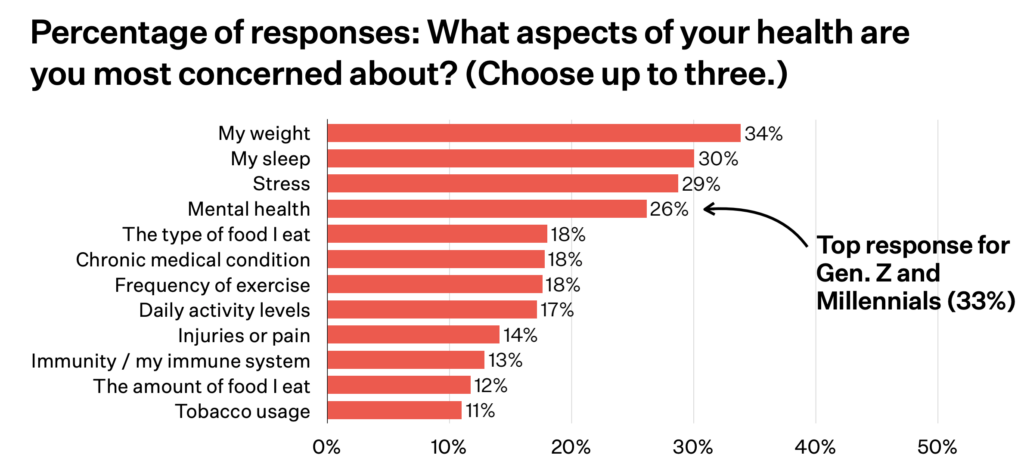
When it comes to their health, weight turns out to be the most pressing worry for Americans, a third of whom (34%) chose it in their top three concerns. Moreover, 18% are worried about the type of food they eat.
It underscores the popularity of GLP-1 drugs like Ozempic and Mounjaro, which have become firmly embedded in the weight-loss industry, and pushed food companies to tweak their offerings.
In fact, the share of consumers using weight-loss medications in the US more than doubled between early 2024 and summer 2025, from 5.8% to 12.4%. And estimates suggest that GLP-1 sales will reach $100M by the end of the decade.
3) UPFs – not seed oils – the chief health concern
With Robert F Kennedy Jr’s ascendance to health secretary, two food groups thought to be in peril were seed oils and UPFs, underlined by the former environmentalist’s love for foods like beef tallow and raw milk.
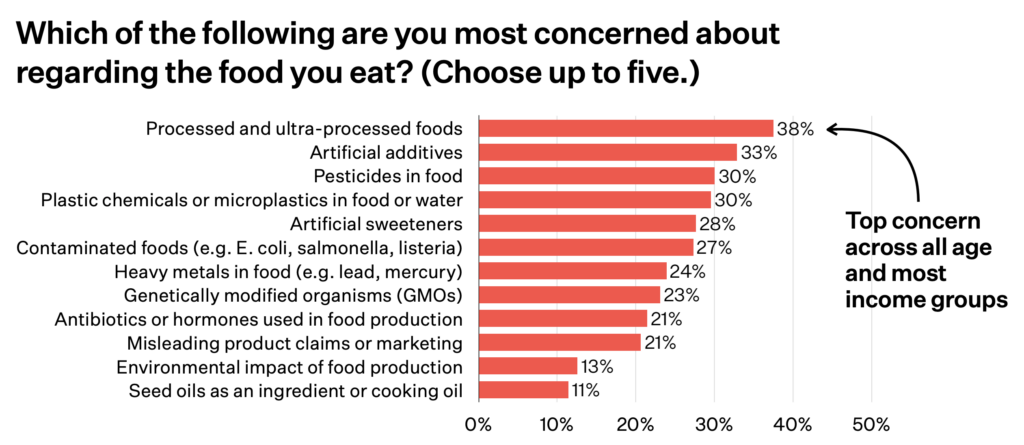
The survey suggests that worries about only one of these categories has carried through – 38% of Americans are apprehensive about processed and ultra-processed products, making it their top food concern. It explains the dip in sales for meat alternatives, many of which fall under the category, which experts say is highly misunderstood.
This is followed by artificial additives (33%) and pesticides (30%). On the flip side, only 11% of Americans are uneasy about the use of seed oils, aligning with studies that show they’re much better for you than fats like tallow or even butter. Further, the poll confirms that these consumers have cooled on the impact of global warming, with only 13% concerned about the climate impact of food production.
4) Protein is here to stay
The protein boom belies the fact that Americans eat too much of the macronutrient to start with, consuming roughly 20% more than is recommended. Still, around a quarter of consumers think they’re not getting enough protein in their diet, a sentiment more popular among women (29%) than men (21%).
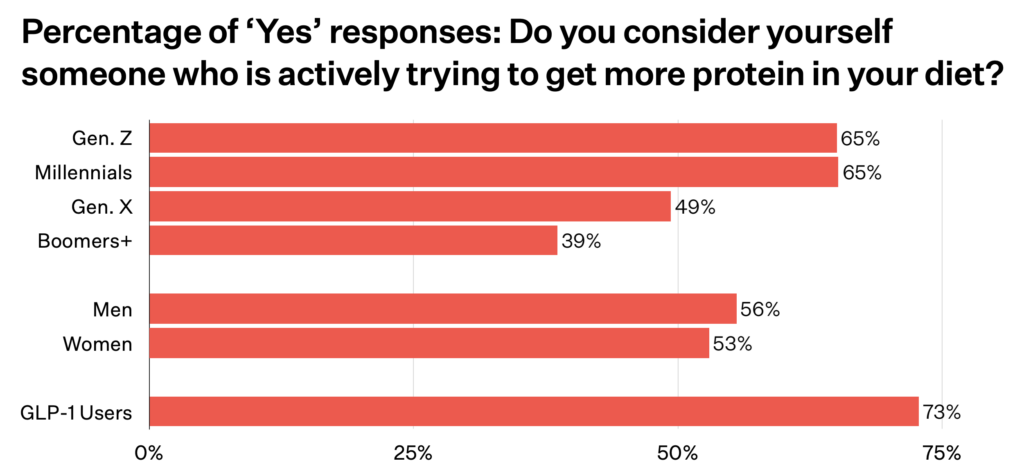
This year, 65% of Gen Zers and millennials are trying to consume more protein, as are 49% of Gen Xers. This rises to 73% among GLP-1 users, who witness a 25-40% decrease in muscle mass over eight to 16 months (several times more than non-medicated weight loss approaches and age-related muscle loss).
On the other hand, 95% of Americans aren’t getting enough fibre, and most of them eat half as much as recommended per day. This is recognised by 22-30% of respondents across different age groups. Interestingly, 52% of people who think they don’t eat enough protein also believe they’re underconsuming fibre.
5) Consumers know brands are protein-maxxing
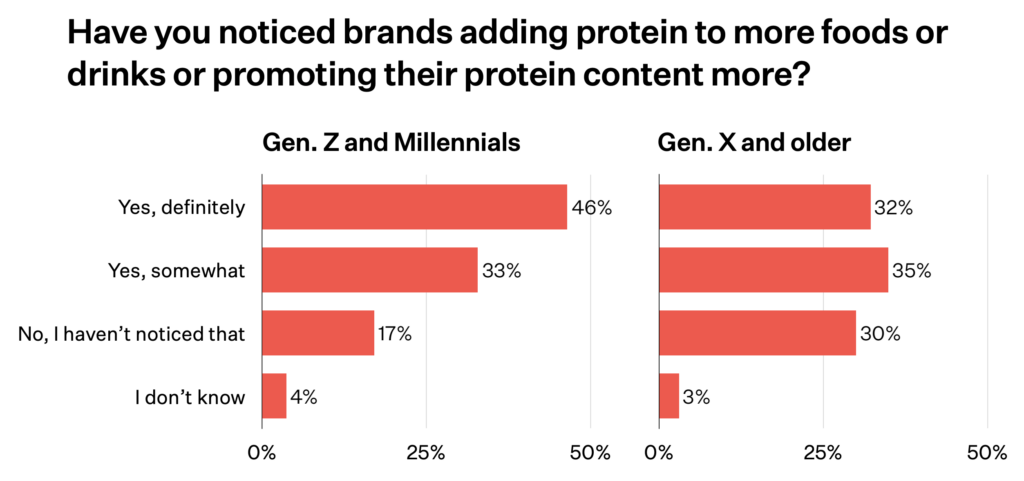
Companies are stuffing protein in syrups, chips, pasta, fizzy drinks, and everything in between – and people are aware of this strategy.
Nearly four in five Gen Z and millennial Americans have noticed brands adding protein to food and beverage products or promoting their protein content more. This is true for Gen X and older populations, too, two-thirds of whom agree with this statement.
And that’s not a bad thing for brands, especially if their target market is younger consumers – 39% of Gen Zers and millennials like having more high-protein options, as opposed to 25% of older demographics. That said, only 5-10% of Americans think protein is being added too many things.
6) Americans are sweet on sugar alternatives
When asked what they wanted to consume less this year, the top answer among the respondents, by far, is sugar, cited by 45%. When buying packaged drinks, nearly half (48%) of them often or always check the label for sugar or sweeteners.
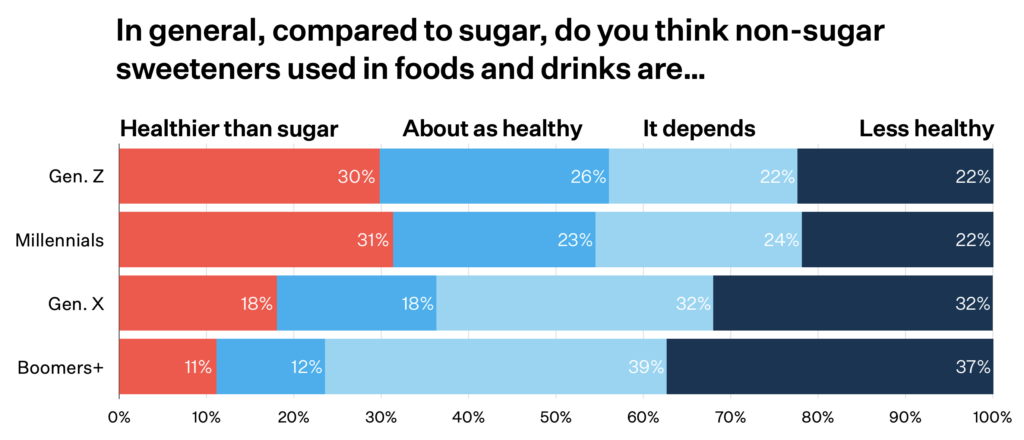
Speaking of which, non-sugar sweeteners are viewed very positively among Gen Z and millennials, more than half of whom believe they’re either as healthy or healthier than sugar. These cohorts rate nearly every sweetener as healthier, and across all generations, honey and monkfruit enjoy the best reception.
Some new climate-friendly products are hitting the nail on the head here – Beyond Meat’s new carbonated protein drink line, Beyond Immerse, offers 20g of plant protein sweetened with stevia leaf and monkfruit. And the data suggests a quarter of Gen Zers and millennials prefer alternative sweeteners over sugar in beverages, outlining the potential for such products.