

How Cocojune Captured the US Dairy-Free Yoghurt Category with Protein & Probiotics

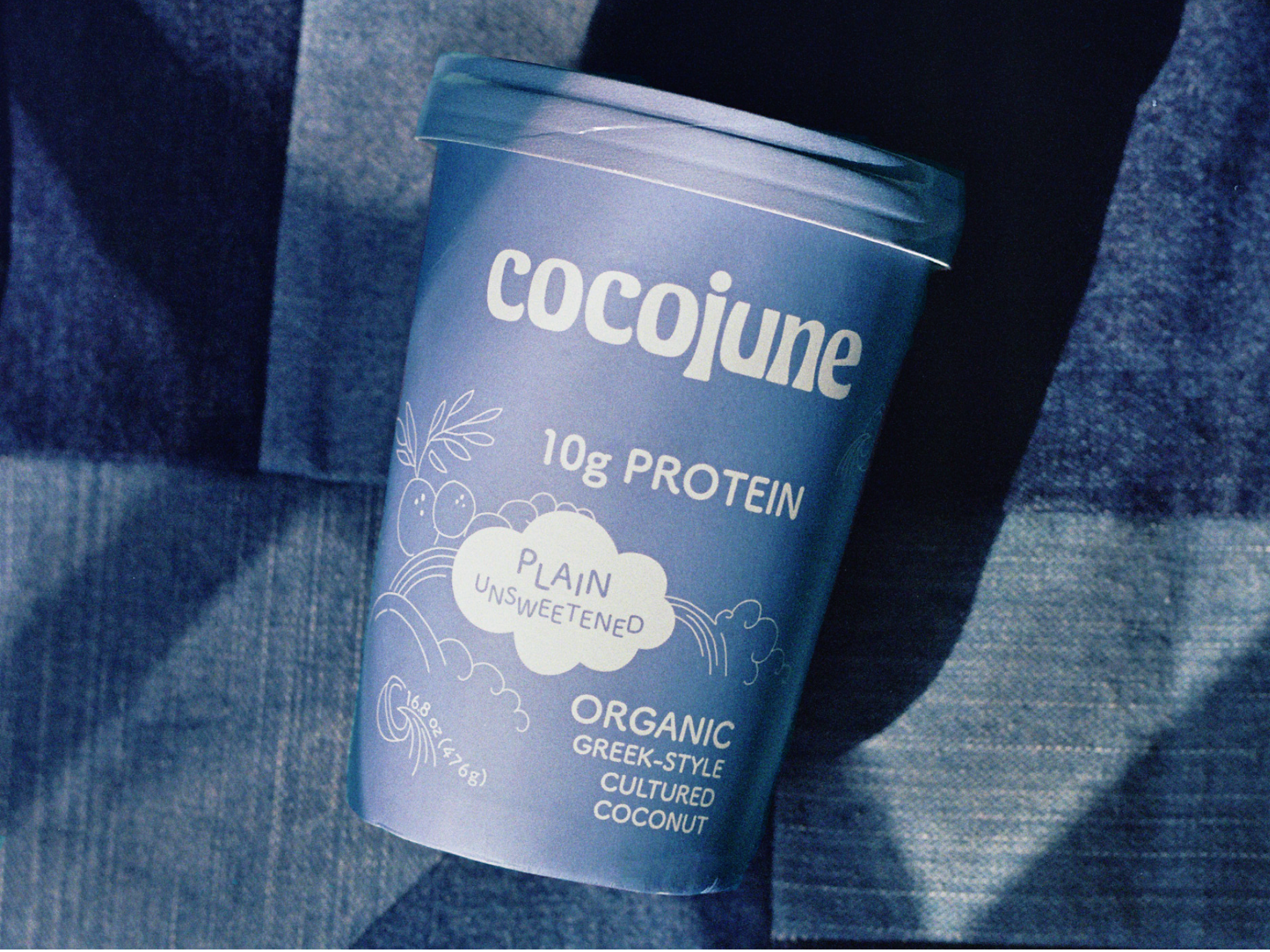
A plant-based protein yoghurt that matches its dairy counterpart? Only Cocojune’s coconut alternative fits this description in US taste tests, and the company explains why.
As sales of plant-based dairy go, yoghurts are only behind milk and creamer alternatives in the US, commanding $400M in dollar sales in 2024.
But the gap between non-dairy and conventional yoghurts is vast, as can be seen from Nectar’s 2026 Taste of the Industry report. Sensory taste tests by the organisation show that only a quarter (26%) of non-vegan Americans like the average dairy-free yoghurt, compared to nearly half (49%) who like the dairy benchmark.
In fact, just 44% of consumers say they’d buy a vegan yoghurt pot, versus 73% who are likely to purchase Chobani’s dairy-based, non-fat, plain version. It’s why only one non-dairy alternative won a Tasty Award last month, indicating that 50% of taste-testers found it to be on par with or better than conventional yoghurt.
That was Cocojune’s protein-boosted plain coconut yoghurt, which was launched last October. “This specific product not only focuses on texture and taste, but it also delivers some functionalities that are pretty similar to dairy products,” Johanne Hvelplund, head of product and R&D at Cocojune, tells Green Queen.
“It’s important that you check off all those boxes. And at the same time, it has these highly studied supplement-grade probiotics, which are what people are looking for,” she says.
Why Cocojune’s protein yoghurts are ‘taking off’
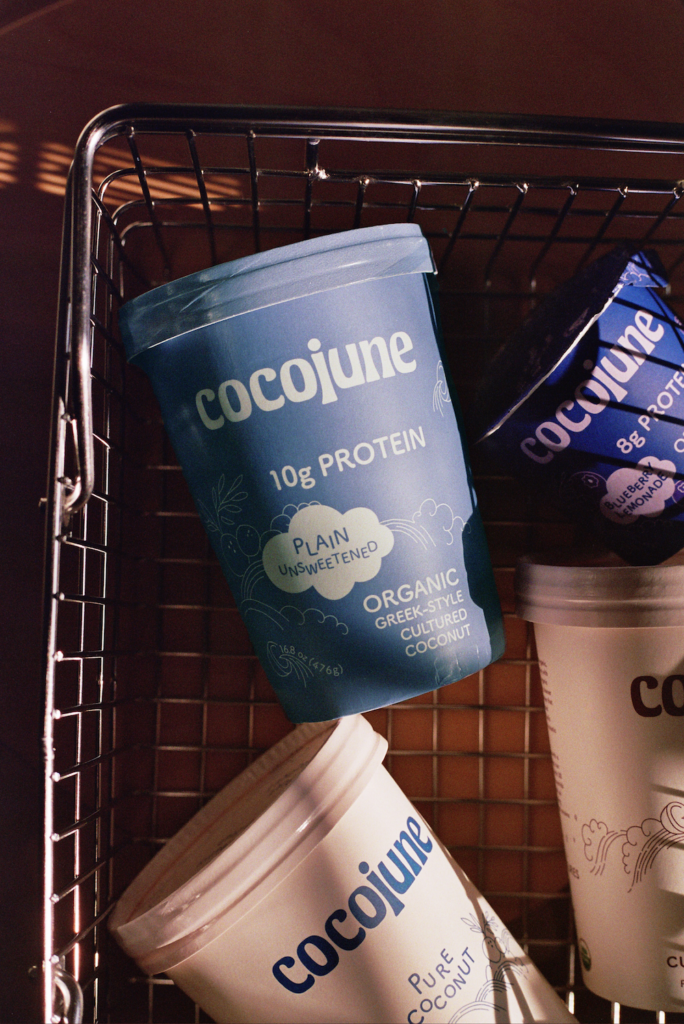
Cocojune’s plain unsweetened protein yoghurt contains coconut milk, pea protein, inulin, citrus pectin, and a bunch of vegan probiotic cultures. It offers 10g of protein and 3g of fibre per 160g serving.
“I’ve tried all organic plant-based proteins out there, and protein in general can be really tricky to work with when it’s plant-based, and also pea,” Hvelplund explains, suggesting that not all proteins are created equal. “Pea delivers a good quality in general, also in terms of digestibility and bioavailability. So it’s good not only for texture creation, but also for health benefits.”
Consumers of the Tasty Award-winning yoghurt keep praising the texture “again and again”. “It’s really unique for this,” she says. “The texture is pretty light and creamy. And some people describe it as pretty close to a normal Greek yoghurt, because it’s not dry, which is what can be difficult with plant-based proteins. It’s not chalky, it’s not grainy; it is just smooth and light and fluffy.
The protein line, which comprises six flavours, has been doing “really well” since its launch. “It’s taking off. And I think in terms of protein, we just launched at a perfect time,” says Hvelplund.
Indeed, protein has never been more popular in the US – nearly three in five (57%) Americans plan to prioritise protein this year, and 43% of them are willing to pay more for products enhanced with the macronutrient, rising to 54% among younger consumers.
And the group of consumers most hungry for protein are GLP-1 users, 73% of whom are actively trying to get more of it in their diets, according to one poll. The share of Americans using these drugs increased from 10% in 2024 to 18% in 2025, and these cause a 5-40% decrease in muscle mass over eight to 16 months (much more than non-medicated weight-loss approaches and age-related muscle loss).
It has also caused more people to want to increase their fibre intake, since this nutrient (alongside fermented foods such as yoghurts) can trigger the body’s natural GLP-1 response.
“GLP-1 can be a buzzword for many things,” says Hvelplund. Cocojune’s products have enough fibre to use as a health claim on packaging. “But we think it’s about making products that taste good and have a good texture, and not focusing ultimately on the functionality, because then you can’t win over all the consumers.”
Wellness-minded consumers the focal market for Cocojune
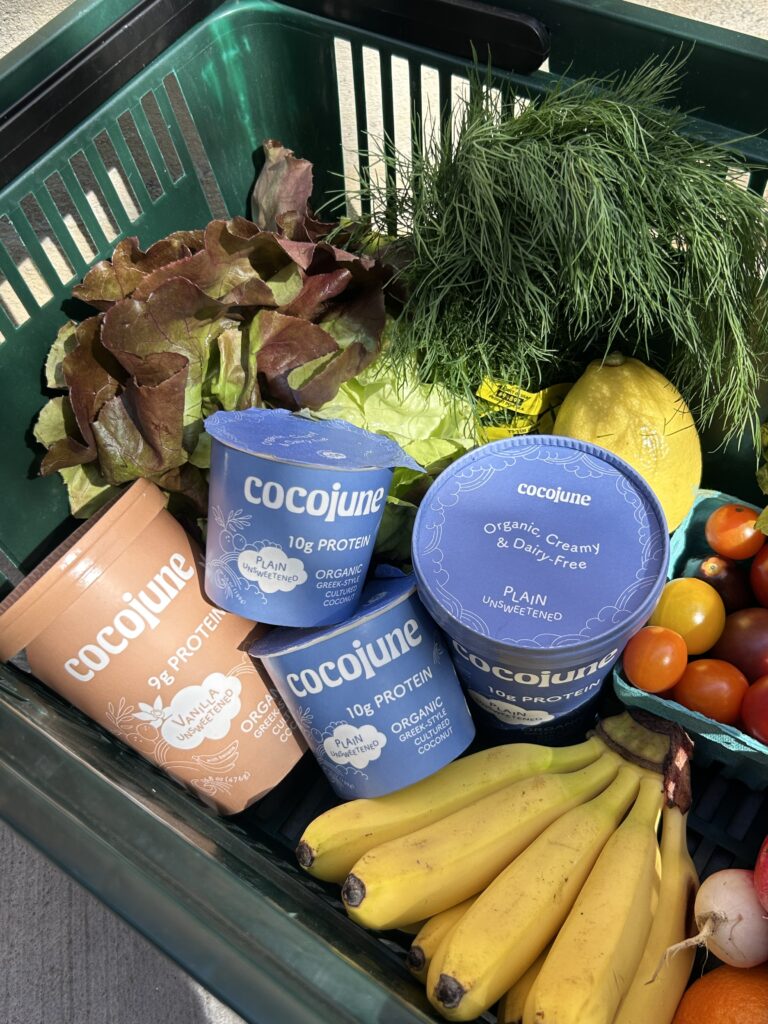
Nearly four in five Gen Z and millennial Americans have noticed brands adding protein to food and beverage products or promoting their protein content more. That’s not a bad thing, especially if companies’ target market is younger consumers – 39% of these age groups like having more high-protein options.
So who is Cocojune’s target consumer? “Initially, it was vegans, and then it grew to vegetarians, and now we’re working on omnivores, because our product is so versatile that you don’t have to be somebody who’s dairy-free or lactose-intolerant to enjoy our products,” says Zanna Scrimgeour, brand partnerships manager at the startup.
“So now we’re really just trying to target people who are wellness-minded and are looking for functional products that taste good and feel good for you as well,” she continues.
Hvelplund adds: “We are always trying to grow the consumer group that we are targeting, and that means that we need to listen to other people also. We do feel like we know what they want, but we also want to listen to what people want, without compromising on our sustainable ingredients, plastic-neutral [philosophy], and all that.”
Reflecting on the Nectar taste test’s results, she says: “I did get a lot of insight on some of the flavour notes people like. Also, just a use case of products – like, this product can also be used in savoury dishes… Do people care about specific ingredients in the same way that I do, or should we be more open towards some things?”
Touching upon Cocojune’s product plans this year, she notes that maintaining the consistency and quality of its offerings is a key focus, especially since protein is growing so quickly.
“We have our own production, so making sure that we deliver every time is huge. I’m also working with quality assurance – that’s really important for us,” says Hvelplund. “And then, of course, because we have our own facilities, it’s easy for us to introduce new products. So we are working on developing new products as well, but it’s always surrounding fermentation.”
How plant-based yoghurts can close the gap with dairy
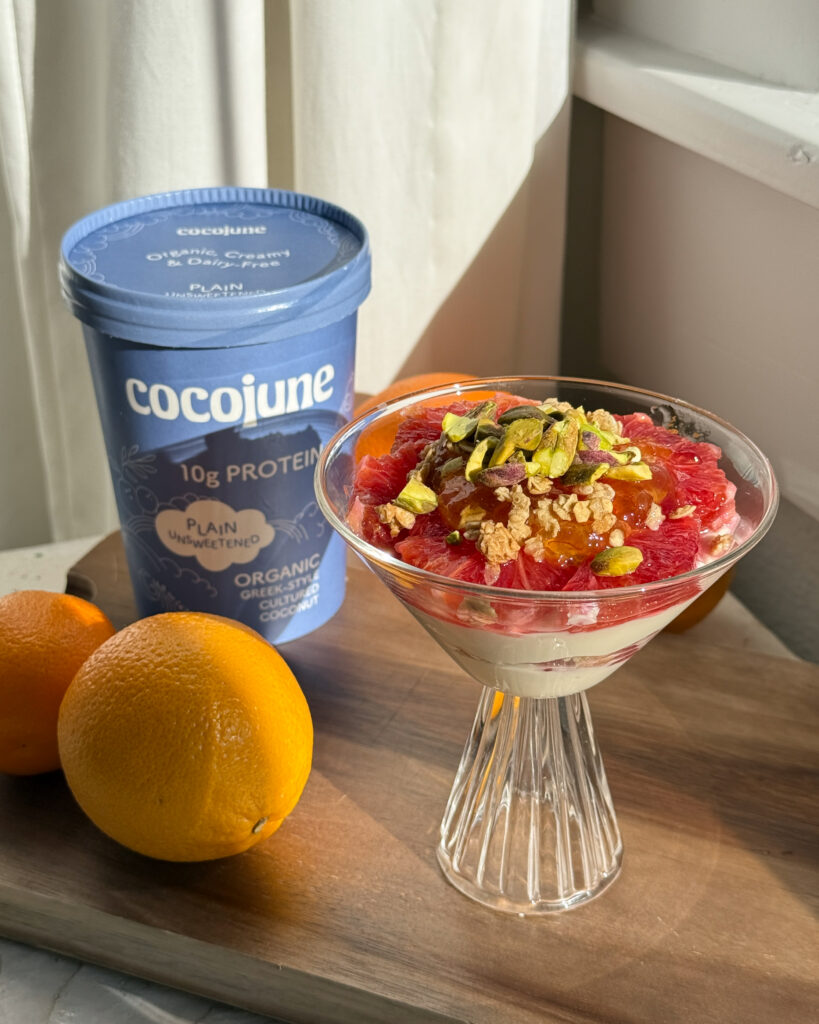
Hvelplund is a firm believer that making a product as good as the dairy version, in terms of the texture, flavour and functionalities alike, is “really important” for success in the plant-based yoghurt sector.
I ask her what the category needs to do to better compete with the dairy industry. “You shouldn’t try to incorporate all functionalities, because you could start focusing on other things than what normal dairies focus on. Normal dairies are not focusing on fibre – it’s not a fibre product,” she says.
Her advice is to start weaving in certain functionalities, but not cramming everything into one product. “This is something you eat every day, so you want to have some health benefits from it. As long as you deliver high-quality probiotics and protein, then I think you are good on the dairy side. The missing thing on a lot of plant-based products are the high-quality probiotics,” she suggests.
“We spend so much time sourcing these really specific probiotics. And it’s not about ‘the more, the merrier’ – it’s about getting the right bacteria. And I think a lot of people don’t know that,” Hvelplund says.
“The right bacteria, in the right amount, and not extremely high counts, and it has to survive throughout shelf life and in the gut – you need to have those probiotics by the end of shelf life and in your digestive system,” she adds.
Cocojune’s products are already available in over 12,000 stores across most major retailers nationwide, and the company is “always working on expanding distribution”. “We’re just continuing to ride that momentum,” says Scrimgeour.
“And we have a little bit of international distribution, which is exciting. We just launched in Costco Canada. So that’s really cool. But for the most part, we’re just working on getting more products on more shelves, so that everybody can trial Cocojune and realise how much they love it,” she adds.
Speaking of international expansion, does Cocojune have its sights set elsewhere, too? “We get requests from people all the time, whether it’s in Europe, Japan or Latin America, who are always asking to bring Cocojune there, because they are always telling us that there’s nothing similar to anything that they have from the market.
“So we have a ways until we can get there. But I think that that would be a dream of ours, one day, to expand internationally.”