

Fysh Foods: Beyond Sushi Owner Scoops Up Shark Tank’s Influencer-Led Vegan Seafood Brand


Fysh Foods, the influencer-founded vegan seafood startup that won a Shark Tank deal in 2024, has been bought by City Roots Hospitality, a plant-based restaurant group led by chef Guy Vaknin.
New York City’s City Roots Hospitality, which owns vegan eateries like Beyond Sushi, Colette and Anixi, has acquired plant-based seafood brand Fysh Foods.
The restaurant group, owned by former Hell’s Kitchen contestant and chef Guy Vaknin, will incorporate the latter’s raw tuna alternative into its locations across the Big Apple, reimagining the squeezable fish-free product for a sit-down dining format alongside its existing menus.
Fysh Foods was founded by Zoya Biglary, an influencer and cookbook author who bootstrapped the startup completely on her own and has guided it to partnerships with Erewhon, Kombu Sushi and Calamigos Ranch over the last four years.
The deal represents a marriage of two creator-led Shark Tank successes, with both Biglary and Vaknin securing investment deals on the ABC show. The exact terms of the all-cash transaction are undisclosed.
City Roots Hospitality eyes expansion beyond NYC with Fysh Foods purchase
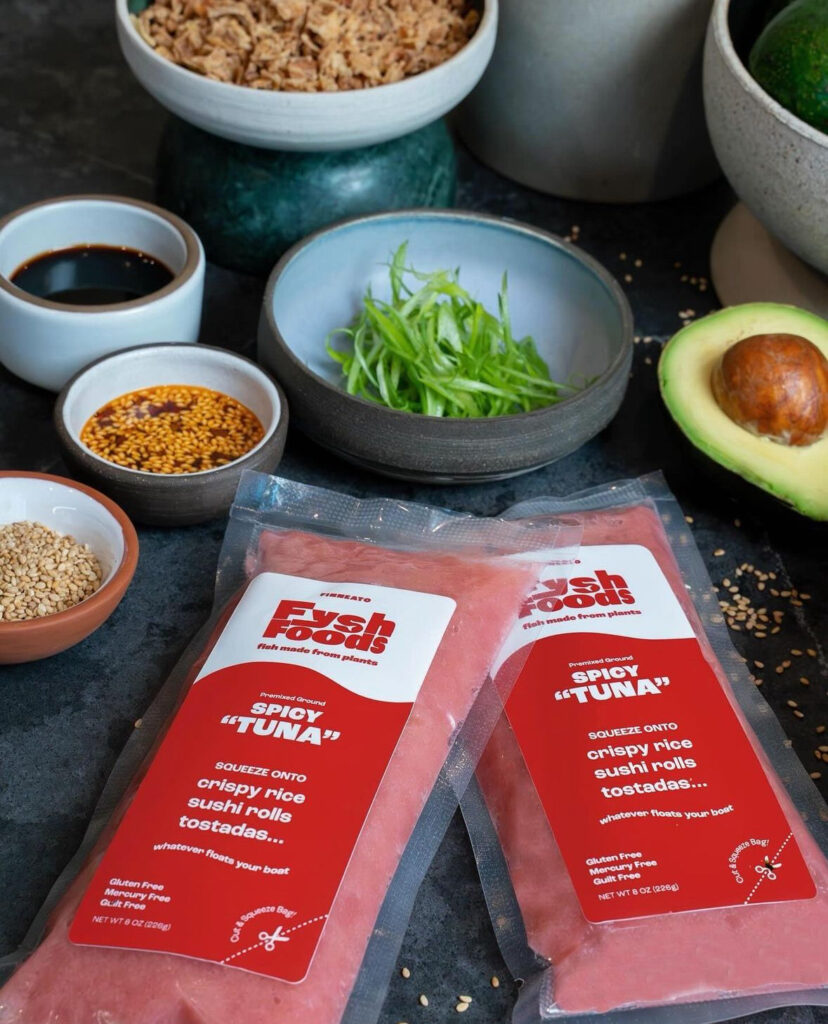
Formerly called Finneato Fysh Foods, the Los Angeles-based brand’s seafood alternatives are made from a blend of root vegetables like tapioca, beetroot and konjac, alongside pea protein, kappa carrageenan (derived from algae), and flaxseed oil.
The startup employs age-old fermentation techniques to elevate the flavour of its range, which has previously also included fish-free salmon and yellowtail, alongside the flagship spicy tuna.
Biglary took the business to Shark Tank with her now-wife, Buzzfeed Tasty alum Alix Traeger, in 2024, positioning its products as a safer option in a seafood industry marred with parasites, mercury and microplastics.
The pitch appealed to Kind Healthy Snacks founder Daniel Lubetzky, who agreed to invest $150,000 for a 30% stake in Fysh Foods. While Biglary and Traeger accepted the pitch deal onscreen, they ultimately chose not to go forward with it, in a bid to keep the business entirely self-funded and female-owned.
After being acquired by City Roots in August, Biglary said: “The most important thing a founder should know is when to let someone else take the wheel. Chef Vaknin has the momentum, experience and team needed to catapult Fysh Foods to the next level. I can’t wait to watch it happen.”
Vaknin himself appeared on Shark Tank six years before Biglary, seeking a deal for Beyond Sushi. He agreed to a $1.5M joint investment from Lori Greiner and Matt Higgins in exchange for 30% of his West Coast business and 15% of New York operations, and ultimately also turned it down after the show aired.
City Roots said its takeover of Fysh Foods was notable within the broader creator economy. Several influencer-led food and drink brands have been acquired by CPG companies and private equity firms, but its purchase of the vegan seafood startup is a rare example of such a business moving directly into a restaurant portfolio, rather than staying in retail or e-commerce.
It called the acquisition a “foundational step”, not a final one. The restaurant group plans to expand the plant-based seafood brand beyond its current New York City footprint, in line with its own expansion ambitions. Specific timelines and locations, however, are yet to be disclosed.
Headwinds persist for fish-free seafood
Biglary grew her Fysh Foods brand through direct-to-consumer sales, word of mouth, and the strength of her online presence, where she has nearly 1.7 million followers across platforms.
“I built Fysh Foods because I believed plant-based seafood deserved the same innovation that plant-based meat had already received. Four years ago, I had competitors who raised millions of dollars on ‘food tech’ valuations. I didn’t do that,” Biglary said after the acquisition by City Roots.
“I always treated my brand as a food company, rather than a ‘food tech’ company. Today, those same competitors are no longer in business,” she added.
Indeed, despite the environmental and health risks of farmed seafood being well-known to Americans, vegan alternatives have largely failed to take off. Last year, sales of the latter fell by 3% to just $10M in 2025, accounting for less than 1% of the overall dollar revenue from plant-based meat and seafood.
As Biglary noted, this has forced the closure of several alternative seafood startups globally in recent years, including Hooked Foods, Aqua Cultured Foods, Olala!, Konscious Foods, Upstream Foods, Vegan Finest Foods, and Impact Food. Happy Ocean Foods, meanwhile, has pivoted away from plant-based seafood to supply clean-label, functional plant protein bases to foodservice operators instead.
That’s part of a larger trend of consolidation in the alternative protein space, in which more than 85 companies have been acquired, merged, gone bankrupt, or shut down in the last 24 months. In July, for instance, US startup Bayou Best Foods snapped up Germany’s BettaF!sh to expand their shrimp, tuna and salmon alternatives on both sides of the Atlantic.
Despite the choppy waters, brands with differentiated strategies stand to win. Oshi raised $3M after sales of its vegan salmon quadrupled in 2025, and the startup expects a similar increase this year as well. It is set to enter Whole Foods Market in December.
In Canada, NS/TX Industries bagged $10.5M to build an automated production system for plant-based salmon, beef and pork, alongside a $3.5M grant from the Canadian government to scale up its tech.