

From Chocolate to Supplements, Kokomodo Eyes 2027 Regulatory Approval for Cell-Based Cacao

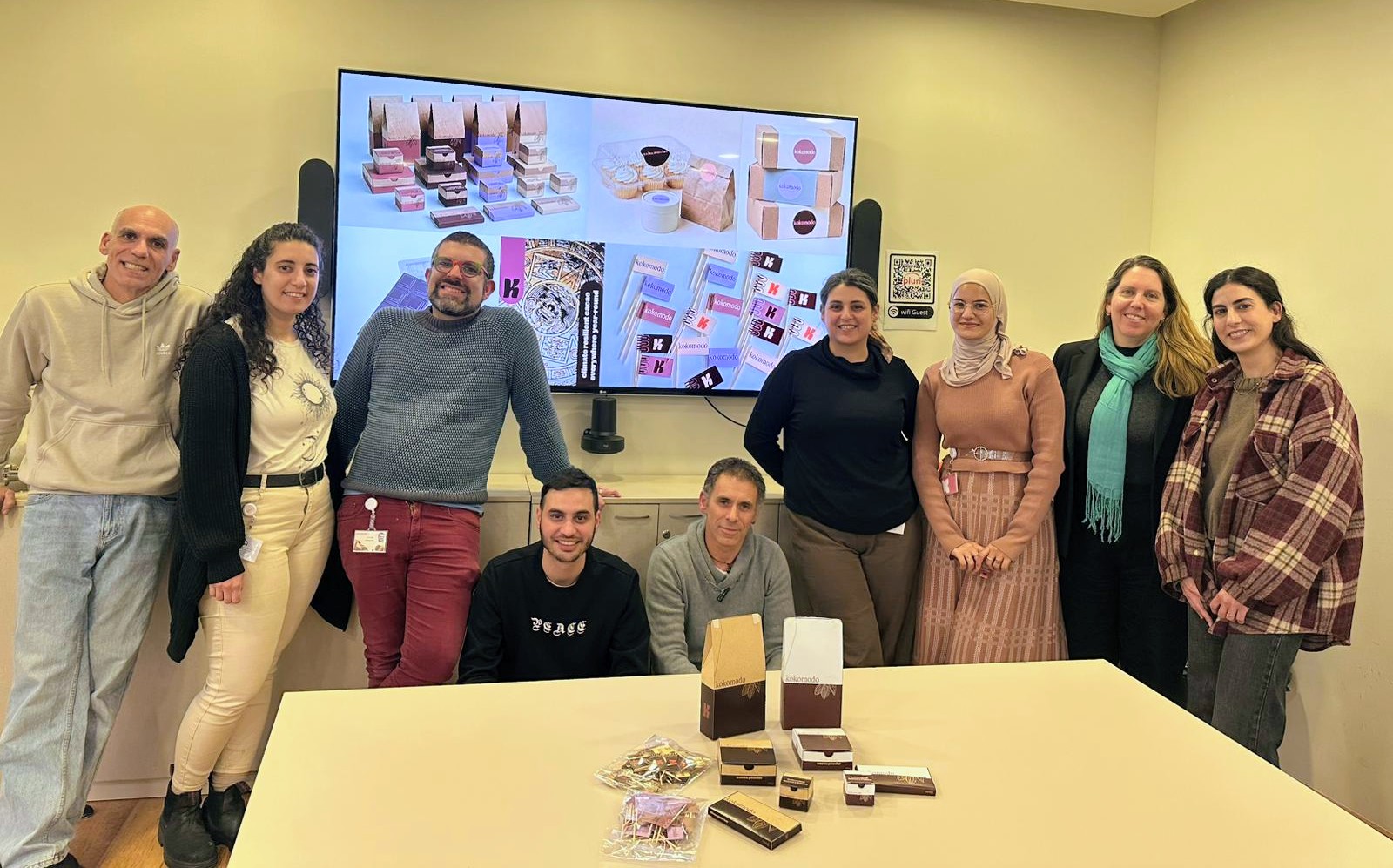
Having partnered with some of the world’s largest ingredient companies, Kokomodo is seeking clearance to sell its cell-based cacao by next year, paving the way for its use across a range of products.
Kokomodo is advancing its path to market with an upcoming fundraise and several regulatory filings across the world, with an aim to receive the green light for cell-based cacao in 2027.
That’s according to its co-founder and CEO Tal Govrin, who is speaking to Green Queen at the 2026 Future Food-Tech conference in San Francisco. “We are filing our regulation in multiple jurisdictions. We aim to have regulatory approval by next year,” she tells Green Queen.
“We’re also currently fundraising,” Govrin adds. “We’re in our seed round. We want to close it in the next couple of months.”
The startup, which emerged from stealth two years ago with a $750,000 investment from The Kitchen FoodTech Hub and the Israeli Innovation Authority, will use the capital to accelerate its R&D and product development projects with “some of the leading brands globally”.
“We want to focus on the proofs-of-concept and joint development agreements to continue developing the products, scaling up from hundreds of litres to thousands of litres, filing all our regulation, and finishing with our patents,” says Govrin.
Why Cargill chose to work with Kokomodo
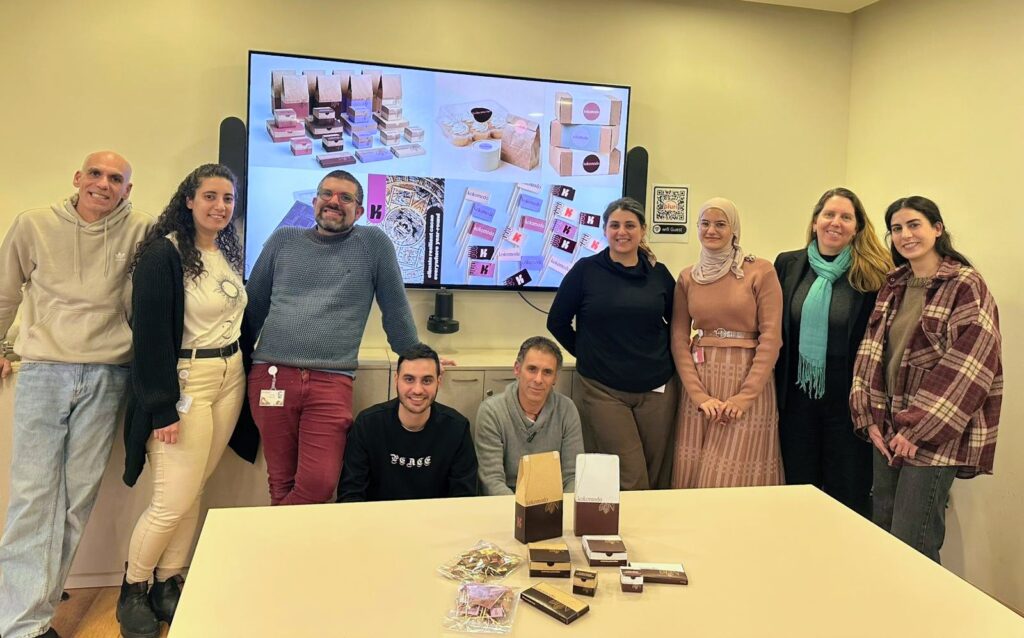
Only a month ago, the startup announced a collaboration with food behemoth Cargill to explore how cell-based cocoa ingredients perform in real-world applications, with a focus on enhanced functionality, sensory experience and scalability.
The project is financially backed by the EU, and will evaluate the functionality, sensory performance, and scalability of Kokomodo’s lab-grown cacao in industrial settings to explore how it can be incorporated into multiple categories, including beverages, dairy and confectionery.
“Cargill has been monitoring the cacao space, checking all the startups that are doing cell-cultured cocoa, and they made the decision to go with Kokomodo for several reasons,” says Govrin. “First, the fact that we do have a lot of cell lines, which allow us to do different products for different segments.”
She explains: “We are sourcing from different genotypes. Why is it important? Because every genotype has its own characterisation. Some of their cell lines will be high in antioxidants. Some will be very strong on flavours. Others will be mental bioactives. And once we have a platform to work with, we can really cater for different customer needs.
“And second, I think we’ve been very, very fast on delivering on products. That’s my belief: that food tech startups should bring products for tasting, for validation.”
Govrin calls Cargill a “great partner” for Kokomodo. “Obviously, they understand the space. They have a lot of capabilities, and it’s a true pleasure to work with them. The end goal is to do some product development together and eventually commercialise it,” she says.
Kokomodo working on several applications with cacao
Our conversation comes a year after fellow Israeli firm Pluri became Kokomodo’s majority shareholder, taking a 71% stake for $4.5M.
“Kokomodo is still an independent company, with its own mission, team and R&D, so we are focused on what we have always been focused on, which is cell-cultured cocoa,” says Govrin. “[Pluri] are our shareholders. They support us on different angles, but at the end of the day, it’s our mission to continue independently.”
The startup uses cells from premium cacao beans grown in Central and South America and has successfully completed lab-scale production, although Govrin declined to disclose its exact capacity.
“Kokomodo is a B2B ingredient company. We’re not exclusive to anyone, but we can work with different customers on different things. So the rationale here is to find the right global partners,” she says.
The company has other partnerships underway, including with CSM Ingredients and Coop Switzerland’s Chocolats Halba division, as well as others that haven’t yet been announced.
“We define together what the problem is and how our technology is solving the problem, and then work together to develop the product and then to commercialise the product,” Govrin explains.
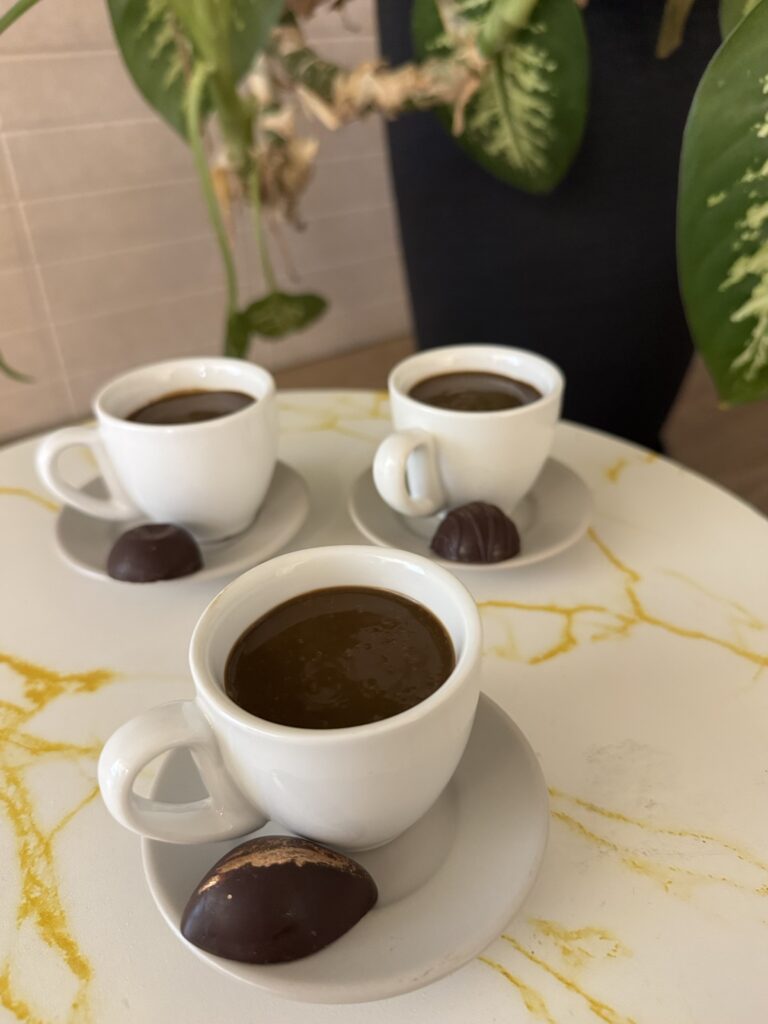
Kokomodo has suggested that its cell-based cacao can be used in several applications beyond just chocolate, including supplements, beverages, and even cosmetics.
Asked what the first Kokomodo-fuelled products could be, she responds: “It’s part of working with the customers. It’s really coming from different angles of the cacao – some will be around functionality, some will be around flavours, some will be around colour.”
Cell-based cocoa is ‘adding on to what nature is giving’
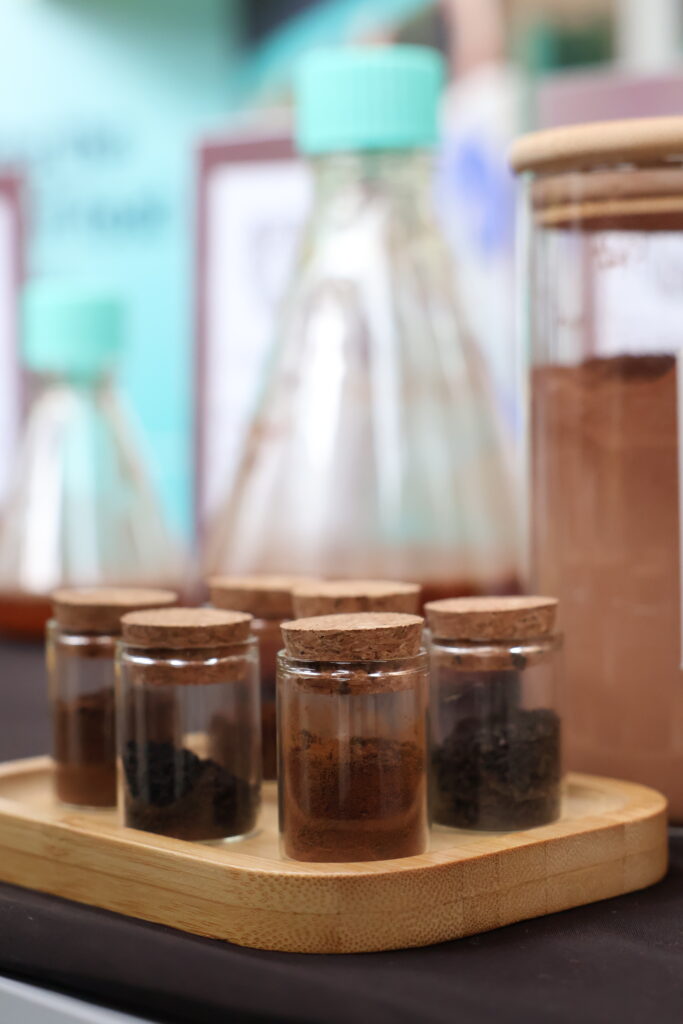
Govrin makes a point of distinguishing plant cell culture tech from cultivated meat. “The first [difference] is that we start with a powder, we finish with a powder,” she says.
“We don’t have the 3D structure, the scaffolding, the media cost is completely different from cultivated meat. [There’s] no need to remove media. All our processes, in terms of upscale, are far less expensive,” she adds. “And specifically at Kokomodo, we’ve also developed light capex.”
This approach is crucial for an industry that has been plagued by record prices and unprecedented supply shocks, largely due to the climate crisis, which pushed cocoa stocks to their lowest levels in a decade in 2024.
Extreme weather and crop diseases are hitting plantations hardest in the Ivory Coast and Ghana, the two largest cocoa producers, which have already lost over 85% of their forest cover since 1960. And scientists warn that a third of the world’s cocoa trees could die out by 2050.
It has led many chocolate majors to look to alternatives such as cell-based cacao and cocoa-free chocolate, including Nestlé, Lindt, Puratos, and Mondelēz International.
“The chocolate space is only one application for cacao. But I think this is our sweet treat. This is what makes us happy. This is something that consumers know and want to continue to consume. And the cacao supply chain is super broken, in terms of the fluctuation in supply and pricing,” says Govrin.
How does she feel about cocoa-free chocolate, which involves turning lower-carbon crops into compounds that resemble chocolate, often via fermentation? “Mimicking cacao with more than 300 molecules is very hard. So if you really want to go to the real taste, the real flavour, it’s not easy to mimic it with other plants,” she says.
“But for things like coating and other applications that are more mass-market, there’s room for that. We still think we want to bring the cacao with its full presence, with its full richness, and this is our mission.
“I’m always saying that we were born from the passion to preserve the supply of cacao, because this is a great plant. We don’t want it to be extinct. So for us, it’s like adding on to what nature is giving. It’s not replacing nature, not at all. For us, it’s always about adding to what is already there.”