

This AI-Led Seaweed Powder Can Replace Multiple Additives for Clean-Label Proteins


US startup Marine Biologics has unveiled SeaTex, a seaweed powder that can stabilise proteins and bind fats to offer clean-label food and drink formulations.
As concerns around ultra-processing push up the demand for clean-label products, one Californian startup is turning to the ocean for a single-ingredient solution.
Marine Biologics has introduced a seaweed powder that can replace multi-ingredient stabilisation and buffering stacks to enable the formulation of nutritious and additive-free foods and beverages.
The ingredient, called SeaTex, can suspend and stabilise proteins, fibres, minerals, and bioactives, as well as bind and structure fats and lipids. With it, the firm is hoping to offer a solution that can help manufacturers reposition their products as free from ultra-processed foods (UPFs), including industrial additives.
The firm will unveil its innovation at the Future Food-Tech event in San Francisco this week (March 19-20), where it will present a ready-to-drink coffee drink stabilised solely with SeaTex. Given its ability to suspend a range of compounds, its application will be broader than just the beverage industry.
“Next for us will be to focus on ready-to-mix [products], and then dairy and dairy alternatives applications, and baking and snack applications,” chief commercial officer Sally Aaron told Green Queen.
How Marine Biologics uses AI to produce clean-label ingredients
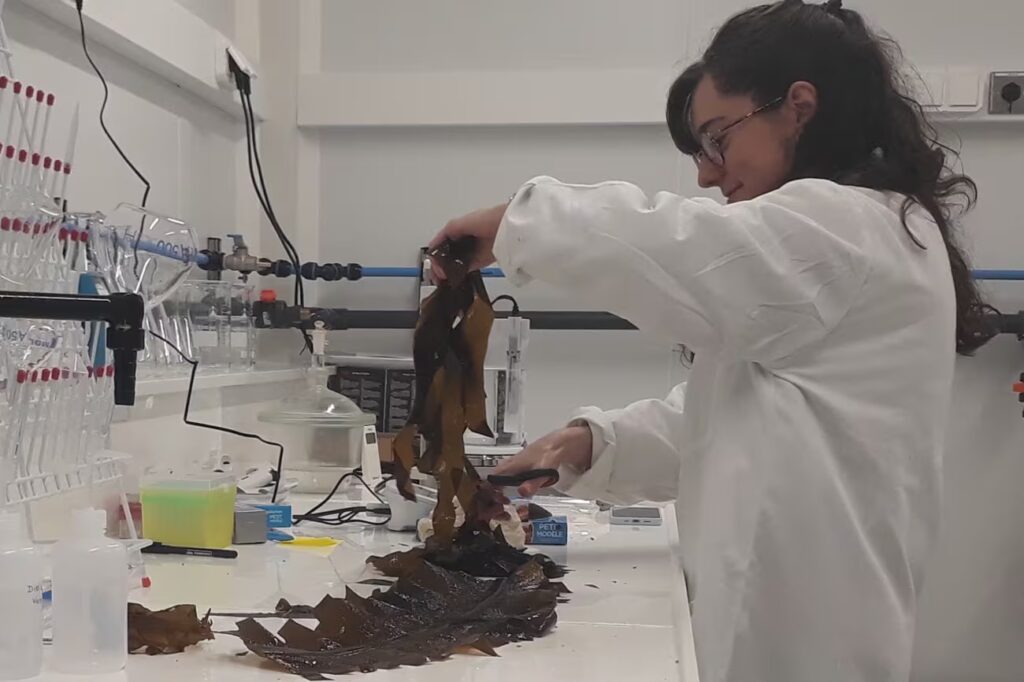
Marine Biologics says it’s looking to build next-gen clean-label ingredients by pairing artificial intelligence (AI) with standardised seaweed inputs.
Its AI engine, MacroLink, is purpose-built for ingredient design and leverages predictive AI to compress clean-label ingredient discovery from years to months. Its aim is to deliver consistent and cost-effective global supply chain solutions.
MacroLink is comprised of a proprietary biochemical data warehouse and supported by Marine Biologics’ standardised bulk material, SuperCrude. This is based on a minimally processed feedstock platform that stabilises variable seaweed biomass into a quality-controlled intermediate.
SeaTex is derived from an ocean-harvested brown seaweed that’s already classed under the US Food and Drug Administration’s Generally Recognised as Safe (GRAS) designation, enabling customers to incorporate the ingredient into market-ready formulations without any regulatory hurdles.
The neutral-tasting ingredient works at an “extremely low application rate” and can tolerate a wide range of pH and temperature requirements. Plus, it contains zero additives or synthetic ingredients, so manufacturers can use it to eliminate gums, buffers and bulking agents from their product labels.
This is becoming increasingly critical in the US, where additives have become one of the most criticised forms of UPFs. They’re the focus of a petition by former FDA commissioner David Kessler, who has asked the agency to revoke their GRAS status and eliminate them from the food supply. Health secretary Robert F Kennedy Jr has promised to act on the request.
In 2025, over one in three food and beverage launches in North America contained a clean-label claim, with no additives/preservatives being the top attribute highlighted, according to Innova Market Insights.
Further, 79% of Americans feel UPFs are a “significant threat” to public health, and 82% believe the fewer artificial or unfamiliar ingredients a food has, the healthier it is. Plus, 69% check labels to avoid highly processed ingredients, and 80% prefer familiar ingredients over artificial additives.
Breakthrough processing can address ‘narrow understanding’ of seaweed
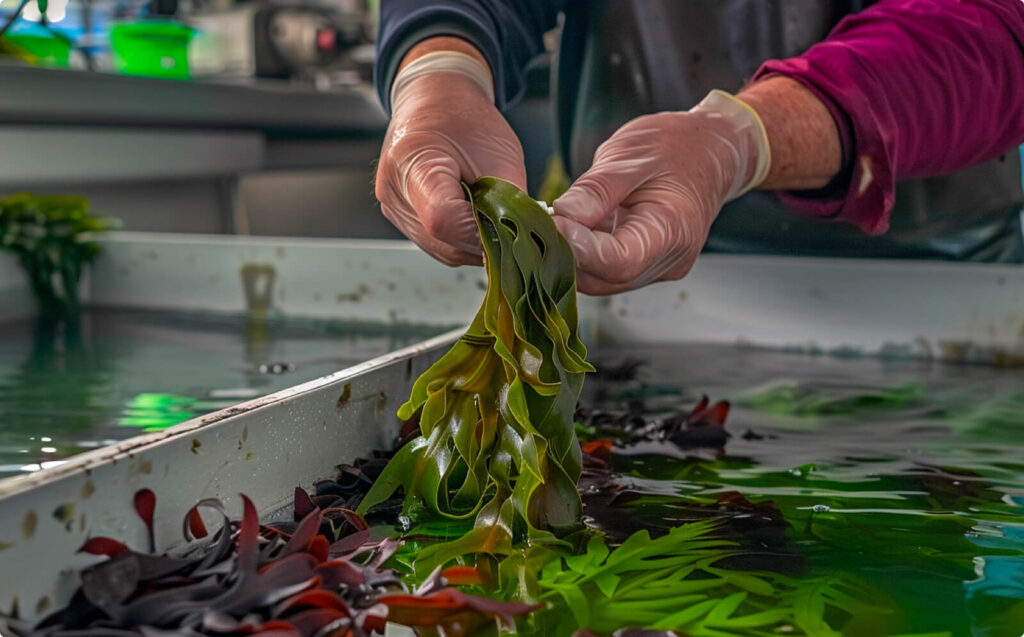
Algae is increasingly being positioned as a sustainable nutrition source, and investors are taking note. Canada’s Mara Renewables is using microalgae to produce DHA, an omega-3 lipid scientifically proven to support cognitive function, vision, cardiovascular performance and prenatal development, as well as reduce inflammation. It recently raised $9.1M to ramp up its manufacturing efforts.
Meanwhile, Aqua Theon recently secured $13M for its seaweed tech, part of which is allocated to expand its OoMee line of functional marine beverages. And Israel’s Brevel received $5M to develop microalgae-based proteins, lipids, fibres and antioxidants for multiple food and drink applications.
“Seaweed has long offered the promise of an abundant and renewable alternative ingredient, but a narrow understanding of its chemical composition and outdated production methods have led to highly refined ingredients that consumers are no longer interested in seeing on their ingredient labels,” said Marine Biologics CEO Patrick Griffin.
“With our breakthrough processing capabilities, we provide product developers and brand teams with new tools to meet consumer demands for cleaner labels,” he added.
The startup’s initial focus is on the production of seaweed-based functional ingredients as scalable bulk materials benchmarked and digitalised to serve as reliable manufacturing inputs.
“Our vision is to create a limitless pipeline of clean-label food ingredients,” said Griffin. “SeaTex is the first manifestation of that and a powerful example of how technology can help unlock the full spectrum of natural, raw material-derived ingredients for the food industry.”
Apart from SeaTex, it’s focusing on a range of innovation areas, including clean-label natural egg replacements, baking texturants, bioactives, and next-gen biopolymers for sustainable packaging. The latter is another category ripe with seaweed-based solutions, thanks to startups like UK-based Notpla and Australia’s Uluu.