

Meat-Rich US Dietary Guidelines Could Cause 33% Rise in Food Emissions

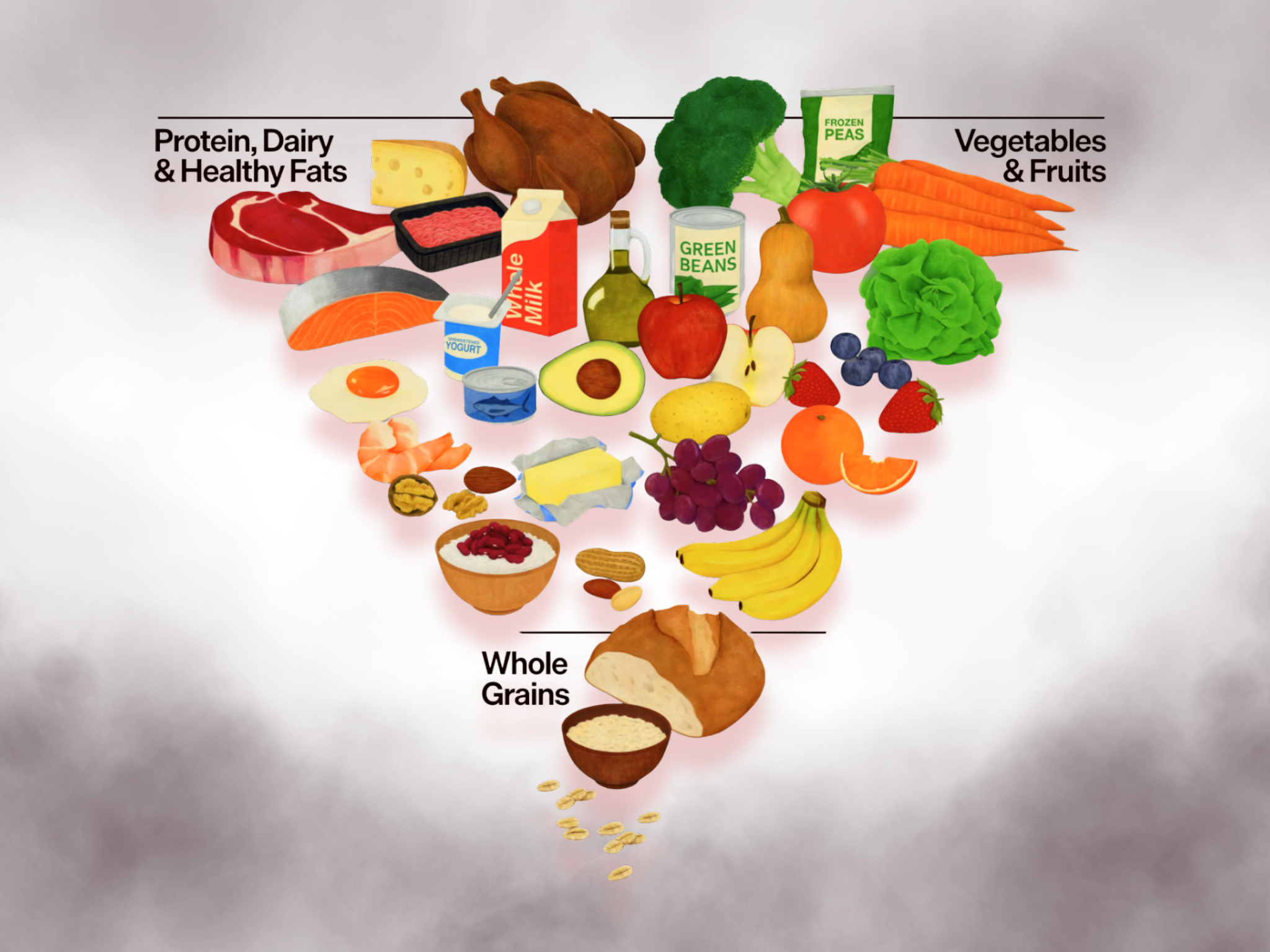
The US’s much-criticised update to the dietary guidelines will likely worsen the food system’s environmental impact, thanks to the spotlight on protein and red meat.
When the Trump administration unveiled the 2026 update to the US dietary guidelines, it was met with fierce backlash from voices spanning health experts to MAHA moms.
One of the primary sources of criticism was the recommendation that Americans should look to increase protein intake from 0.8g to 1.2-1.6g per kg of body weight, despite the country’s population already overconsuming this nutrient.
To make matters worse, the 2026 Dietary Guidelines for Americans (DGAs) endorsed the consumption of beef, pork, and other red meats, put whole milk back into the spotlight, and promoted butter and tallow, despite advising Americans to keep saturated fat intake under 10% of their total calorie intake.
“The DGAs lump together plant- and animal-based protein sources, emphasising the advantages of the latter, despite substantial evidence for widely disparate health effects, with plant-based protein foods strongly preferable,” states a new study in Proceedings of the National Academy of Sciences.
The research examines an often understated drawback of the DGAs: the environmental impact of shifting diets towards a more animal-protein-heavy pattern.
“Given that the majority of protein currently consumed in the US is animal-based and that the new inverted food pyramid places red meat and other meats at the top (indicating that they should be consumed regularly), the public is likely to interpret calls to increase protein intake as encouragement to consume more meat, which is disproportionately environmentally costly,” the authors write.
Animal proteins make up the majority of UPFs’ climate impact
The researchers analysed the environmental implications of aligning diets with the new DGAs, accounting for the concentration of ultra-processed foods (UPFs), another food group attacked by the advice.
The Robert F Kennedy Jr-driven guidelines were branded as a return to eating “real food” by eliminating highly processed products. According to the researchers, that implies eating more “natural” red meat, which, for many consumers, would mean grass-fed beef.
“But producing grass-fed beef for the entire population at current or higher intake levels is simply impossible. A nationwide transition to grass-fed beef could only support half of the current beef consumption levels in the US. Increasing protein intake by ≥50% thus necessarily means expanding industrial beef production,” they explain.
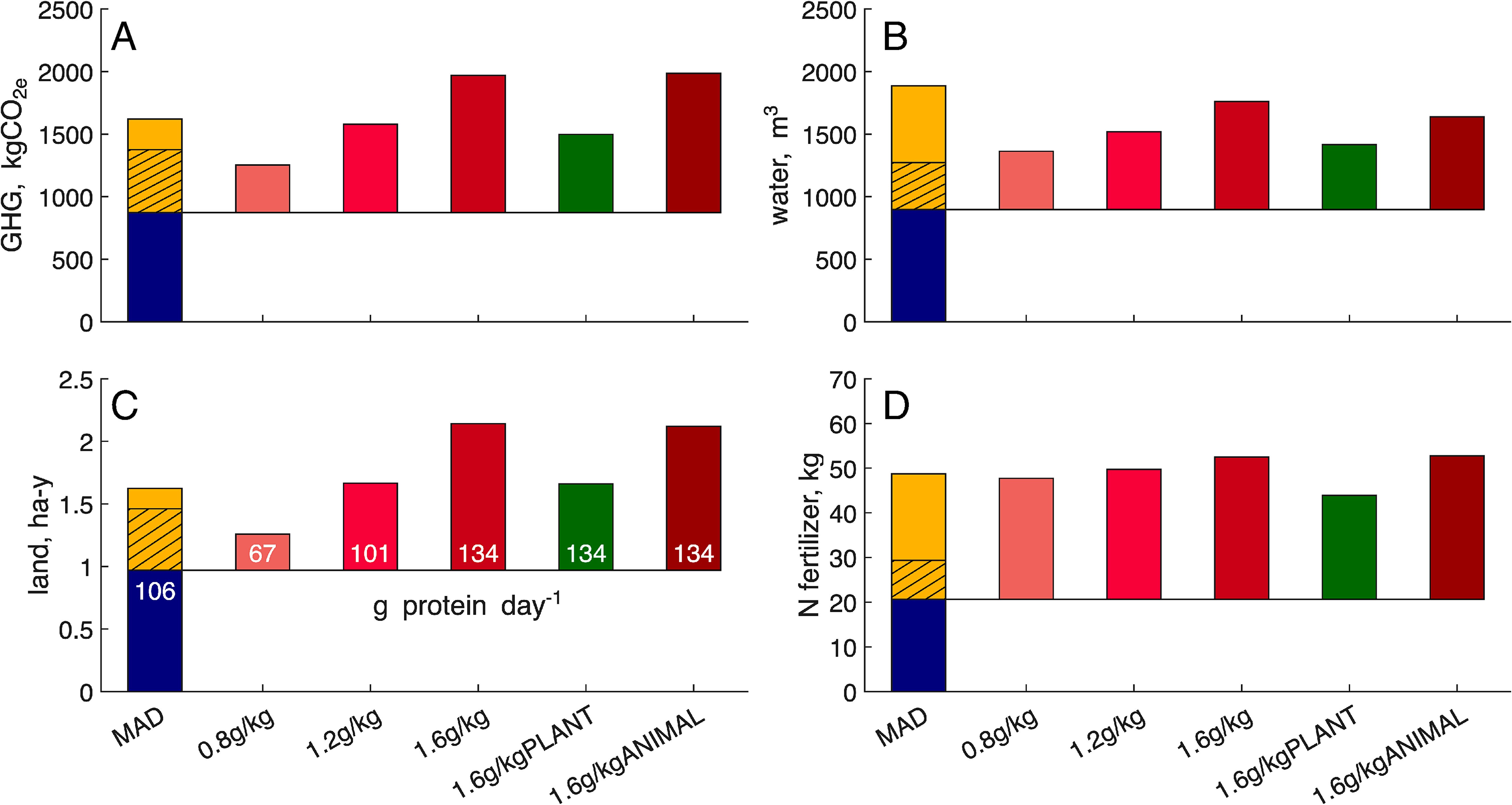
They found that the protein intake in the typical American diet is 1.2g per kg of body weight, which is 50% above the previous guidelines’ 0.8g per kg recommendation. The share of environmental impacts attributed to UPFs, meanwhile, is high.
UPFs make up 46% of the greenhouse gas footprint of US diets, 40% of the associated land use, 52% of water consumption, and 58% of nitrogen fertiliser use.
However, this reflects not only their larger contribution to total energy intake but also the high prevalence of animal proteins in these products. Of the aforementioned impacts, two-thirds of UPF emissions come from livestock-derived foods, which account for 75% of their land use.
“Although eliminating UPFs from the mean American diet could yield substantial environmental benefits […, the recommended increase in animal-based proteins will more than offset this environmental dividend in GHG, land use, and nitrogen fertiliser use by as much as 32%,” the researchers note.
They also found that in the 1.6g per kg scenario, prioritising animal protein had higher environmental impacts across all metrics compared to an increase in protein from plant-based sources – the former is associated with 33% higher emissions, 28% greater land use, and 16% more water consumption.
“High-protein plant-based diets had considerably lower environmental impacts than equally protein-rich animal-based diets and, in some cases, even lower than mixed, lower protein diets. There [are] considerable potential benefits for both public and planetary health if prevailing diets remove UPFs, and replace them with plant-dominated whole foods,” reads the study.
Study lambasts dietary guidelines’ ‘disregard’ for public and planetary health

“Notably, there is near unanimity that replacing animal with plant protein would simultaneously improve environmental performance and health outcomes,” the researchers write, adding that the replacement of UPFs with animal proteins like beef would cause net harm to the climate.
“If plant-based UPFs are removed, animal-food UPFs are retained, and more animal foods are appended, net harm to human and planetary health alike [is] all but ensured,” they suggest.
The researchers don’t mince their words about the latest DGAs, calling them “hard on the heels of hostility towards climate science” and identifying “disregard for environmental and public health” as their hallmark characteristic.
“The dietary guidelines must be revised so as to realign them with overwhelming evidence and established science. Most urgently, this requires prioritising plant-based foods over animal-based ones,” they say.
This aligns with the view of many health experts. In one letter to RFK Jr and agriculture secretary Brooke Rollins, over 200 doctors, dietitians and researchers called the recommendations “at best, confusing, and, at worst, harmful to public health”.
The Center for Biological Diversity and the Center for Science in the Public Interest released an alternative “uncompromised” version of the dietary guidelines, showing what the Trump administration’s recommendations would look like “if they had actually followed scientific consensus”.
The Physicians Committee for Responsible Medicine asked the government to withdraw the DGAs and reissue them without bias, nodding to the government’s removal of the original scientific advisory committee for the guidelines, which was replaced with a handpicked panel on which eight of the nine members had received some form of funding from the livestock industry.
Meanwhile, the American Heart Association published its own dietary guidelines to improve cardiovascular health, contradicting the government’s advice by emphasising a diet rich in fruits, vegetables and whole grains, and prioritising plant-based proteins and oils over meat and animal fats.
And another open letter, co-signed by MAHA-aligned groups, noted: “Protein adequacy is not the nutritional gap facing children. The more urgent public health priority is increasing dietary fibre and overall food quality.”