

German Cultivated Meat Fat Startup Cultimate Foods Winds Down

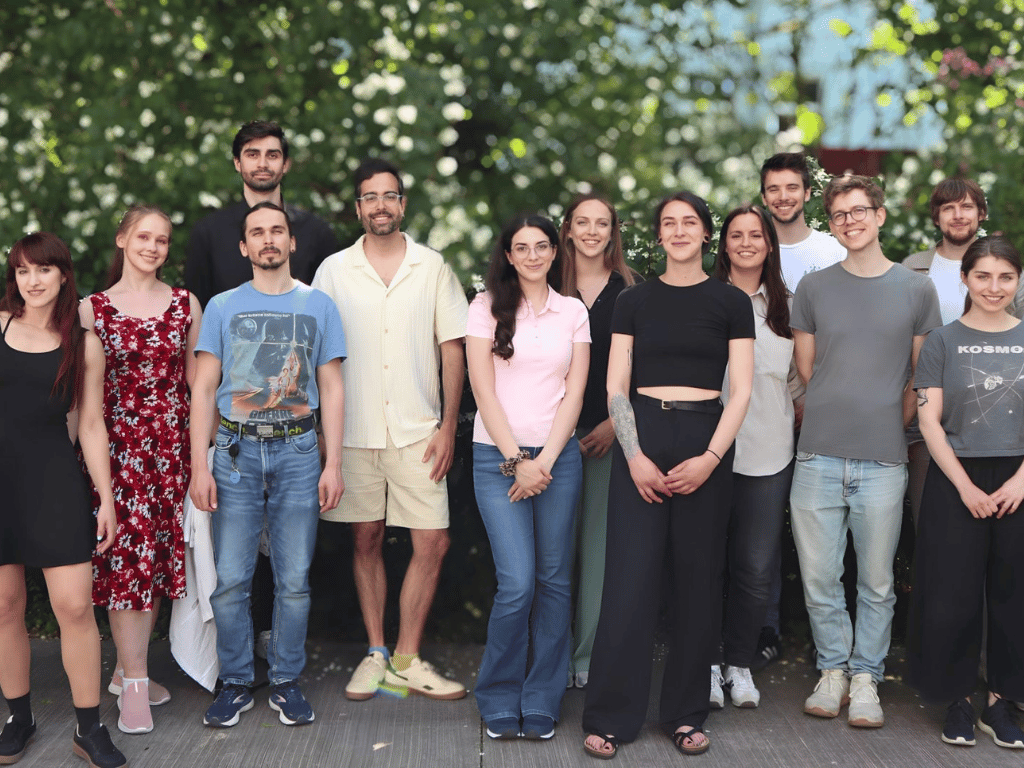
Berlin-based Cultimate Foods has closed down nearly four months after filing for bankruptcy, unable to secure enough funding to stay afloat.
Cultimate Foods, the German startup known for its cell-cultured fat that enhances the taste of cultivated meat, has wound down its operations, its founder confirmed.
The firm had filed for bankruptcy in April and initiated a financial restructuring to return to the path of long-term growth. However, despite efforts to find investors who could help save the business, it has now reached the end of the road.
“The company didn’t become what we hoped it would become. That hurts,” Cultimate co-founder and CTO Jordi Morales-Dalmau said in a LinkedIn post.
“But I also learned an enormous amount: about technology, about building teams, about running a company, about fundraising, and about what it really means to build something with no guarantee it will work,” he added.
Cultimate Foods aimed to use fat to boost cultivated meat’s flavour

Founded in 2022 by Eugenia Sagué, George Zheleznyi, Askar Latyshev and Morales-Dalmau, Cultimate was among several companies taking the fat route to cultivated meat, since it is the primary flavour driver of food and a more viable way to bring these products to the market at an approachable price point.
The company’s flagship innovation, CultiSense, was a cell-cultured fat ingredient that delivered the savoury flavour and aroma of meat without animal components. It began by selecting a small number of cells from cows and pigs and developing immortalised cell lines for beef and pork fat, respectively.
These cells were grown in its proprietary culture media inside bioreactors, enabling proliferation in a controlled, scalable environment. Once harvested, the cells are processed into flavour ingredients for industrial use.
The ingredient was seen as a bio-based flavour precursor to enable complex meaty notes with just a single component, helping manufacturers reduce ingredient count, simplify formulations, lower greenhouse gas emissions, and stabilise their supply chains.
The fat could be mixed with plant-based ingredients to create hybrid meat products, an approach adopted by leading players such as Mission Barns, Mosa Meat, and Hoxton Farms.
When Cultimate filed for bankruptcy, it stressed that its team (of around 21) remained fully operational and committed to advancing CultiSense to deliver to its customers. That situation has now changed.
Cultivated meat sector in freefall amid funding decline and strategy pivots
“We built something real: A team. A technology. Scientific publications and patents. A product. None of that changes the outcome. Cultimate is closing,” said Morales-Dalmau.
“But I don’t think the outcome makes those years meaningless. I am very proud of what we accomplished and thankful to the people who made it possible, including the team, collaborators, investors and governments, ” he added.
Cultimated had raised €2.3M in seed funding in 2024 to scale up production and expand commercial operations for CultiSense. And last year, it secured an investment from the European Regional Development Fund (ERDF) and the state of Lower Saxony for a project to establish a scalable and robust production platform for cultivated fat.
However, its closure reflects the financial struggles of the wider cultivated meat space, where startups only raised $74M in 2025, nearly half of the funding total from the year before, and 20 times lower than the peak investment levels seen in 2021.
That has led to several players ceasing operations, most notably Israel’s Believer Meats (which had secured both FDA and USDA approval to sell cultivated chicken in the US), and Dutch startup Meatable. The list includes fellow cultivated fat producer Upstream Foods, cell culture bioprocessor CellRev, and, as recently as last month, Portugal’s Cell4Food.
Cultivated fish startup Avant also shuttered its research arm in Singapore (it maintains a headquarters in Hong Kong. Others, meanwhile, have shifted gears. Uncommon Bio sold off its cultivated meat business and pivoted to therapeutics instead; Wildtype launched a marine complex supplement for skincare; and Upside Foods, the best-funded company in the space, branched out with a new life sciences division, Lucius Labs.
And in Australia, Vow co-founder George Peppou relinquished his CEO post to lead a new stealth startup spun off by the company, with a focus outside of food.
Green Queen has reached out to Cultimate for more details on the closure.