

Cocoa-Free, No Added Sugar: Planet A Foods Unveils Healthier Chocolate Alternative

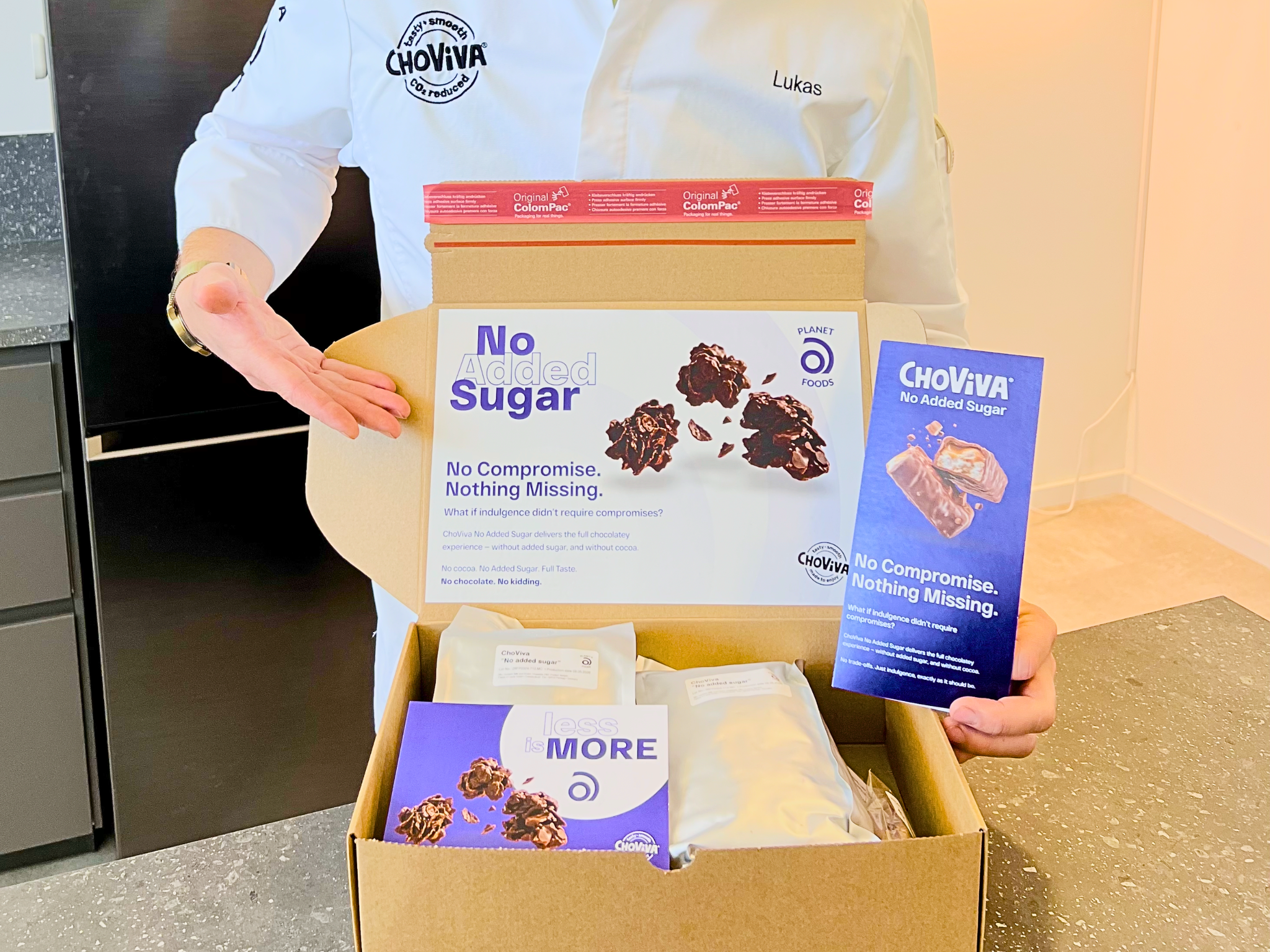
Germany’s Planet A Foods has introduced a no-added-sugar version of its cocoa-free chocolate, ChoViva, to meet the demand for “healthier indulgence”.
Already selling to some of the world’s biggest confectionery companies, Planet A Foods is looking to expand the horizons of its cocoa-free chocolate line with the launch of ChoViva No Added Sugar.
The new product swaps out sugar for maltitol, a lower-GI alternative to sucrose with half as many calories. It is the first chocolate innovation that eschews both cocoa and sugar, the two main ingredients in conventional products.
“The launch is a response to accelerating demand from both consumers and customers, who are increasingly seeking high-quality confectionery options with reduced sugar,” Jessica Karch, Planet A Foods’s senior marketing manager, tells Green Queen. “This shift is also backed by recent market studies.”
Planet A Foods eyes consumer demand for low-sugar options
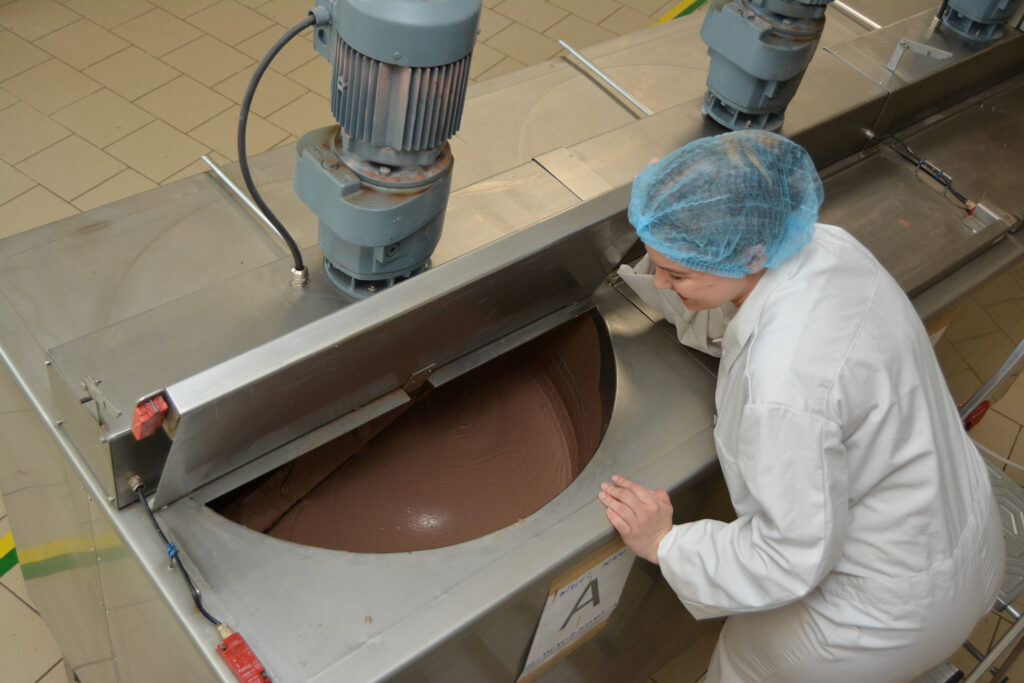
ChoViva is produced by applying proprietary fermentation and roasting processes to a base of sunflower and grape seeds to elicit aromas, flavours and textures similar to cocoa. These are then combined with plant-based fats and sugar to create a mass that can be used as a one-to-one substitute for chocolate.
In the non-added-sugar version, Planet A Foods replaces the sugar with maltitol. This sweetener “best matched the required flavour profile”, according to the firm’s co-founder and CTO, Sara Marquart.
“Our R&D process followed a classic iterative approach of recipe development, rigorous sensory tastings, and benchmarking against reference products,” she tells Green Queen.
“The key focus was carefully selecting the optimal sugar alternative that perfectly balanced the smooth structural melt while preserving ChoViva’s signature cocoa-free flavour profile,” she adds.
According to the German startup, consumers are actively seeking healthier alternatives to traditional confectionery, including rising interest in reduced-sugar options amid growing awareness of sugar’s health impacts.
Today, roughly 8% of our calories come from the ingredient, whose consumption has quadrupled in the last 60 years. But added sugars are linked to a host of ailments, including cardiovascular disease, cancer, obesity and type 2 diabetes. In the last three decades, the share of people with diabetes has doubled (95% of them have type 2). Over the next decade, half of the world could be overweight or obese.
A seven-country survey by Tate & Lyle last year found that over 50% of respondents planned to cut back on sugar over the next 12 months, with strong interest in fruit- and plant-derived sweeteners that taste great.
This aligns with 2025 research by its would-be parent company, Ingredion, which found that 64% of global respondents said they were actively consuming less sugar, citing health reasons.
This is also driven by the rise of weight-loss drugs worldwide. Research shows that 45% of GLP-1 users consume less sugar than before. In fact, when asked what they wanted to consume less of in 2025, the top answer among Americans was sugar. And non-sugar sweeteners are viewed very positively among Gen Z and millennials, with over half believing they’re either as healthy or healthier than sugar.
Chocolate producers already formulating with ChoViva No Added Sugar
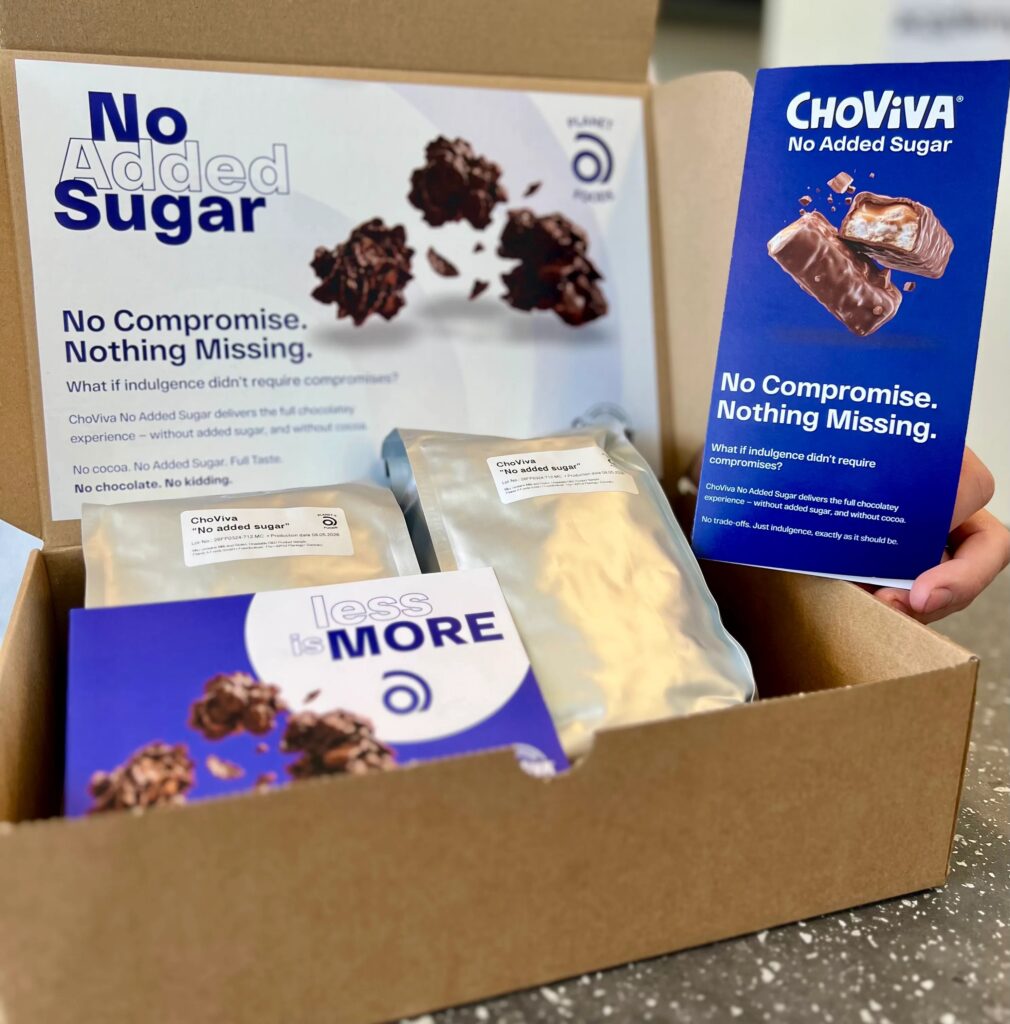
“Historically, cutting out sugar often meant sacrificing taste. Our formulation successfully retains the familiar, smooth melt and indulgent experience while eliminating added sugar,” says Marquart. “This is a true milestone for consumers: they get a satisfying sensory experience with no sense of deprivation or compromise.”
Planet A Foods has begun introducing the reduced-sugar cocoa-free chocolate to its B2B customers. “We are now working with them to implement the formulation into various product applications, which will determine the timelines for upcoming market entries,” reveals Karsch.
It comes amid rapid growth in the startup’s cocoa-free chocolate portfolio. The ChoViva ingredient is available in vegan, dark, milk and white chocolate formats, and has featured in over 120 products across 10 countries in Europe and Asia, with partners such as Nestlé, Mars, Lindt, Aeon, Lufthansa, Deutsche Bahn, Kaufland, Rewe, Aldi, and Lidl.
Planet A Foods has successfully expanded the capacity of its Pilsen, Czech Republic, production facility from 2,000 tonnes to over 15,000 tonnes annually. To ensure the continued availability of ChoViva, which is available in more than 100,000 stores globally, it relies on a commercial partnership with Barry Callebaut, the world’s largest B2B chocolate producer.
The startup’s technology tackles an ingredient marred by climate change. Cocoa stocks fell to their lowest levels in a decade, and prices rose to all-time highs in 2024. Extreme weather and crop diseases have hit plantations hardest in the Ivory Coast and Ghana, the two largest producers.
Scientists warn that a third of the world’s cocoa trees could die out by 2050. Plus, producing chocolate emits more greenhouse gases than any other food except beef, and the industry is linked to widespread tropical deforestation. In contrast, ChoViva lowers emissions by 82-91%, depending on the type.
These challenges have prompted industry majors, including Cargill, Puratos, Mondelēz International and Döhler, to invest in cocoa-free or cell-based chocolate players, a space that includes Voyage Foods, Nukoko, Prefer, Win-Win, Foreverland, California Cultured, Kokomodo, Celleste Bio, and more.
Planet A Foods is the most well-established, raising $30M in late 2024. Marquart declined to respond to questions about the private company’s runway, revenue performance, or future fundraising plans.
“We are actively focusing on long-term collaborations with major industry players,” she says when asked about Planet A Foods’s plans over the next year. “Our current focus remains on driving commercial growth, expanding our B2B partnerships, and scaling production to meet market demand.”